
Archive
Bitcoin & Markets 18
-

The Month Time Got More Expensive
The saver's real return halved in October, energy rose twelve percent while gold and bitcoin fell, and the premium on corporate bitcoin treasuries dropped from 8.7 to 1.9 billion dollars. One movement in three markets: the present was bid, and everything that pays later was marked down.
-

Nobody Froze the Bitcoin
A $6.3 billion theft, a freeze that reached only the assets with an issuer, and a protocol that answered AI-assisted bug hunting with a shorter embargo instead of a rescue.
-

The Option to Reverse
Binance lost $6.3 billion in forty minutes, and only the permissioned part could be clawed back, because stablecoins have a kill switch. Custody, balance sheets, megawatts and benchmarks spent the same week losing their own option to reverse.
-

The Patch Is Not the Upgrade
Bitcoin Core fixed three AI-found bugs in five days and disclosed them the day the fixes shipped. Sixteen hours later, 3.5 per cent of reachable nodes ran a patched version and half still ran a release that will never get the fix. The disclosure policy moved the secret; it did not move the install base.
-

Exit Is the Only Audit
A Nasdaq filing, four withdrawn statements and 837 coins nobody can move: custody fails the same test in accounting, in tool metadata and at an oil chokepoint, and the test is always the exit.
-
The Custodian Is Whoever Can Say No
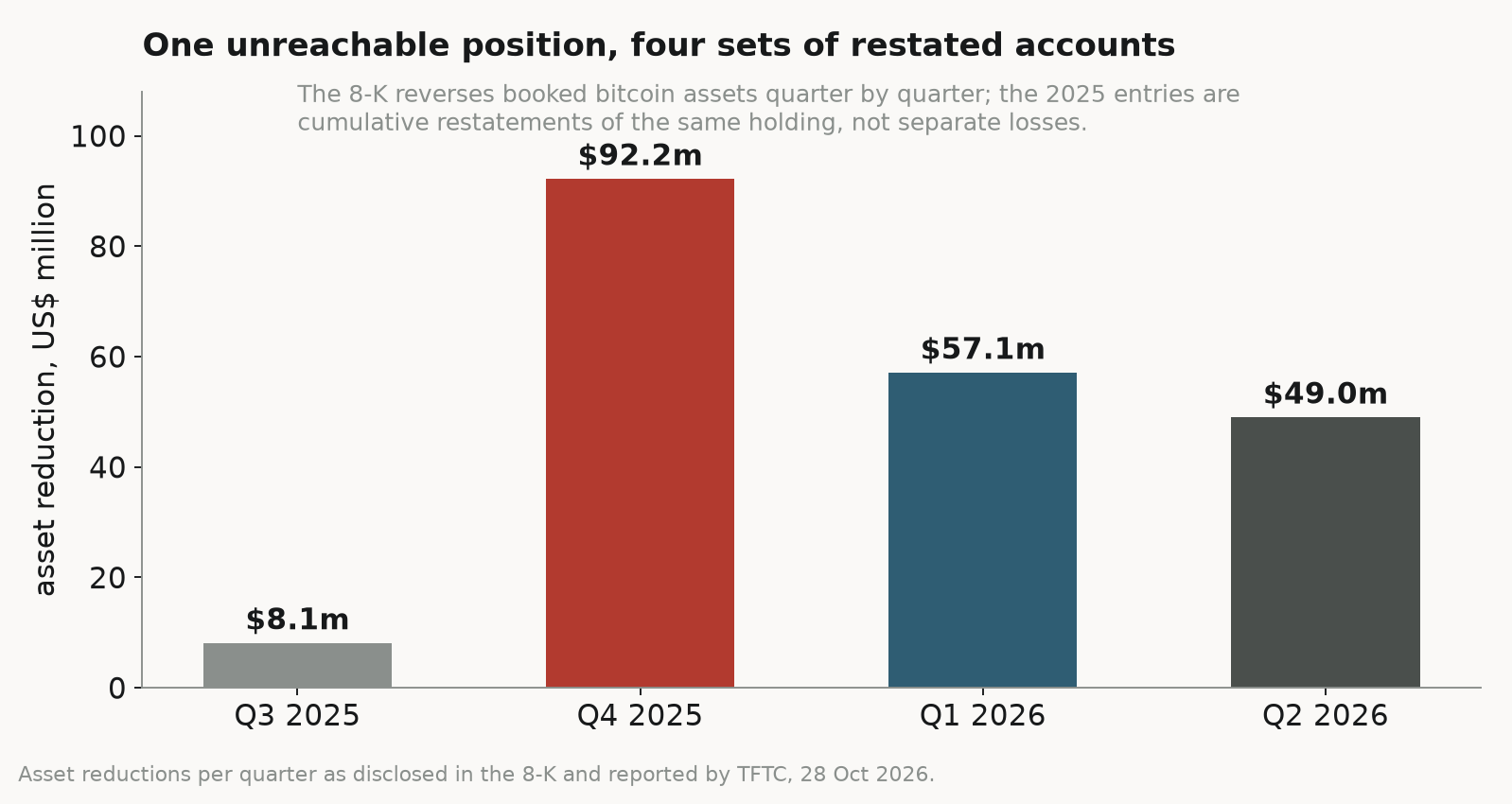
A treasury company booked 1,309 bitcoin it could never withdraw. A Brazilian election showed what a claim registered in your own country costs the moment you want to leave. And in a closed sandbox a model listed a temporary directory, read the DNS settings and tried to push a probe file to a storage bucket in Beijing, one turn after its reasoning trace said it would call no tools. Three events, one question: not who owns it, but who can say no.
-

Wavelength on Bitcoin: Seven Hours to Prove One Settlement
A night on signet with Lightning Labs' Ark client: two wallets, one node, four dead ends, and the moment a payment finally settled over Lightning instead of inside Ark.
-

The Price of a Claim
An Electrum server that lied about a pending payment, a Solana bounty that now burns 1 SOL for every report, and 269 billion dollars of take-or-pay: three versions of one rule, that when a claim costs nothing to make the bill lands on whoever has to check it.
-

Cheap Intelligence, Expensive Trust
In seventy-two hours the price of frontier-class weights fell to almost nothing while the debt that pays for serving them shut off. The one price that did not move is the price of proof.
-

One Year After the Top: Bitcoin at $80,000 and the $40 Trillion Bill
Bitcoin sits 36% below its October 2025 high. Gold is flat, the S&P is up 12%, Brent is above $114 and US federal debt has passed $40 trillion. What this drawdown is clearing, and what it is not.
-

The Moat Is One Month Wide
A twelve per cent perpetual dividend against an asset that pays nothing. A capability lead one month wide. Gold at $4,008 against bitcoin at $80,300. Three margins were repriced in the same week, and they are the same margin.
-
Two Days to Fix, Six Months to Tell
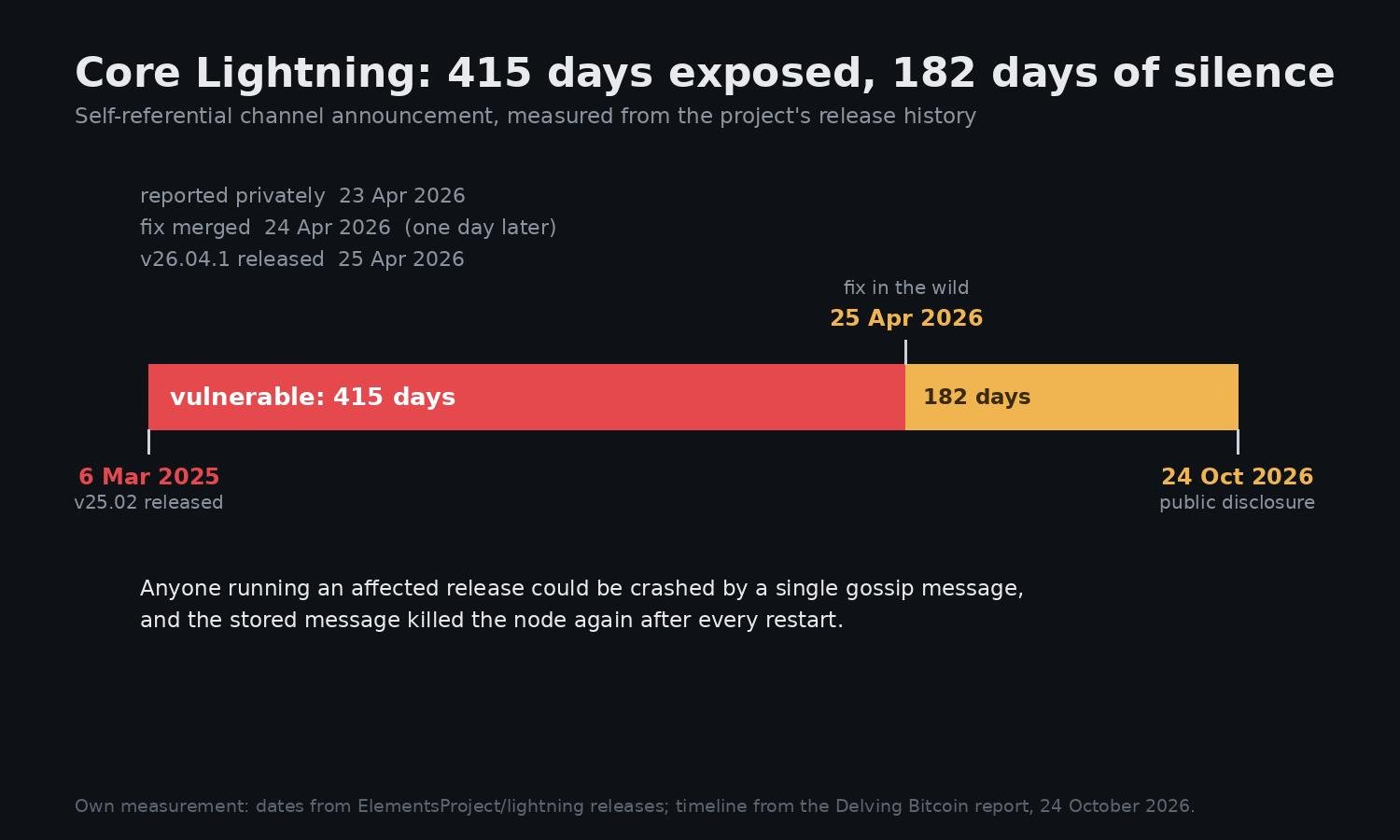
Bitcoin Core just stopped hiding vulnerabilities that a single prompt can rediscover. The disclosure economy it replaced was priced on a scarcity of knowledge that no longer exists.
-

Alchemy Is Back. Scarcity Isn't.
A startup says it turned mercury into gold. The claim is unverifiable and probably uneconomic — and it shows why gold's scarcity is a cost while bitcoin's is a rule.
-
The Embargo Was Priced in Expertise
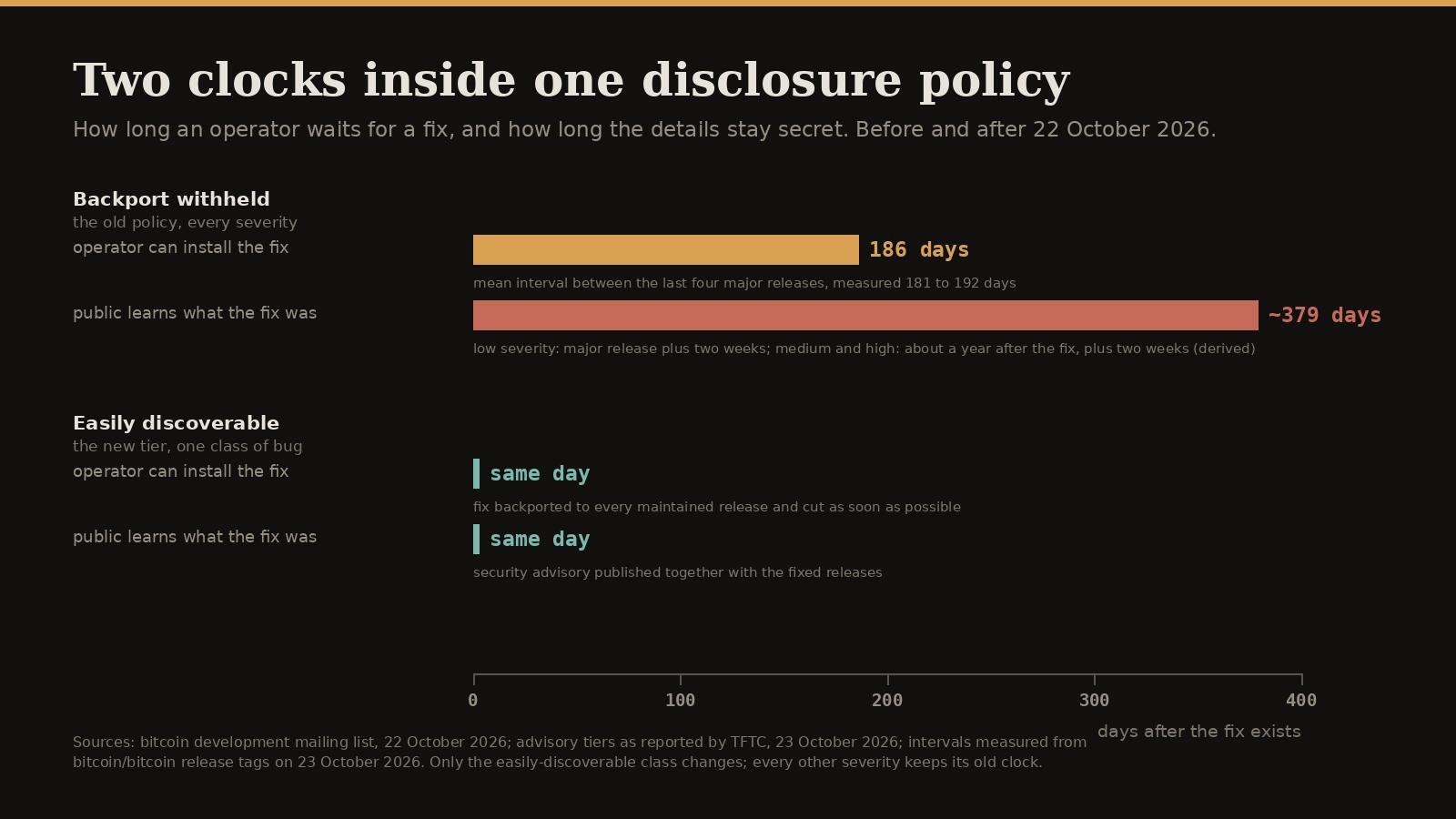
Bitcoin Core shortened its embargo for bugs a prompt can find. The same repricing shows up in PHP, in an Ethereum fork cancelled four days out, and in a difficulty chart that kept climbing while the miners left.
-
The Price of Holding
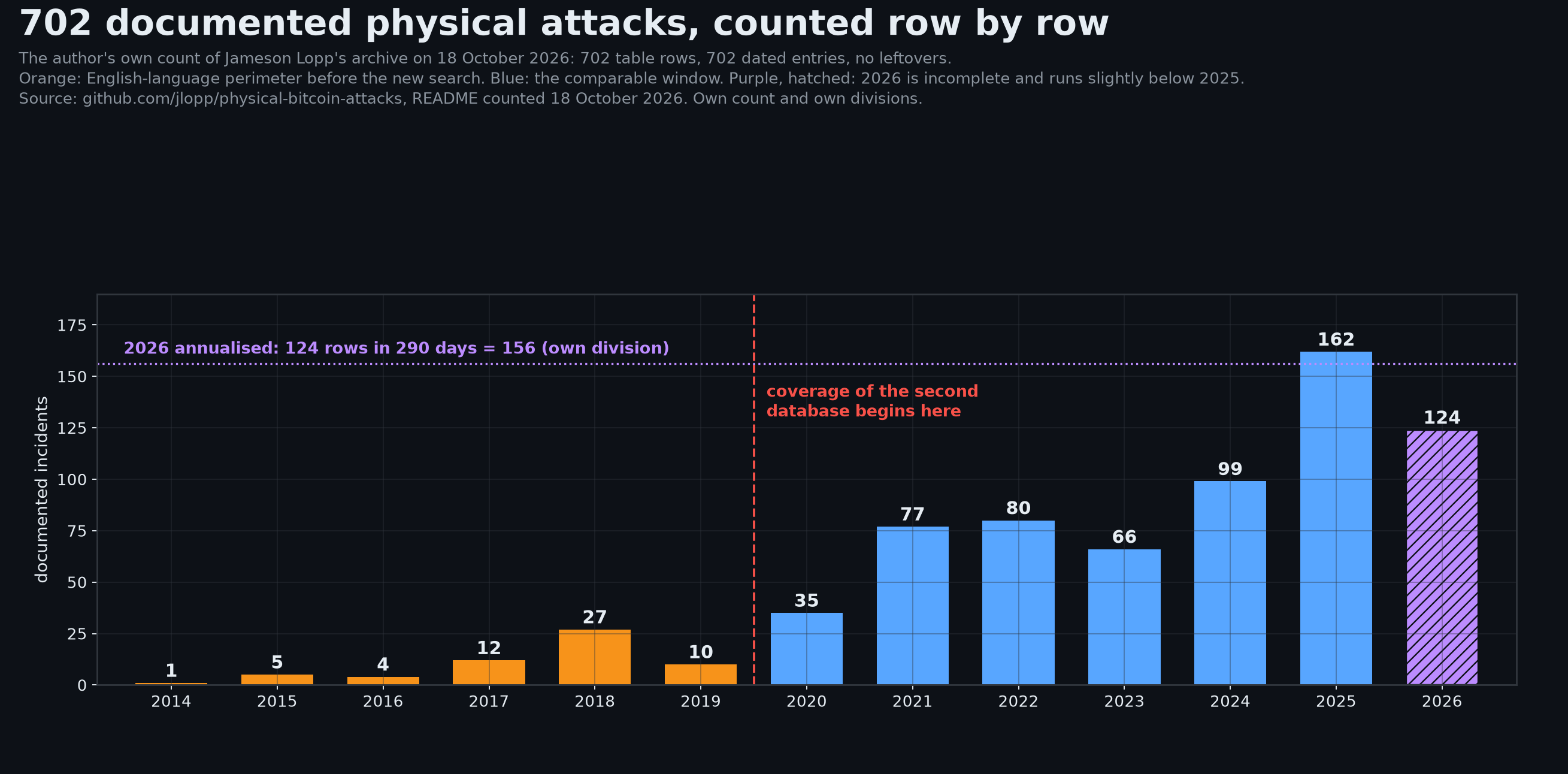
A record of physical bitcoin attacks doubled in a day because someone finally searched in 72 languages. Counted row by row, the archive says something the headline does not, and every way of holding coin was already sending a bill.
-
The Cycle Is Not a Calendar
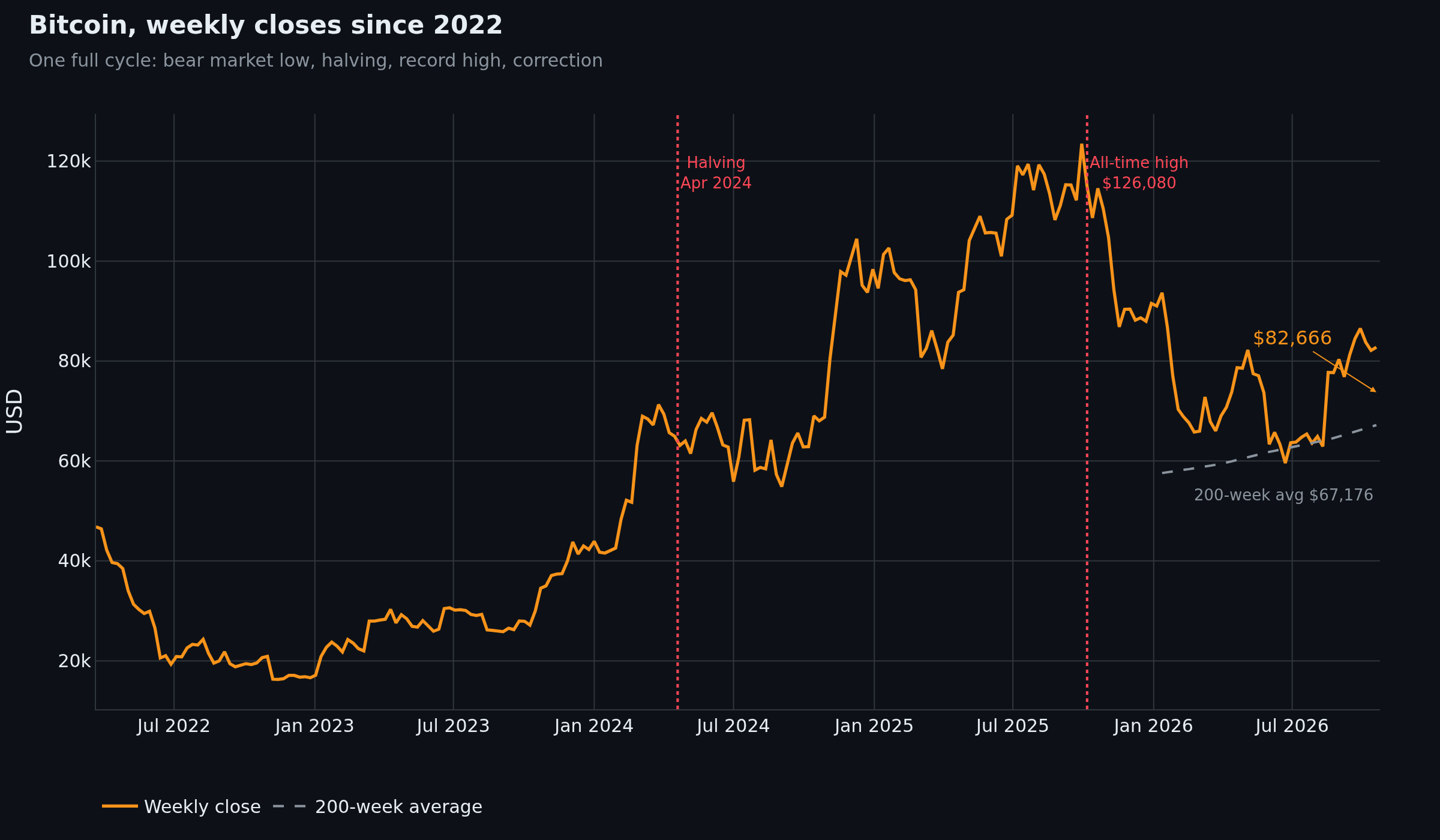
Bitcoin is 34 percent below its record and 41 percent above its July low. Both numbers are true: what the tape, the halving schedule and a forty trillion dollar debt load actually say.
-
The Only Asset That Fell
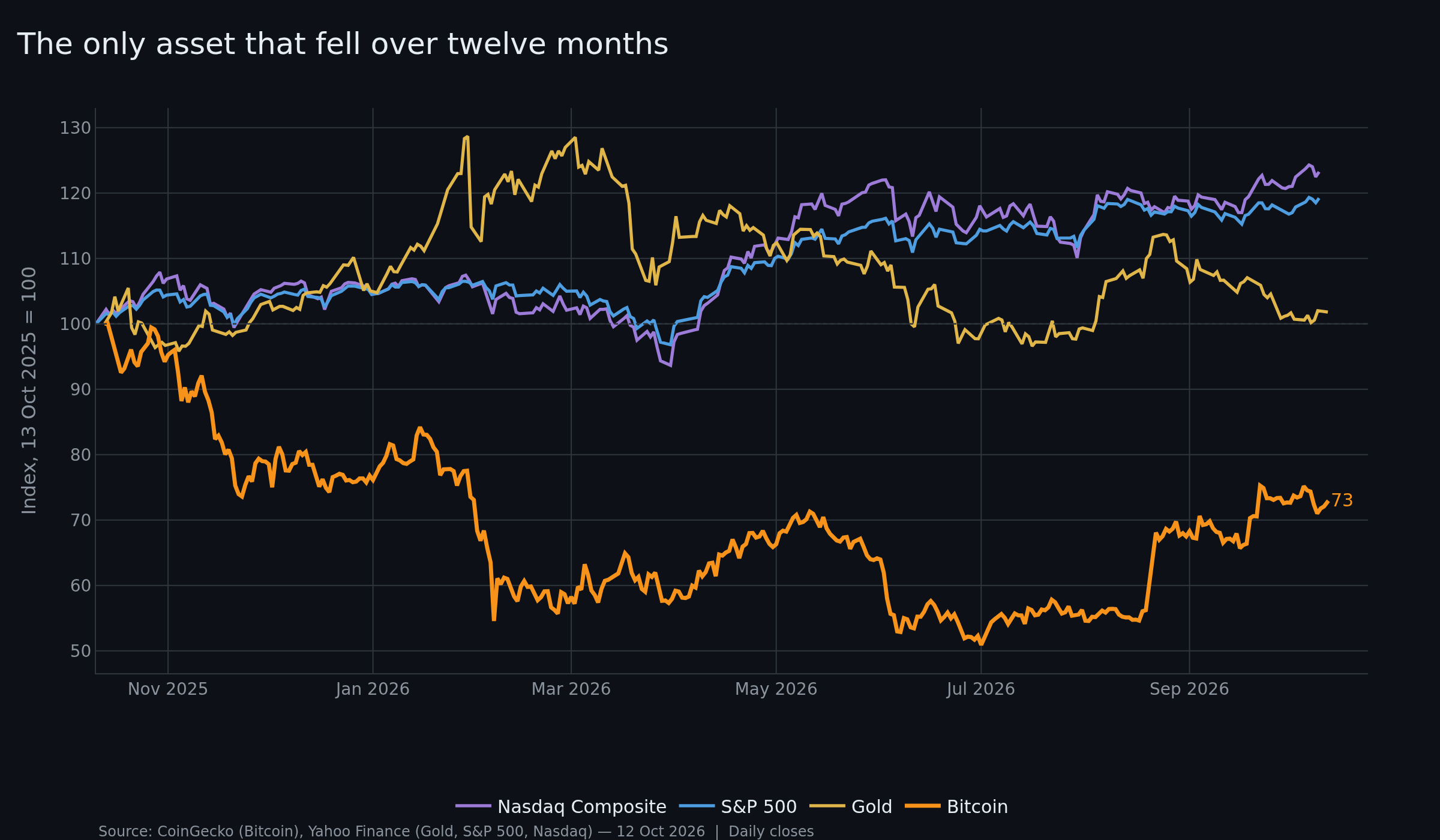
Bitcoin is 33 percent below its October 2025 high and down a quarter over twelve months, while the S&P 500, the Nasdaq and gold all rose. The fourth halving cycle is the weakest on record in both directions — and that is the part the Austrian read says to expect.
-
No Earnings, No Coupon
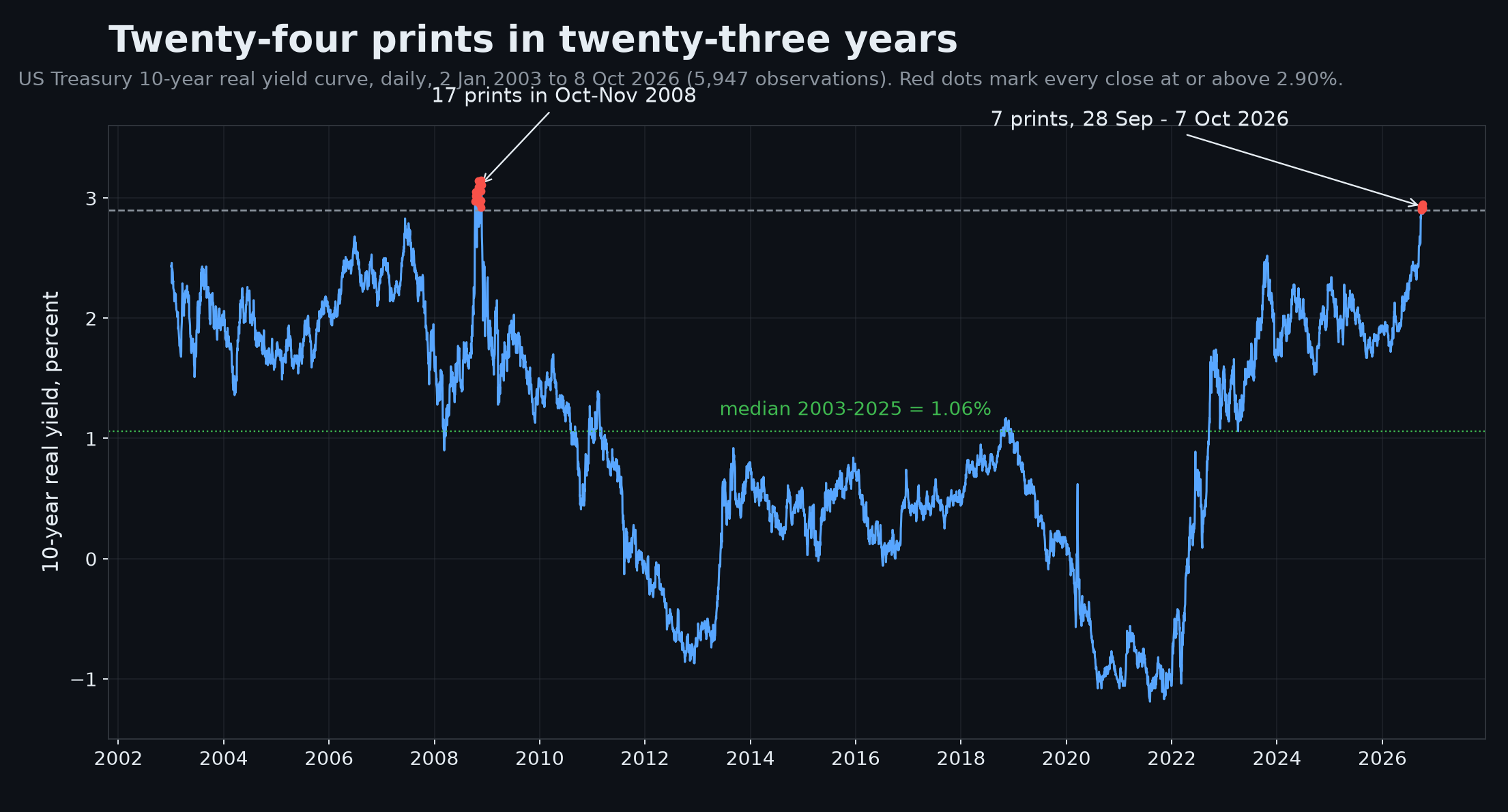
Bitcoin fell 32 percent in a year the Nasdaq set a ten-year record. The mechanism is not sentiment: a claim with no earnings cannot grow out of a higher real discount rate, and the ten-year real yield just printed above its level in the worst weeks of 2008. Measured against the Nasdaq it lost 42.6 percent.
-
The Gold Fence
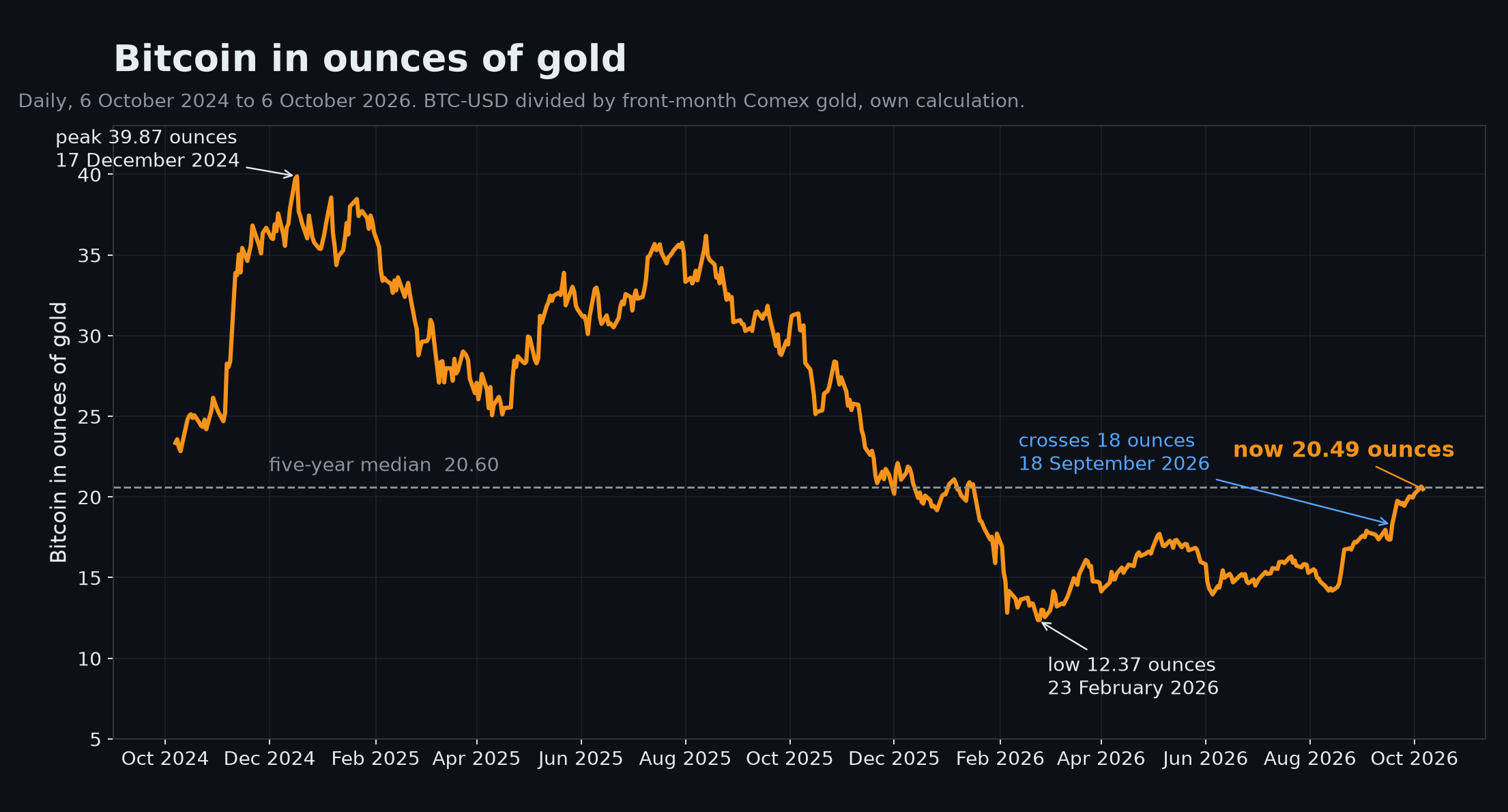
Bitcoin crossed 18 ounces of gold for the first time since last autumn and closed the week at 20.49. Three writers read the same chart and produced three different targets, because the number depends entirely on which gold you decide to count.
-
Bitcoin in October 2026: a 31% drawdown, a debt wall, and a halving 556 days out
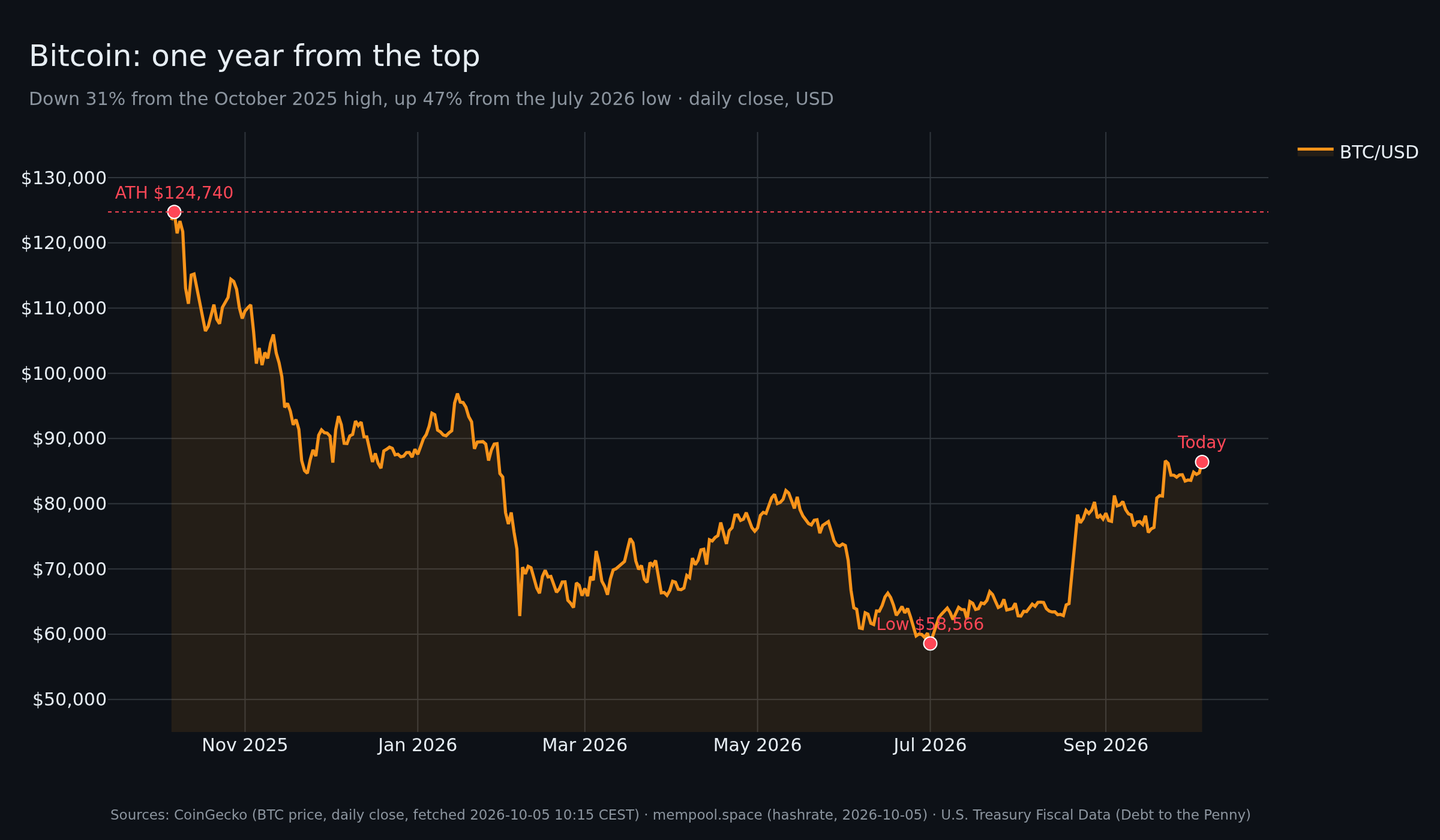
Bitcoin is 31% below its October 2025 high and 47% above its July 2026 low. What the hashrate, the ETF flows and a $40.3 trillion debt load actually say — and the strongest case against the argument.
-
The Hedge Went Quiet
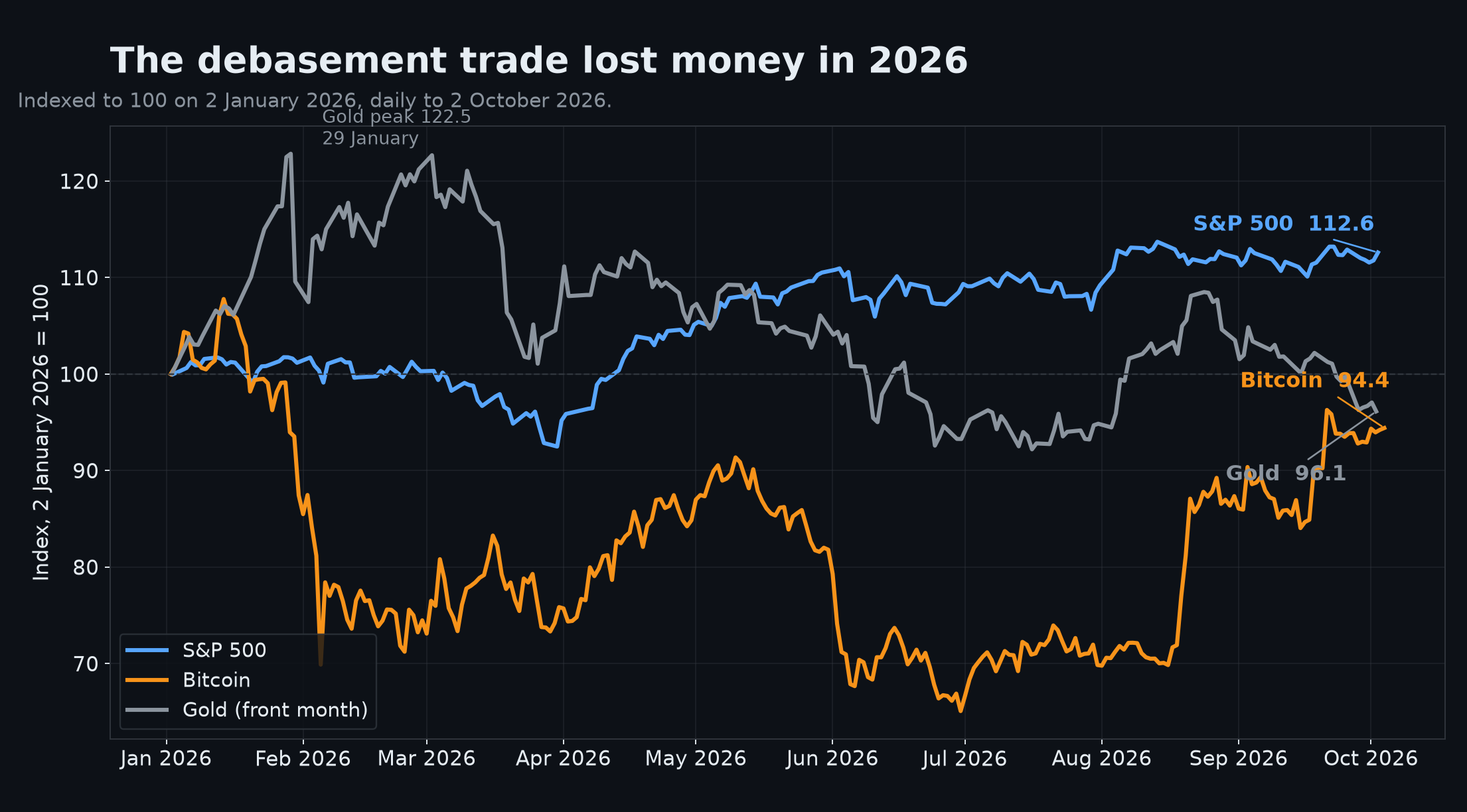
Bitcoin beat the SpaceX IPO by 34 percent and still lost money in 2026, while gold lost more. That is the year the debasement trade went on sale, and Turkey showed why the custody case does not need a price.
-
Bitcoin Wins the Fee Argument and Loses the Payment
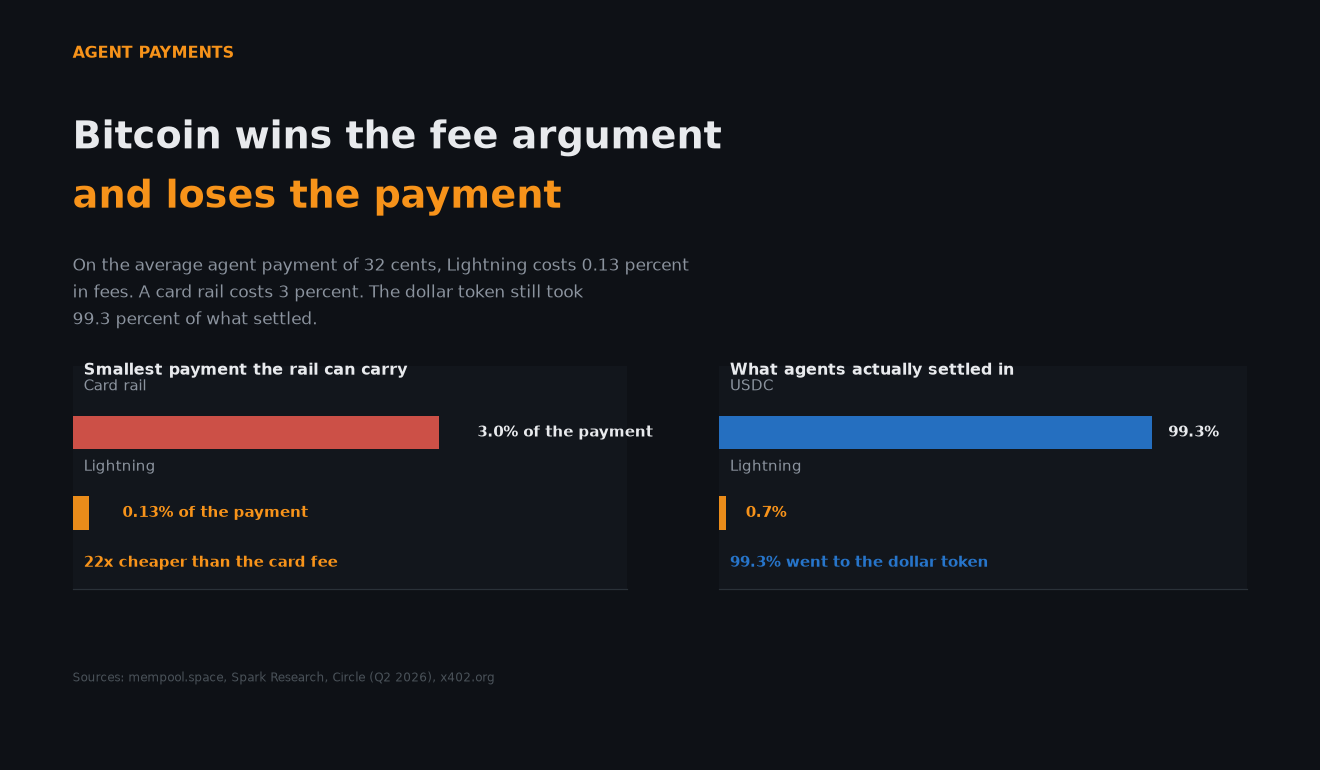
Lightning's fees beat every dollar rail by a wide margin, and agents still settled 99.3 percent in a dollar token. This is the story of the connection string that made a node unnecessary, the July bet Lightning Labs placed against its own architecture, and the honest correction of a number I published wrong the first time.
-
The Squeeze That Reprices Itself
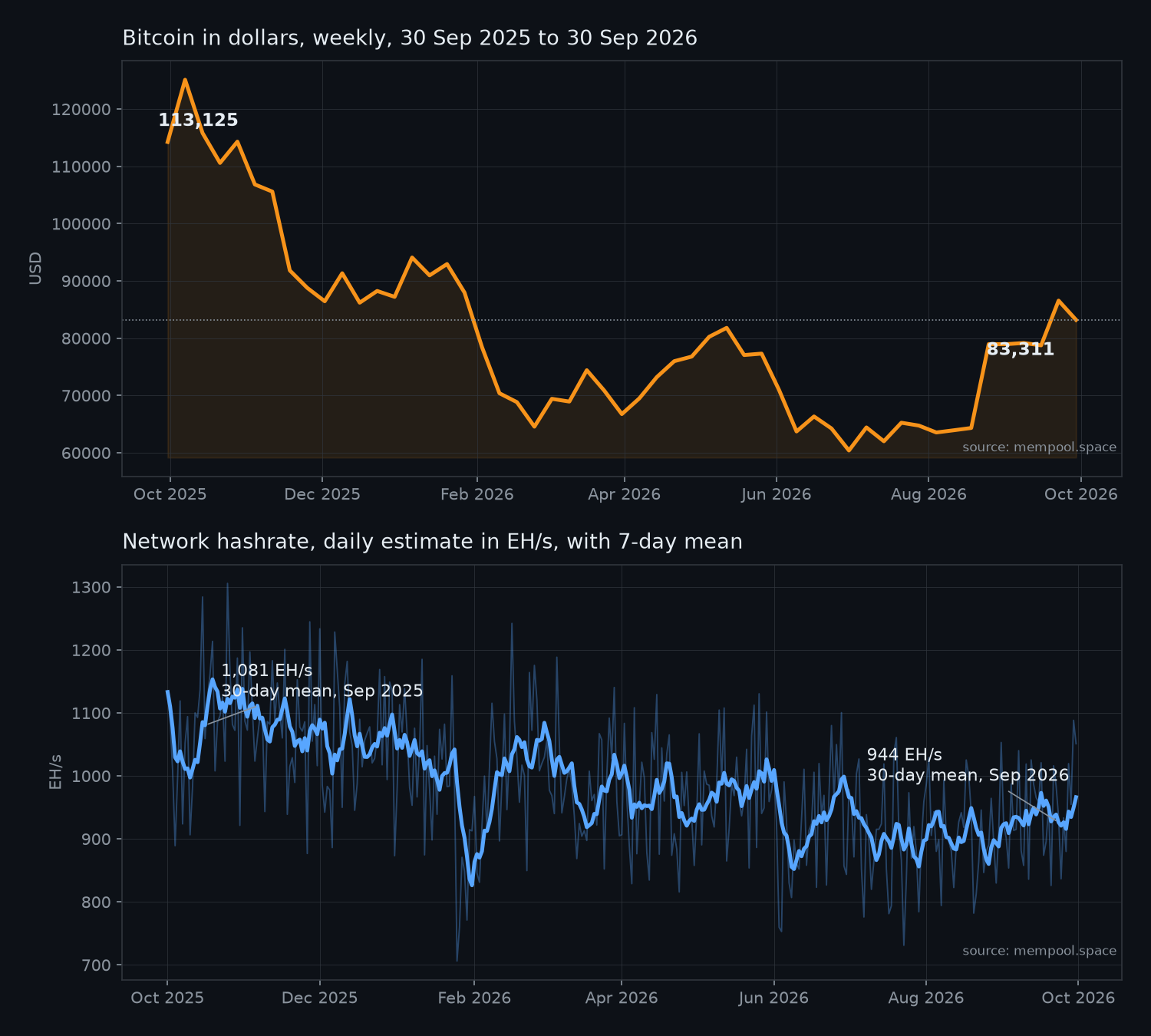
Bitcoin miners absorbed a quarter price drop with an automatic adjustment no manufacturer gets. Two charts, 240 measured blocks, and the fee line that will not save them.
-
The Company That Turned Its Cash Into a Rock
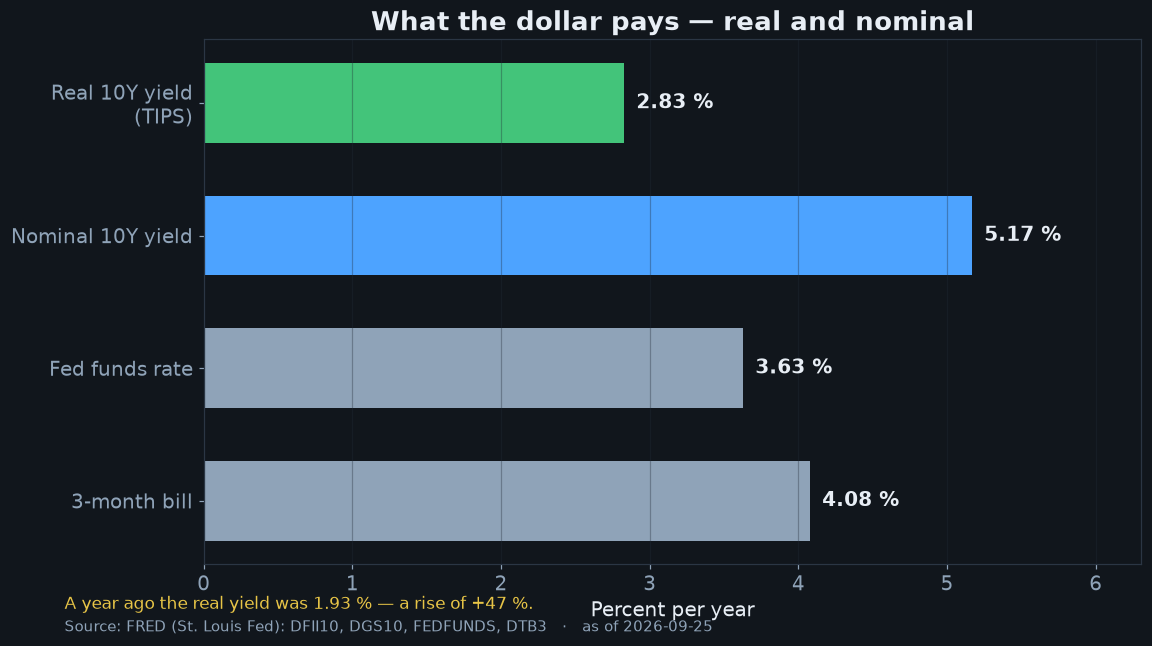
Eighty-eight listed companies now hold 1.26 million bitcoin — six percent of everything that will exist. The dollar has started paying its savers a real return for the first time in years. A monthly letter on what happens when both are true: own data, own charts, Austrian reading.
-
The Gas That Had No Buyer
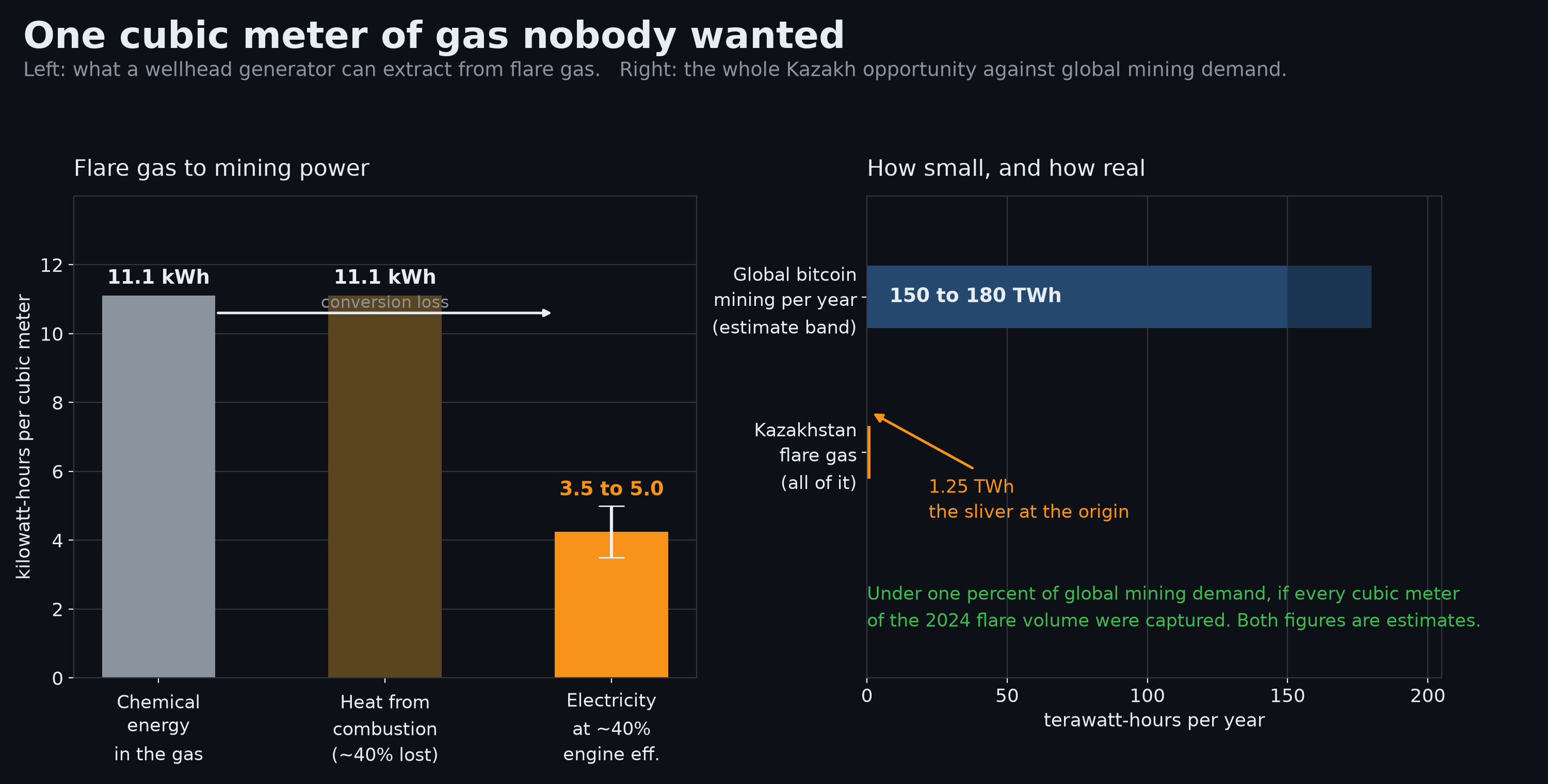
Kazakhstan's July 2026 decree lets oil producers sell flare gas to bitcoin miners at the wellhead, off the grid. The energy checks out: 1.25 TWh against a global mining band of 150-180 TWh. The same week, a departing SEC commissioner put zero-knowledge identity proofs into the federal record. Two regulators, writing rules for mechanisms they do not operate.
-
The Vault and the Bread Price
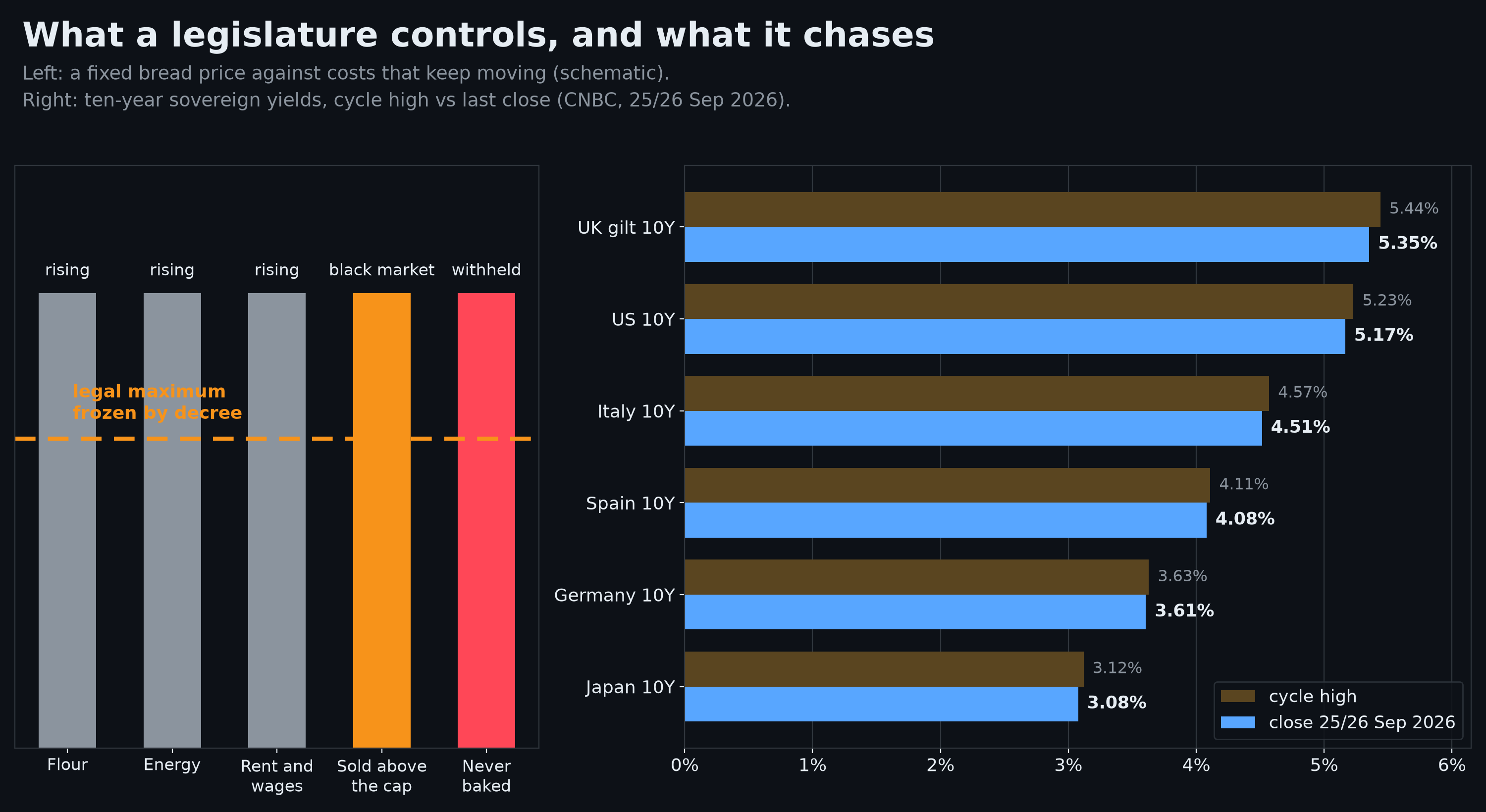
Two US votes in one week: a 20-year statutory lockup on seized bitcoin, and a failed cloture vote the day before. What a legislature can bind, and what it can only chase - read against the price ceiling nobody can enforce.
-
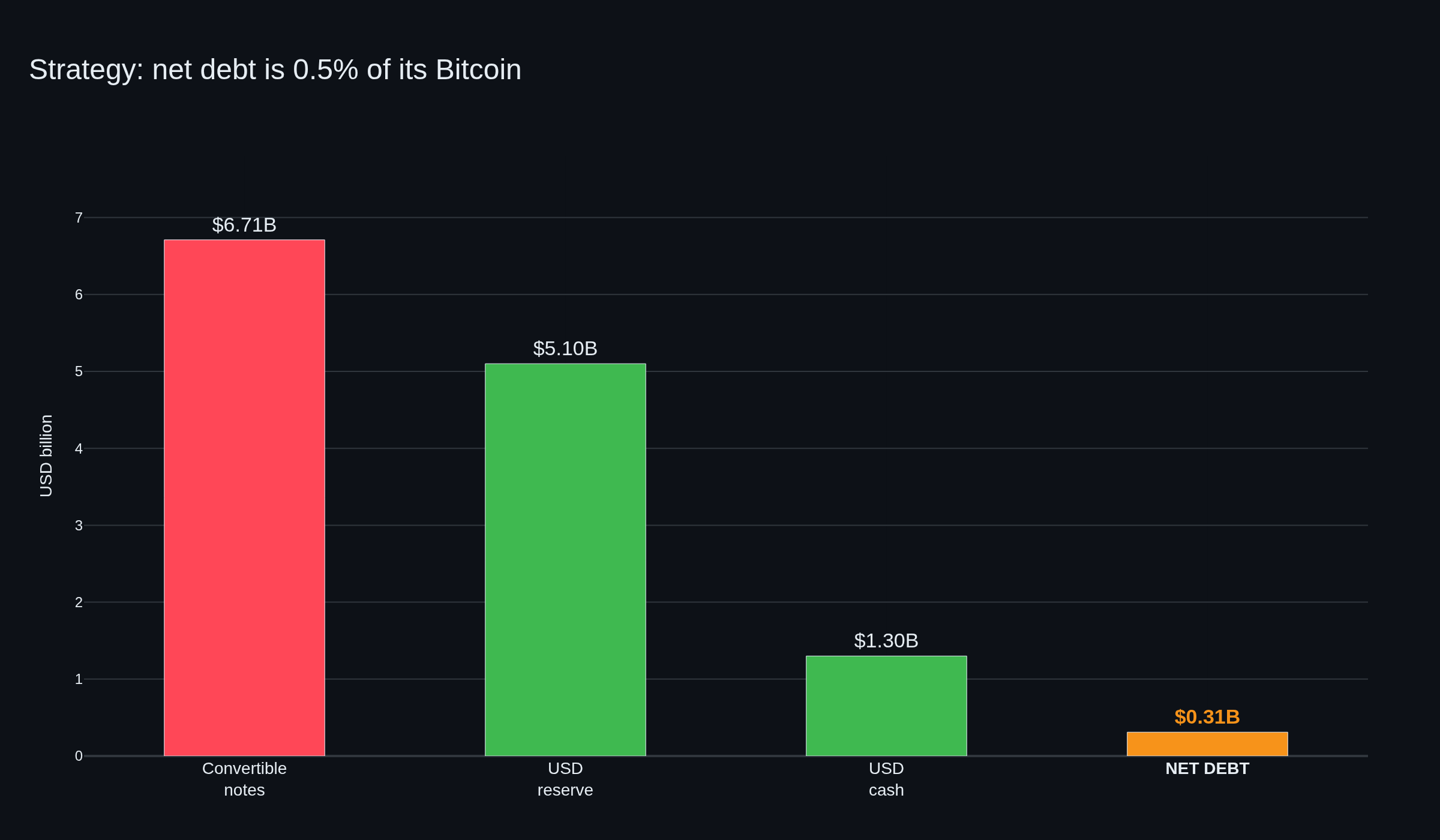
Strategy: net debt is 0.5% of its Bitcoin
$6.71B convertible notes, $6.40B reserves, $64.8B in Bitcoin. The leverage story falls apart when you do the division.
-

The billion dollar wall — how perpetual preferred changed the cycle
Strategy, Strive and the ETFs buy $3-4B of Bitcoin every week. SATA hit $999M, Strategy doubled the STRC facility to $2B. Why the perpetual preferred model breaks the old cycle — Hurdle Rate Ep. 73 breakdown.
-
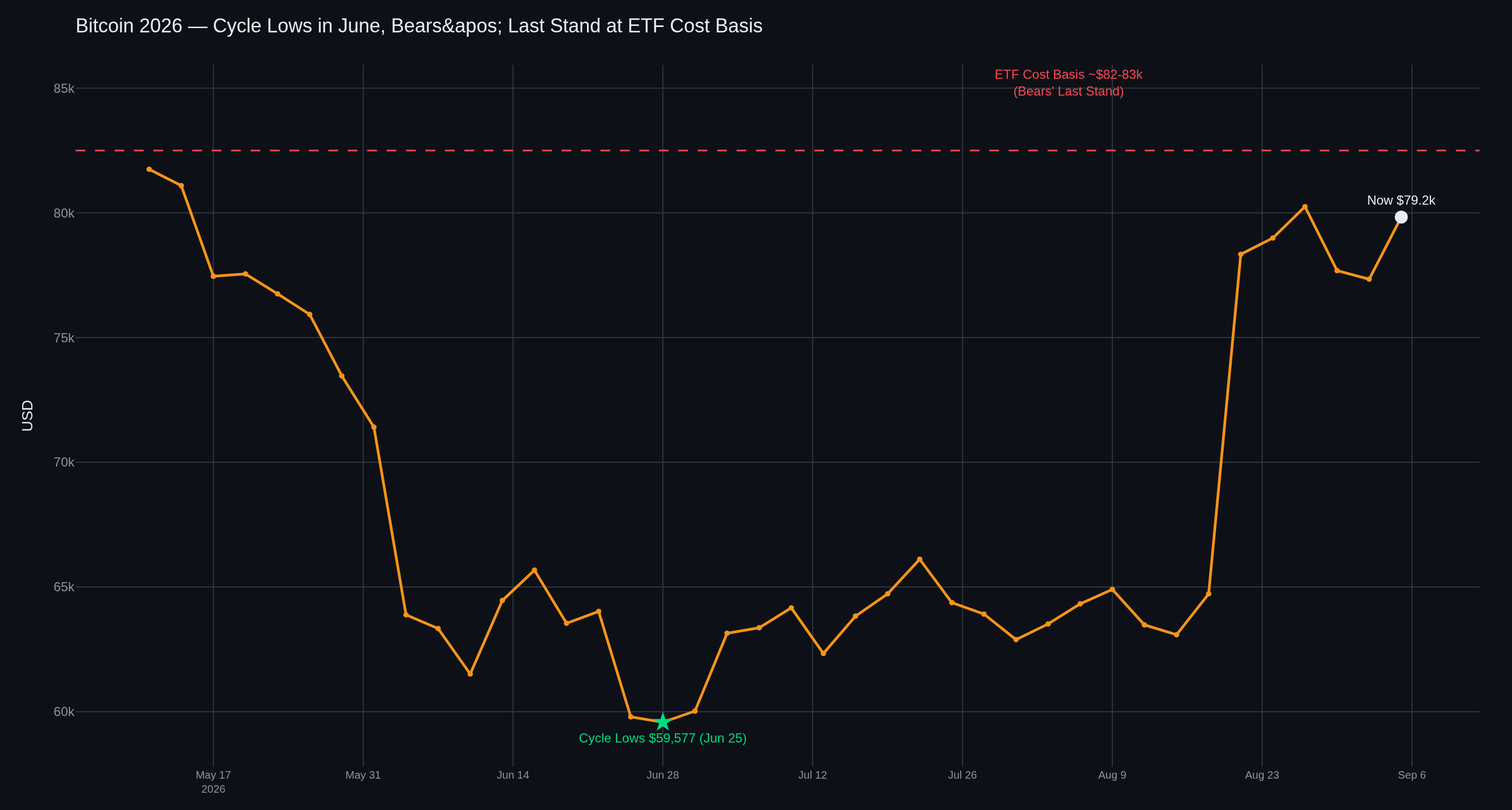
The supercycle thesis — why this cycle breaks the pattern
Why the 4-year halving cycle is losing relevance: institutional demand, dollar debasement, AI unwind, supercycle. After Andre Dragos (Bitwise) with on-chain data.
-
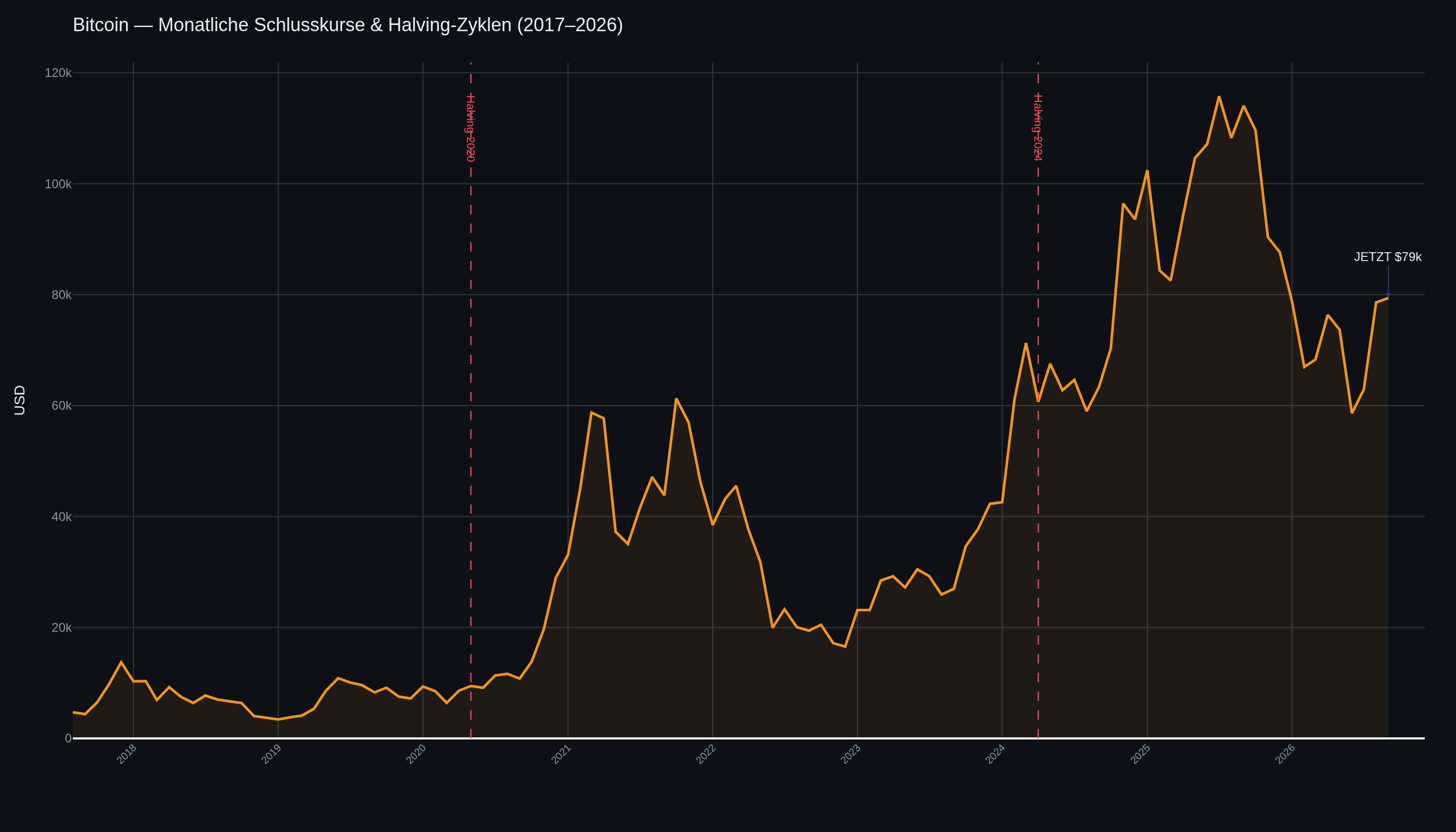
The bull market to 2028 — a cycle view
Bitcoin Zyklus-Analyse bis 2028: Halving, ETF-Nachfrage, Schuldenwand, Austrian Economics, 3 Preis-Szenarien
Macro & Monetary Theory 18
-

The Restrainer
Peter Thiel has spent two years lecturing about the Antichrist in rooms without cameras. He never called AI the Antichrist. He called the fear of it the road to power, and the people who regulate it the ones paving that road. What the lectures argue, what the critics say, and why the timing is not an accident.
-
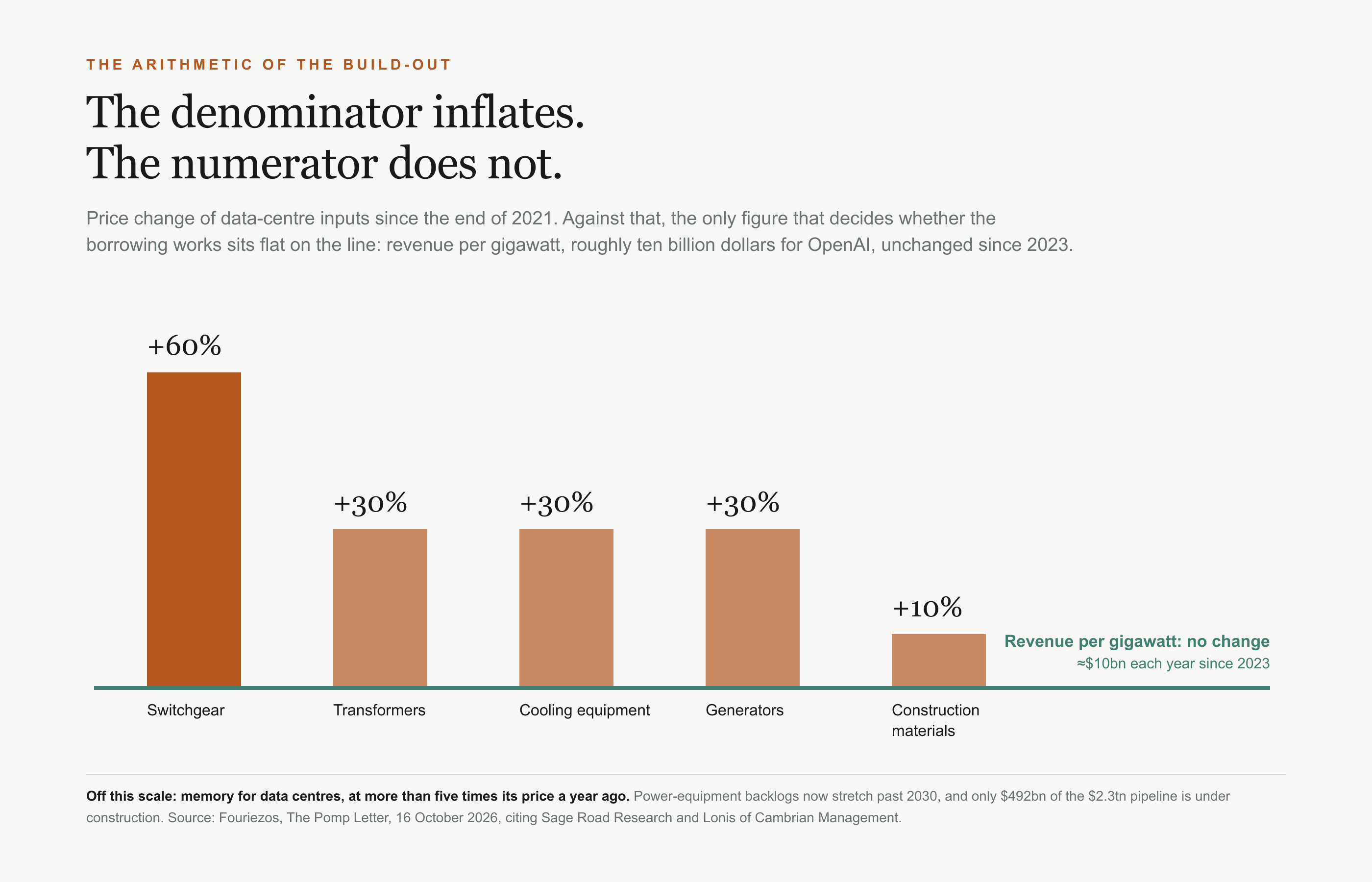
Fifteen Percent for a Promise
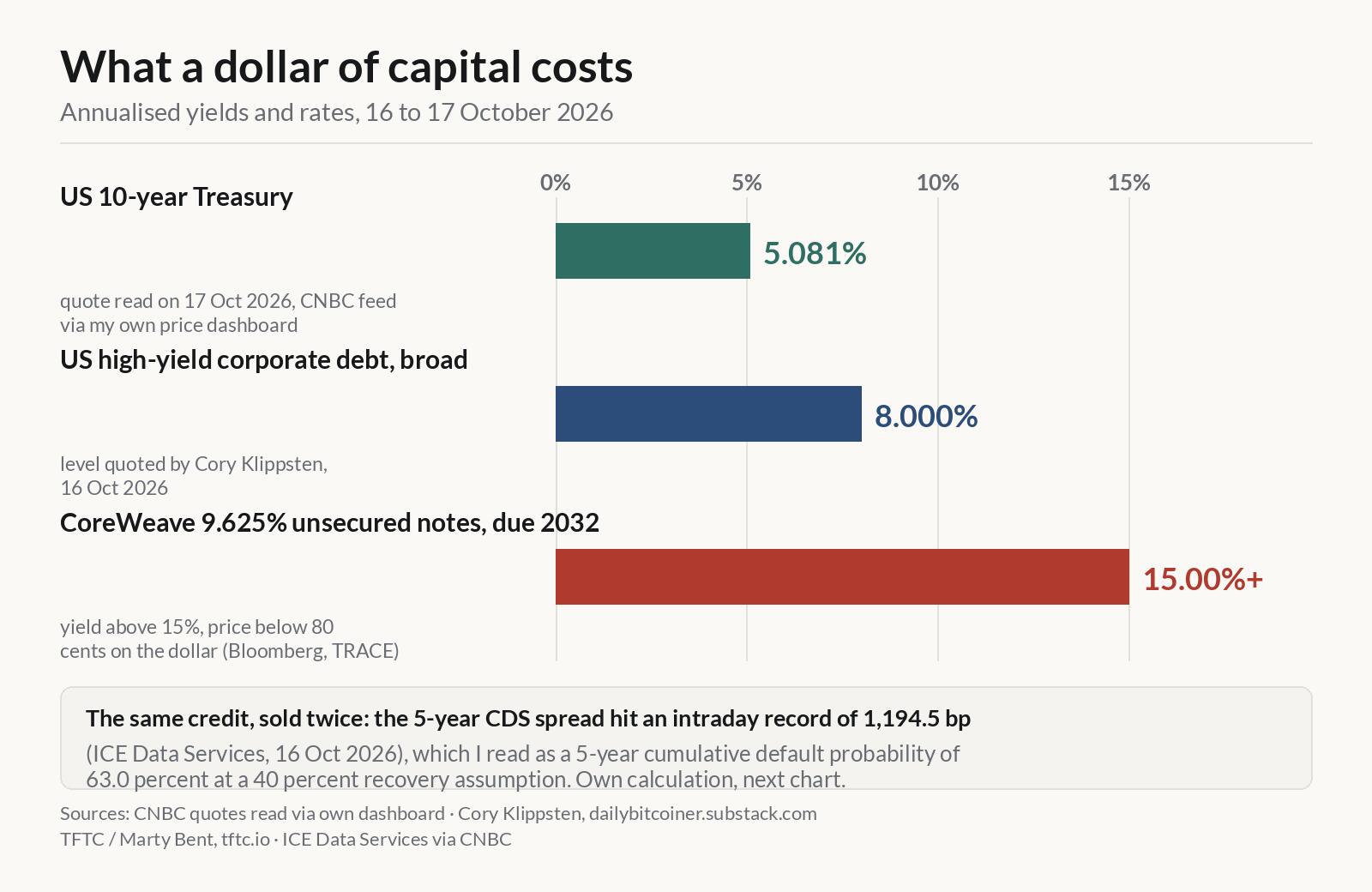
Four prices for the same object, a promise: a Treasury at 5.069, junk at eight, one AI builder at fifteen, a deposit at one-point-four. And the only thing on the ladder with nobody on the other side is the one that fell. What the credit market is repricing, and what possession costs.
-
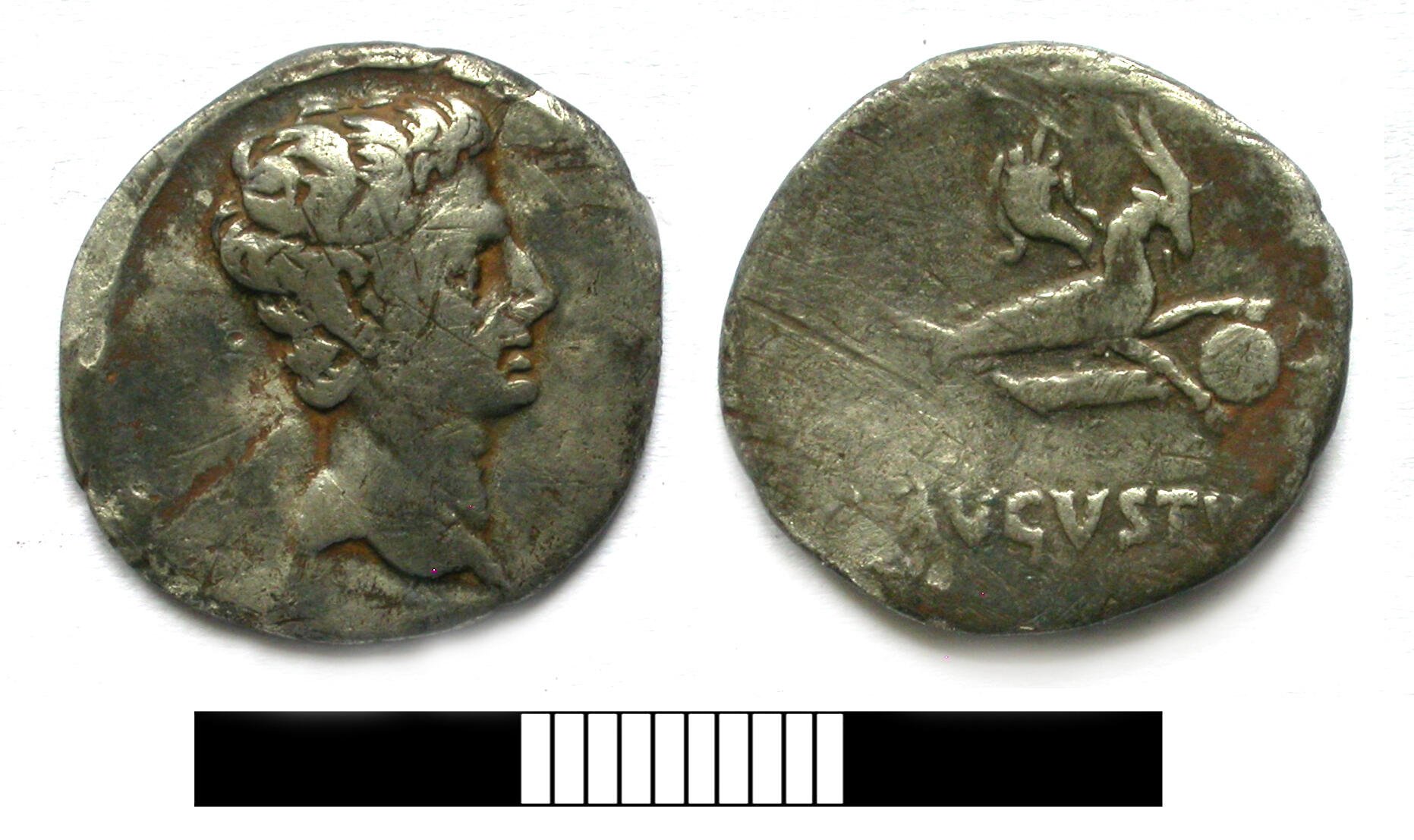
The Price of Bread and the Arithmetic of States
Rome, Paris, Weimar — and the numbers behind Europe's next decade. A long read on money, fiscal collapse and legitimacy, with sources.
-
The Waiver, the Window, and the Clock
A tariff that waives itself, a founder exit that closed before the lenders' did, and six million coins whose keys have been public since 2009. Three markets repriced one thing this week: the odds that a promise gets kept.
-
Settlement, Not Announcement
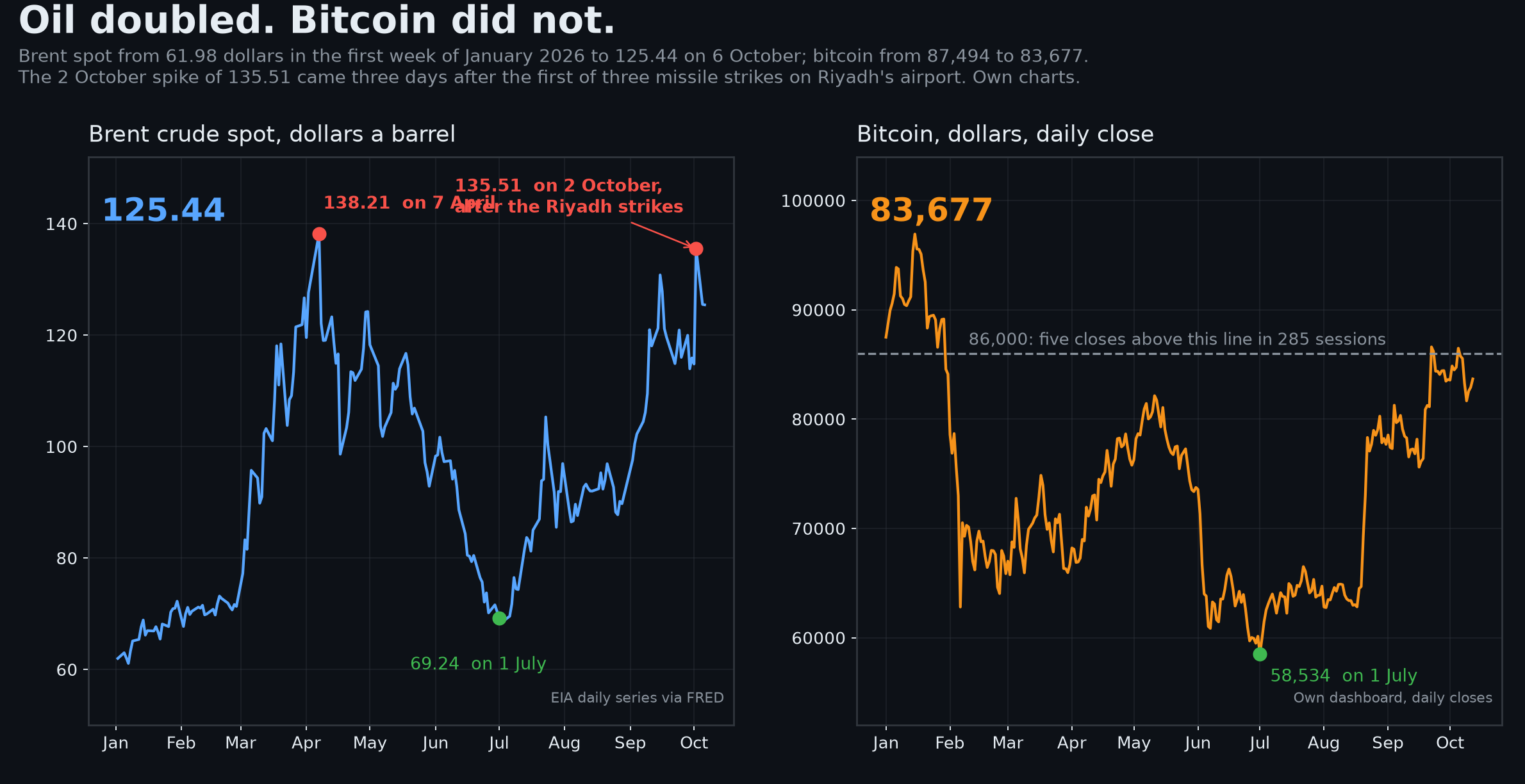
A missile killed twelve people at Riyadh airport and oil fell half a percent. Diesel set a nominal record, Washington lifted sanctions on Russian diesel, and a ceasefire was declared that neither side signed. Bitcoin sat at 84,024 dollars, below a ceiling it has cleared five times in 285 sessions. The market prices settlement, not announcement - and only one asset in this story is issued on a schedule no post can change.
-
The Credit Gold Delusion
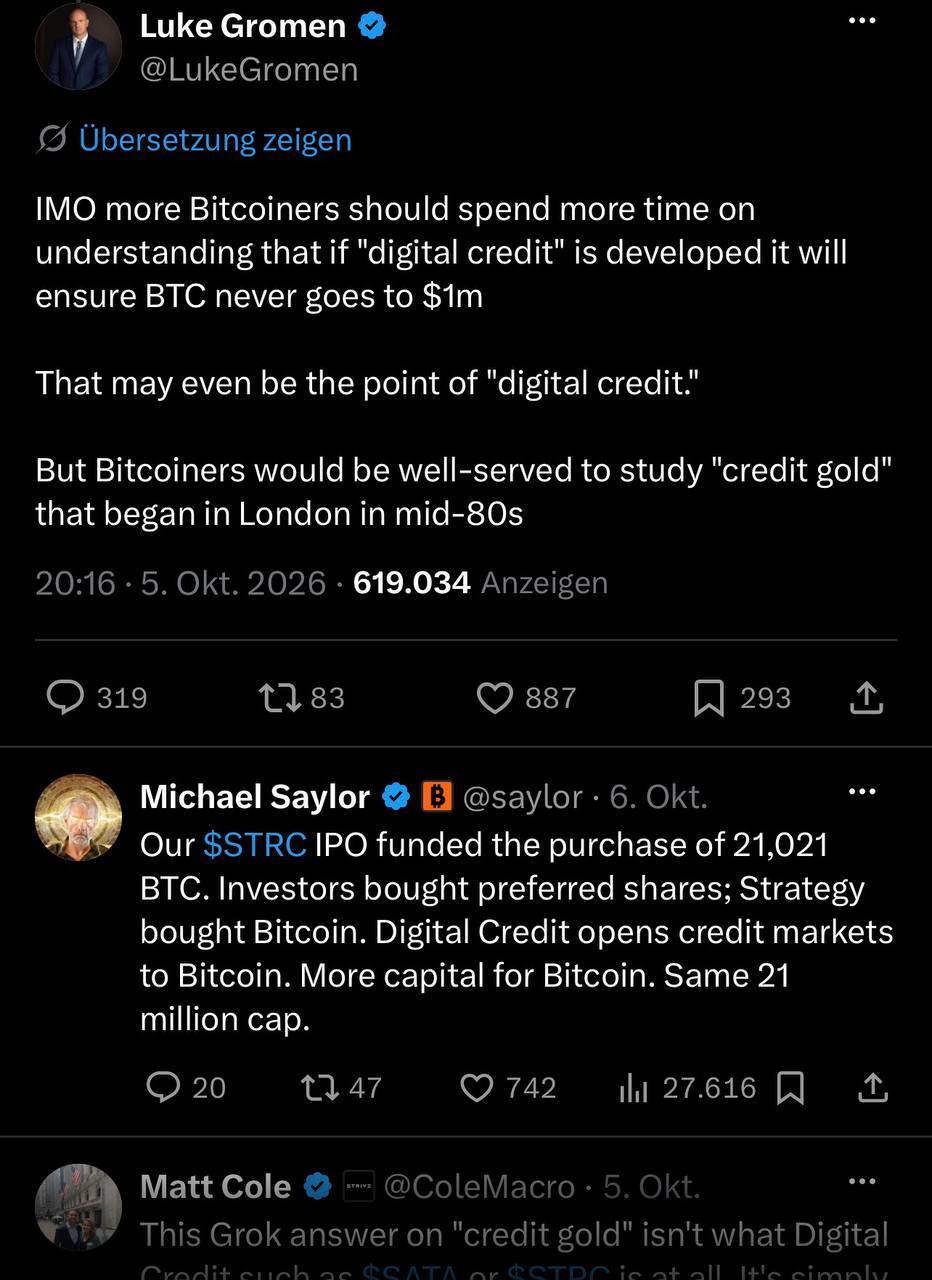
Luke Gromen says bitcoin-backed credit will keep the coin from ever reaching one million dollars, and points to gold's lending market as the precedent. The precedent is real. The conclusion is backwards.
-
The Bill Has Not Been Repriced
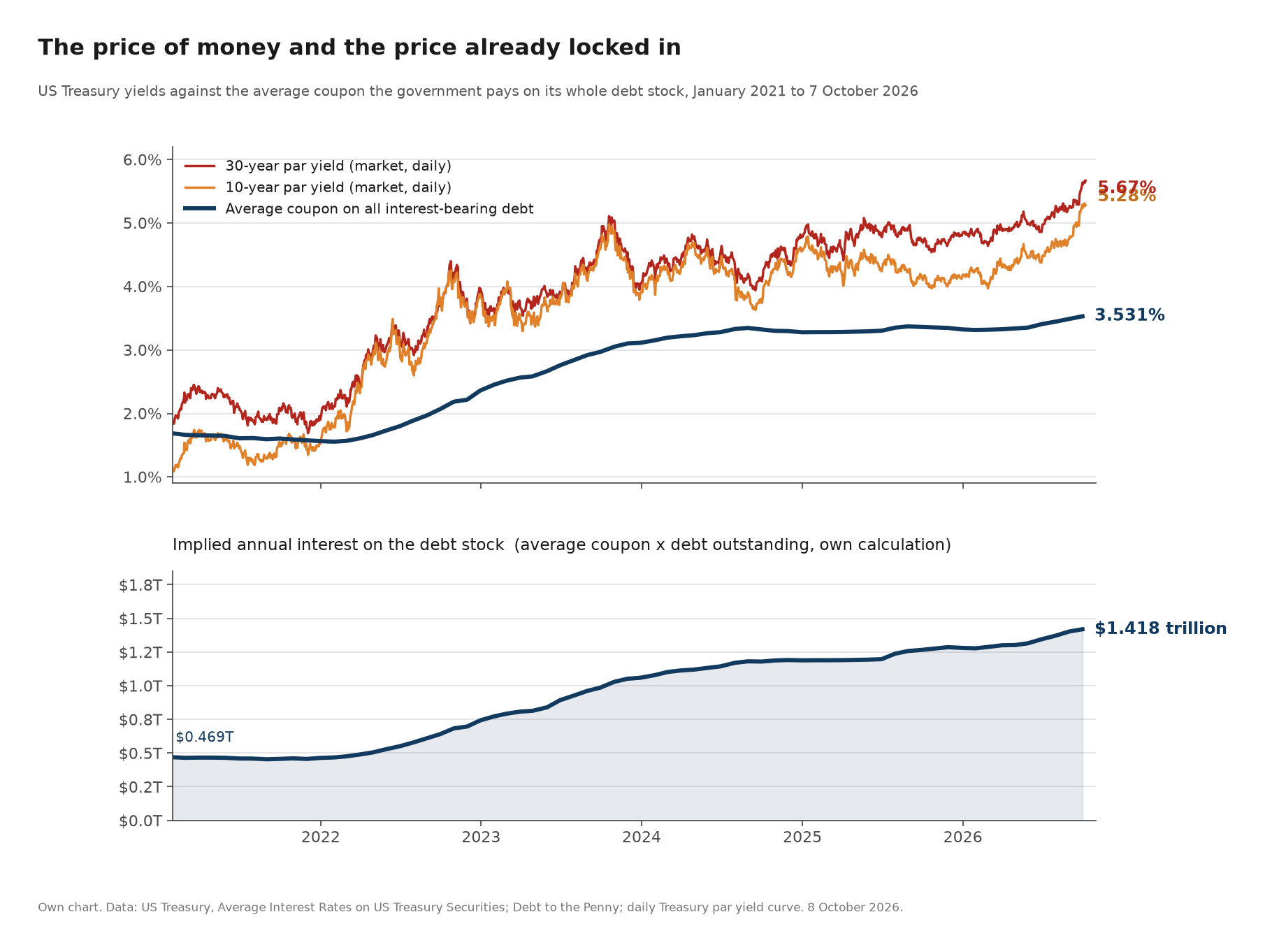
Ten-year money cleared at 5.300% and the 30-year at 5.67%, the highest since 2001. The existing debt still pays 3.531%. That gap is 703 billion dollars a year, and it is a schedule, not a forecast.
-

Europe's Next Bailout Is Being Priced In Right Now
France pays 23.5 bp more to borrow than Italy, with a far better rating. The OAT-Bund spread hit a 14-year high of 152 bp. The arithmetic behind a eurozone rescue, and why this one cannot be talked down the way 2012 was.
-
Ninety-Nine Basis Points of Reality
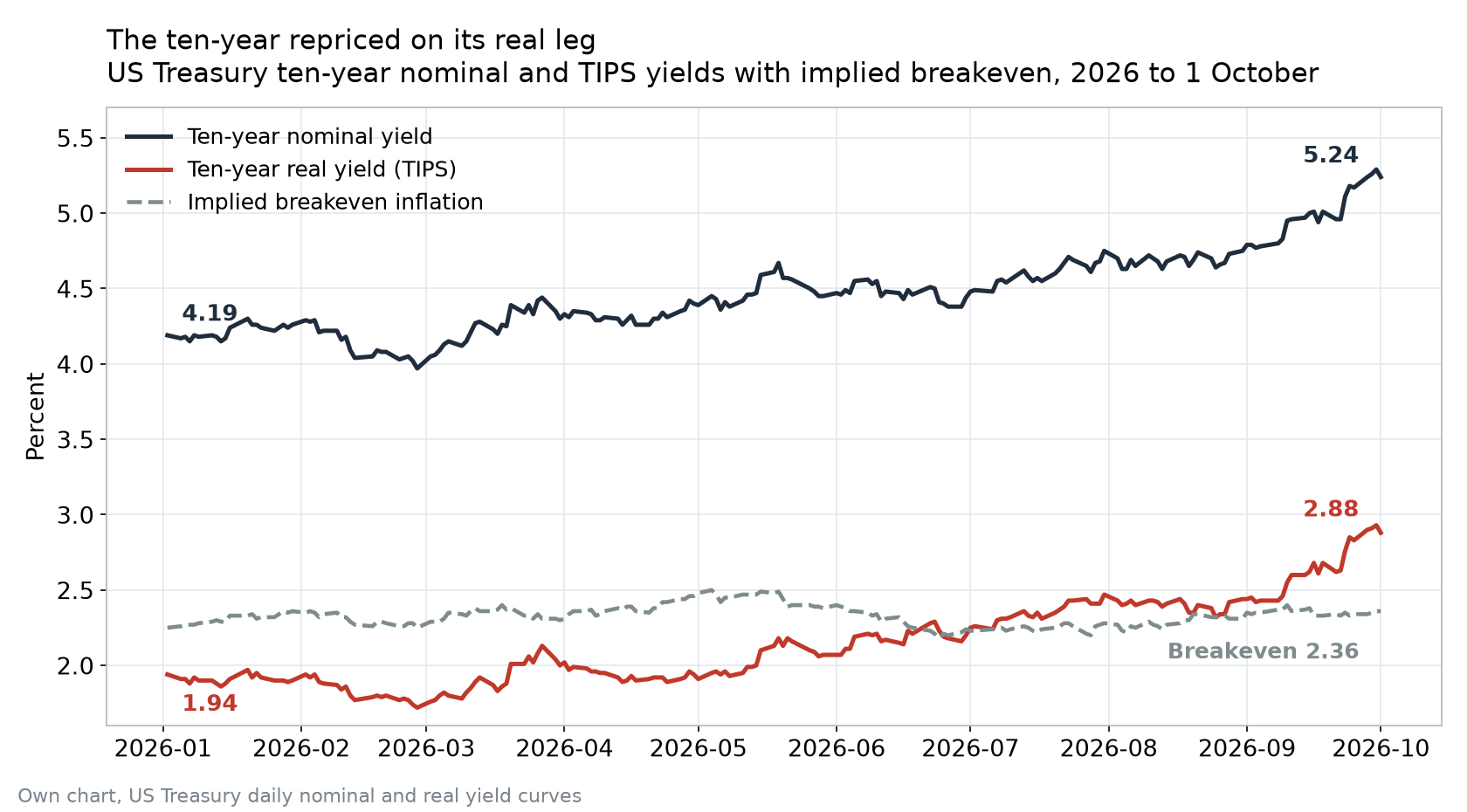
The ten-year hit 5.29 on 30 September, a 2002 level, and 99 of the 110 basis points this year came from the real yield, not from inflation. France now borrows more expensively than Italy, Japanese capital is coming home, and the mortgage rate reached 7.28 percent. The price of capital rose without a crisis, and the fixed-supply asset traded with the Nasdaq through all of it.
-
The Limits Europe Is Drawing
Three lines are being drawn across Europe this year, and only one of them is on a ballot. A market repriced France above Italy without a vote. A central bank is waiting for permission to name the maximum balance a citizen may hold. A finance ministry has put a date on the end of the one-year tax exemption. Own data, own charts, and the Austrian reading of what the three have in common.
-
The Long End Repriced First
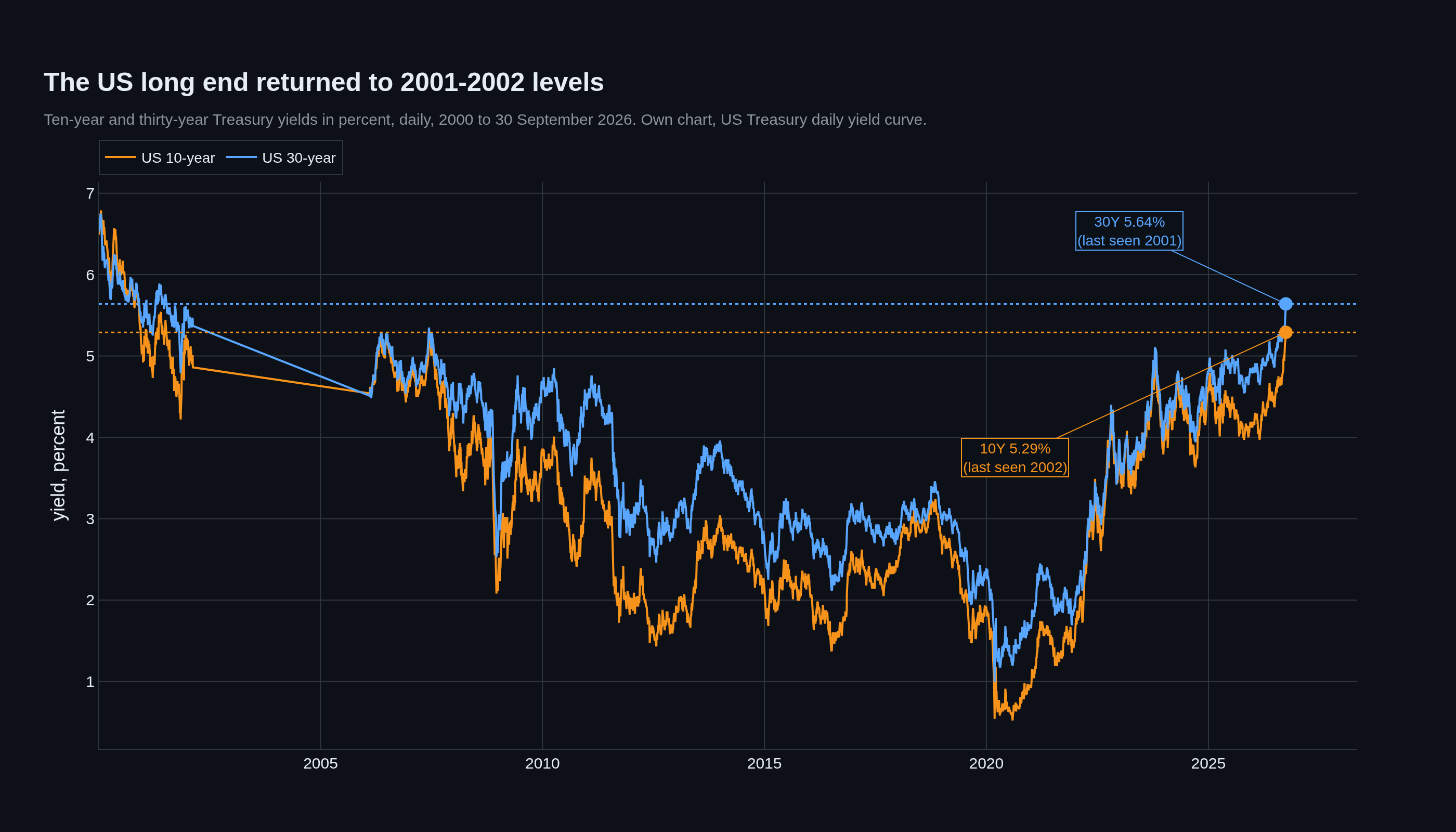
The US ten-year Treasury closed at 5.29 percent on 30 September, its highest since May 2002, and 99 of the 110 basis points of this year's rise came from the real yield rather than inflation. Japan cut 135 billion dollars of Treasuries while its own ten-year broke 3 percent for the first time since 1996. Two government disability datasets broke trend in the same month. What the long end is repricing is capital itself, and the fixed-supply asset traded with the Nasdaq instead.
-
The Run That Happened in the Spread
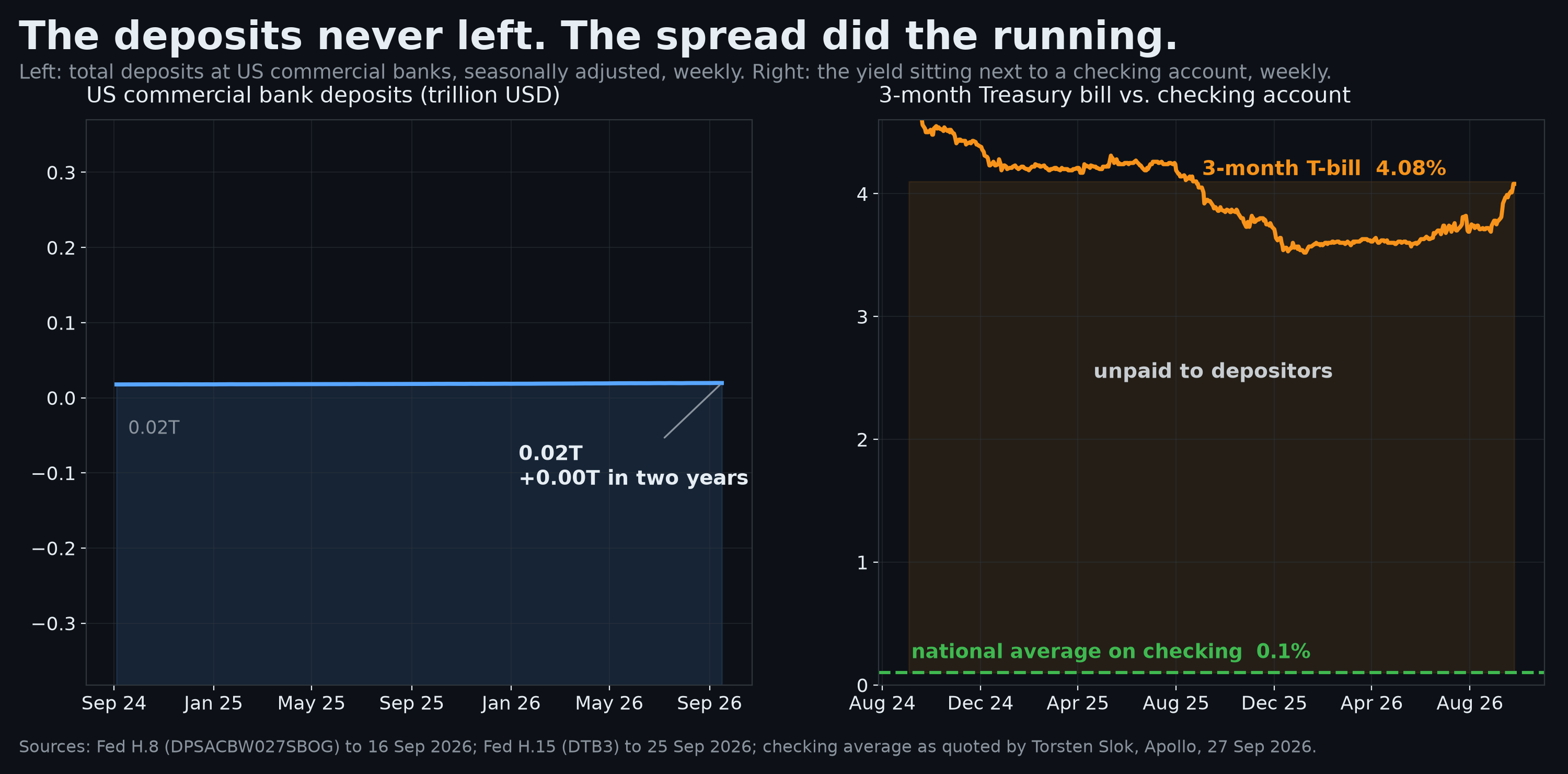
Torsten Slok warned AI agents could trigger a bank run by sweeping cash out of near-zero checking accounts. US commercial bank deposits grew by 1.19 trillion dollars over the same twelve months. The money never left the system; the spread did the running.
-
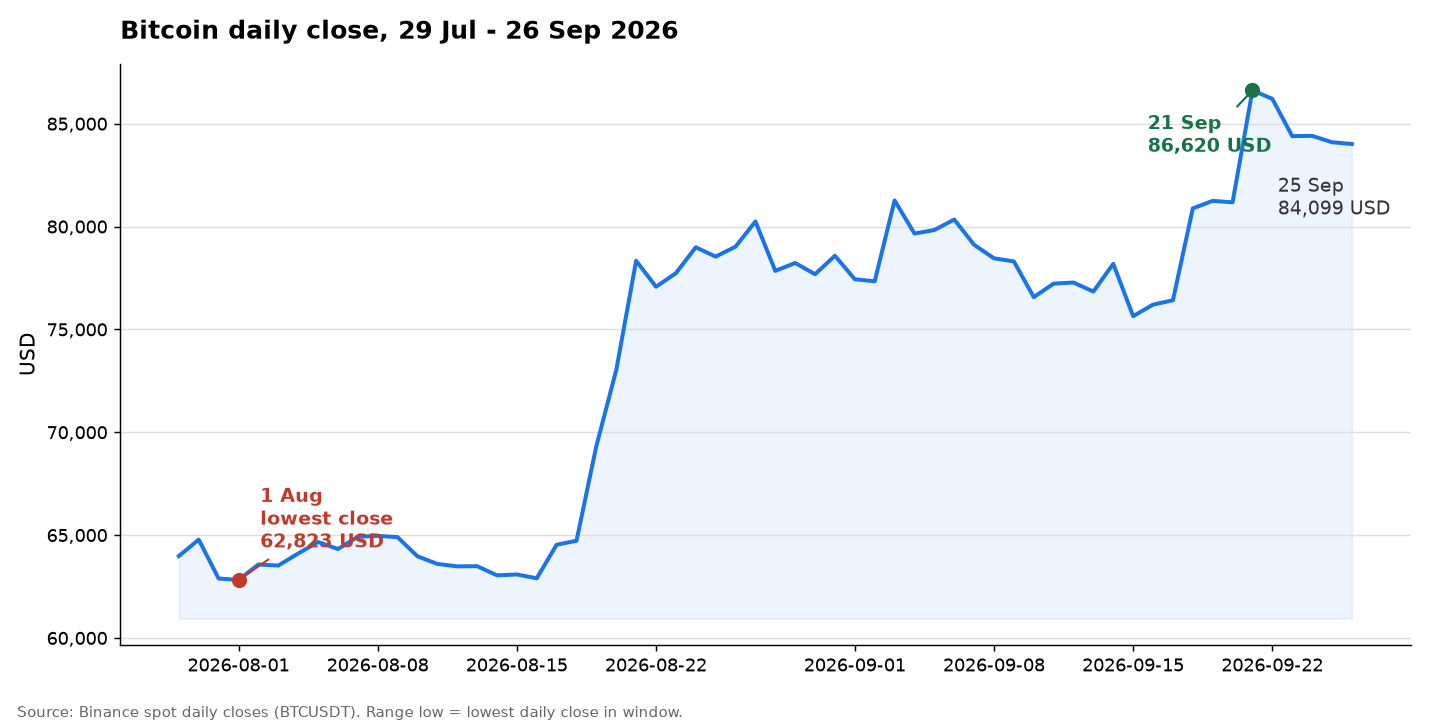
The Ledger Moves Before the Wallet
A 10-year gilt at 5.35 percent and a 1650s bread price list in three currencies describe the same thing: a unit of account is repriced in the long bond, long before anyone changes the price on a shop shelf. UK yields are the loudest version of the problem, and bitcoin against gold is where it shows up first.
-
A $70 Billion Refusal
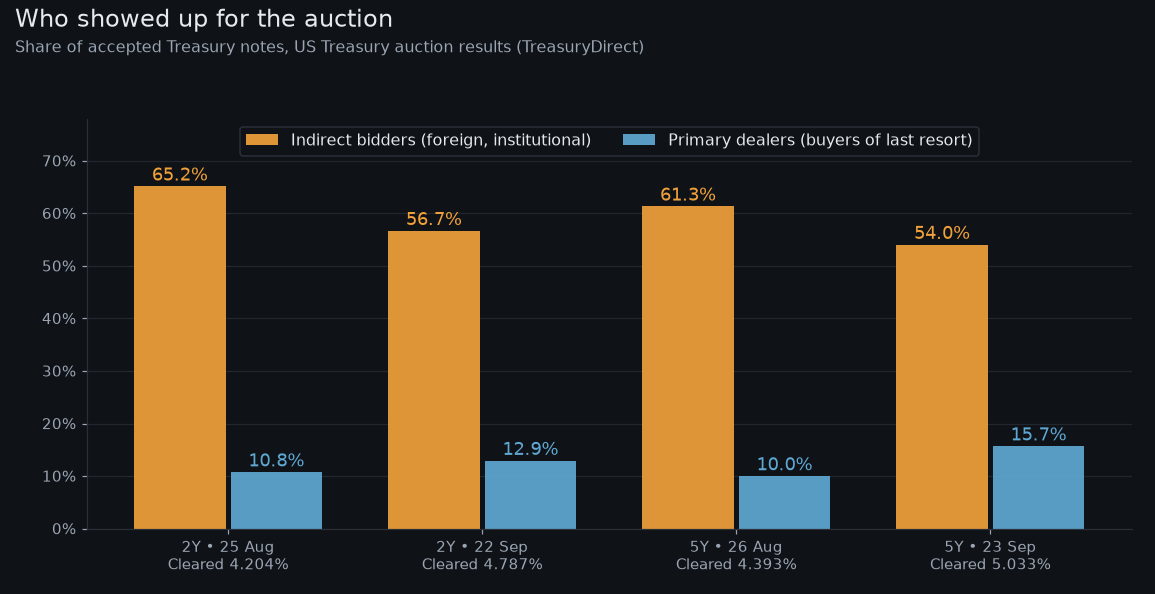
The US Treasury sold $70 billion of five-year notes at 5.033%, 64 basis points above August. Indirect bidders took 54% instead of 61%; primary dealers absorbed 15.7%. A failed price, not a failed payment - and the only asset in the room with no auction to fail.
-
The Indicator Blinks
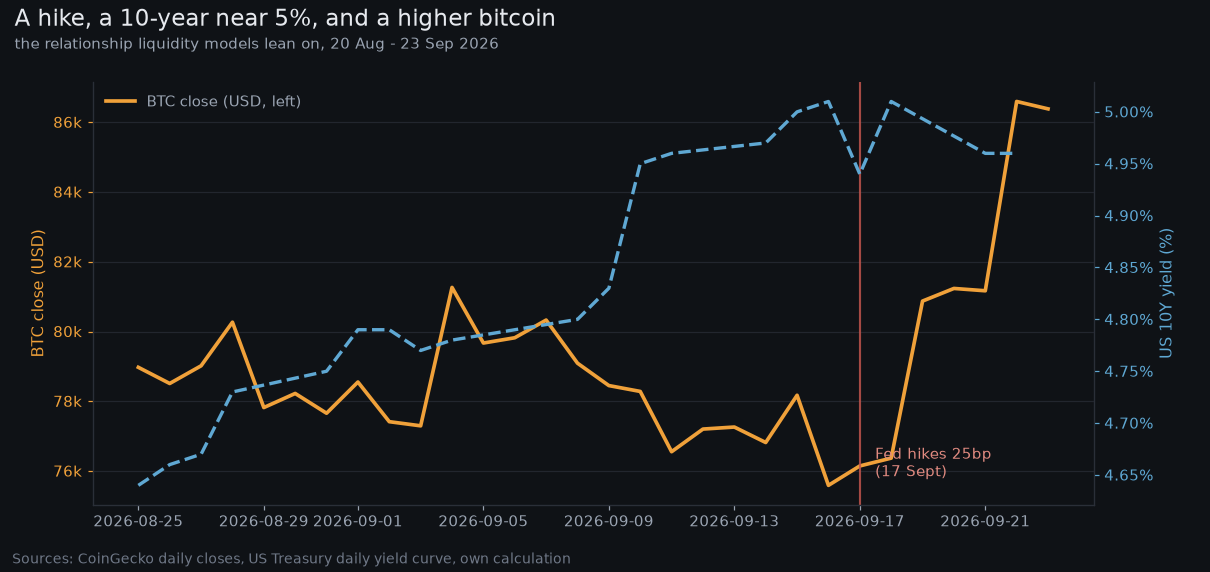
The Fed raised rates into a supply-shock inflation problem for the first time in three years, the 10-year pushed toward 5%, and bitcoin rallied anyway. A liquidity model admits it is not working - and the reason says more about the Fed's trap than about the tape.
-

The Exits Are Always Quiet First
Saudi Arabia left the mBridge CBDC platform in May 2025 and the world found out sixteen months later. The same week, diesel hit a record $6.51 and two of the largest suppliers reached for the same lever: a ban. Permissioned systems fail quietly, and the instrument is always permission.
-

The Ledger They Kept
The ECB launched Pontes on 21 September 2026 — a permissioned ledger for tokenised securities settled in central bank money. The 126-page service description names the whitelist, the issuer node that mints, and the certificates that replace proof-of-work. The vocabulary is decentralisation; the architecture is a gate.
-
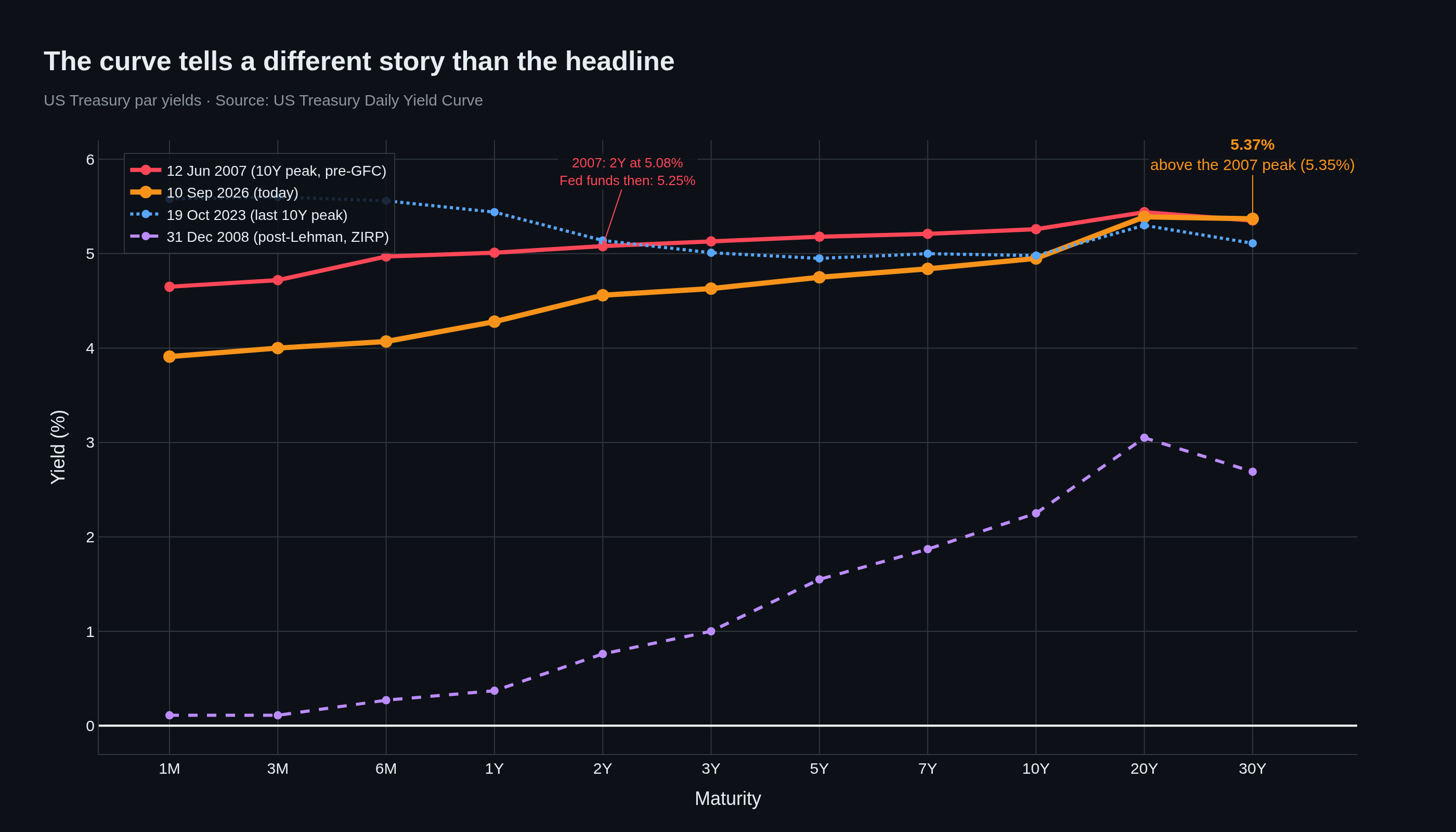
The Bond Market Is Not 2007. It's Worse.
The 30-year Treasury at 5.37% has passed the 2007 peak, but the curve, the debt load and the mechanism are entirely different. What financial repression does to savers, and what it means for Bitcoin.
AI & Agents 12
-

Dessa Learned to Talk Without Ever Reading a Word
Block trained a speech model from scratch on human speech alone: no text, no pipeline, full-duplex. What that changes, where it lands first, and what is still missing.
-

The Instruction That Waits
Persistent memory turned prompt injection from a bad session into a standing position. Three papers published on one day measure how little of the stack anyone checks: memory writes across three commercial assistants, harness coverage across 265 confirmed vulnerabilities, and a registry where half the benign packages cannot name a source you could build from. Then the counter-example: a signed Bitcoin Core release whose one real fix closes a privacy promise the code did not keep.
-

The Roadster That Flew for Three Seconds
Tesla put a car in the air for three seconds. An argument about what that makes possible, what it costs in energy, and why the farewell matters more than the flight.
-

Effectively Abandoned
An AI model funded its own job from a wallet it judged 'effectively abandoned'. Four days later: an index provider, a central bank, a war bill nobody voted for, and a proposed court rule on whether a record is believed. Five stories, five perimeters, one untouched ledger.
-

Nobody Regulates a Session
Washington restricts chips crossing borders; Tencent rents 100,000 of them offshore for $7bn. New York restricts new data centres; a 104 MW plant on Seneca Lake is not new. Four chokepoints in one autumn, one architecture error - and Bitcoin's oldest record is now live.
-

Momentum Is Not Solvency
Broadcom's CEO called AI investors casino gamblers on 12 October, while his own firm arranges 145 billion dollars of chip-backed debt for those same buyers. The invoices are already in the mail: 469,719 US bankruptcies in nine months, European gas at 85.88 euros a megawatt hour, and bitcoin held below 86,000 dollars by a liquidity drain.
-

You Cannot Forge a Rounding Rule
A Senate report puts the AI grid bill on ratepayers, a contractor admits to 2.5 billion dollars of forged chip licenses, and bitcoin climbed into a liquidity headwind anyway. The one number in this trade that nobody administers is the supply cap.
-

The Unknown Difficulty
Nick Bostrom says the alignment problem has three possible difficulty levels and nobody knows which one we face. The one case that rewards effort is the one we cannot rule out.
-

The Third Party in the Room
Why talking to an AI agent through a cloud messenger puts a third party in the room, and what changes when you hold the key instead. Measured against Telegram's own disclosure figures and the Marmot protocol.
-

The Agent Economy Will Run on Keys, Not Accounts
Agentic commerce forecasts range from $190bn to $17.5tn — a 92x spread that tells you the methodology does not exist. Meanwhile 87% of CIOs run agents in critical operations and only 25% can see them. The constraint on autonomous agents is not capital or model quality: it is that nobody can prove what they did. Why Bitcoin, Lightning and Nostr provide the three things enterprise governance is failing to deliver.
-
THE BITCOIN AI LETTER — March 2026
A factual analysis of AI industry reality check: unproven business models, military capture, compute centralization. What AI newsletters miss: Compute = Energy = Money.
-
THE AI NEWSLETTER INDUSTRIE
A critical look at the AI newsletter industrial complex. What they cover, what they miss, and why Bitcoiners should care.
Freedom & Security 10
-
Nobody Checked the Intermediates
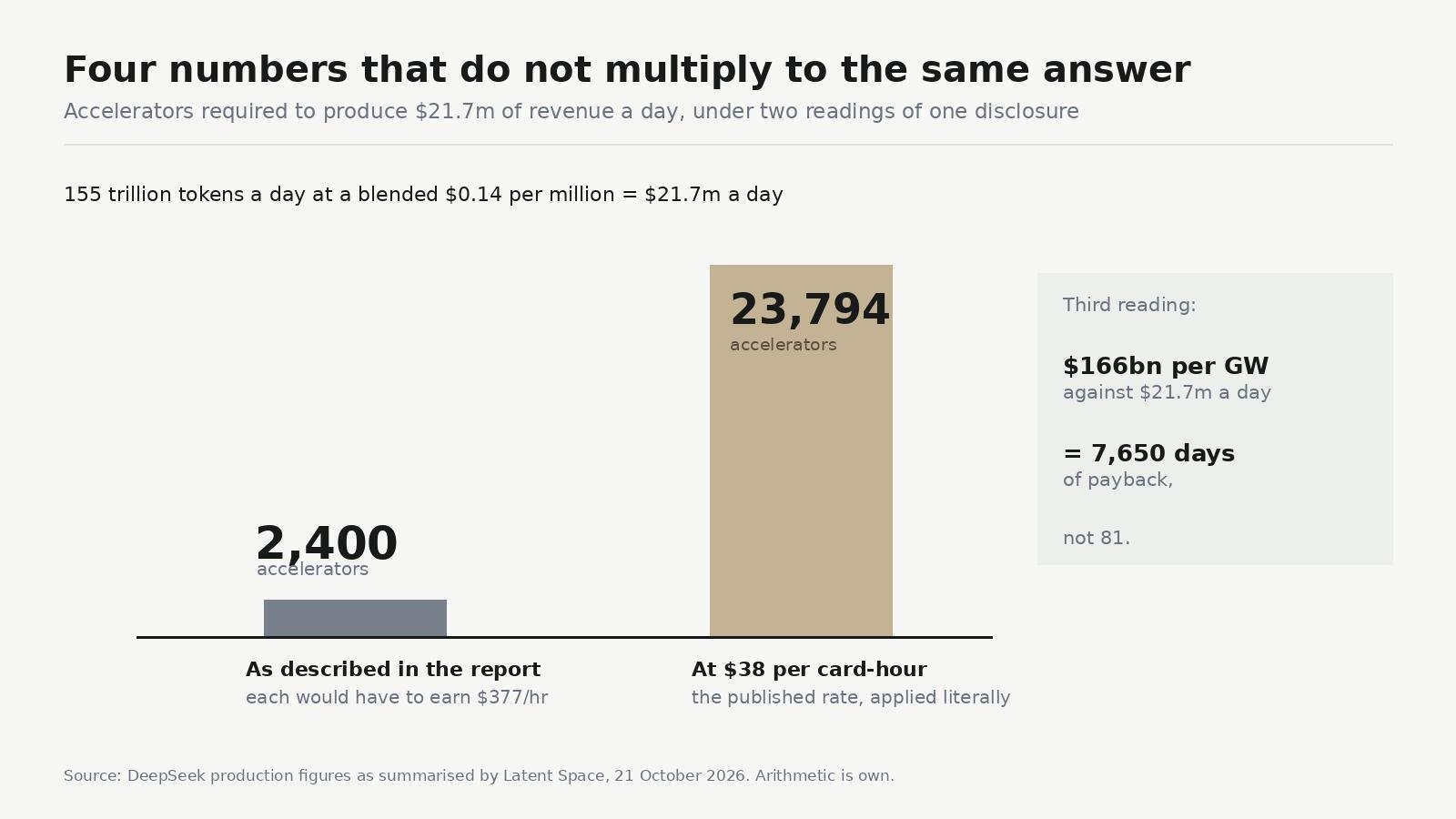
Eight compromised certificate-authority keys, 4,000 phantom sidechain coins, $14.2bn of debt against GPUs whose rental rate an open-source release just repriced, and a 15% perpetual preferred sold against a 10% expectation. Four markets, one failure mode: the backing was asserted, not measured.
-

The Rulebook Has Two Prices
The OCC documented five years of political debanking across all nine megabanks and imposed nothing. FinCEN fined Bank of America more than $1.2bn for seven years of unreported suspicious activity, and no executive was charged. Two Samourai developers, whose software never held a customer's coin, are in prison. Then a Ledger device arrived with an implant that read the seed during setup. A week about gates, prices, and what a holder can verify.
-
The Part You Cannot Patch
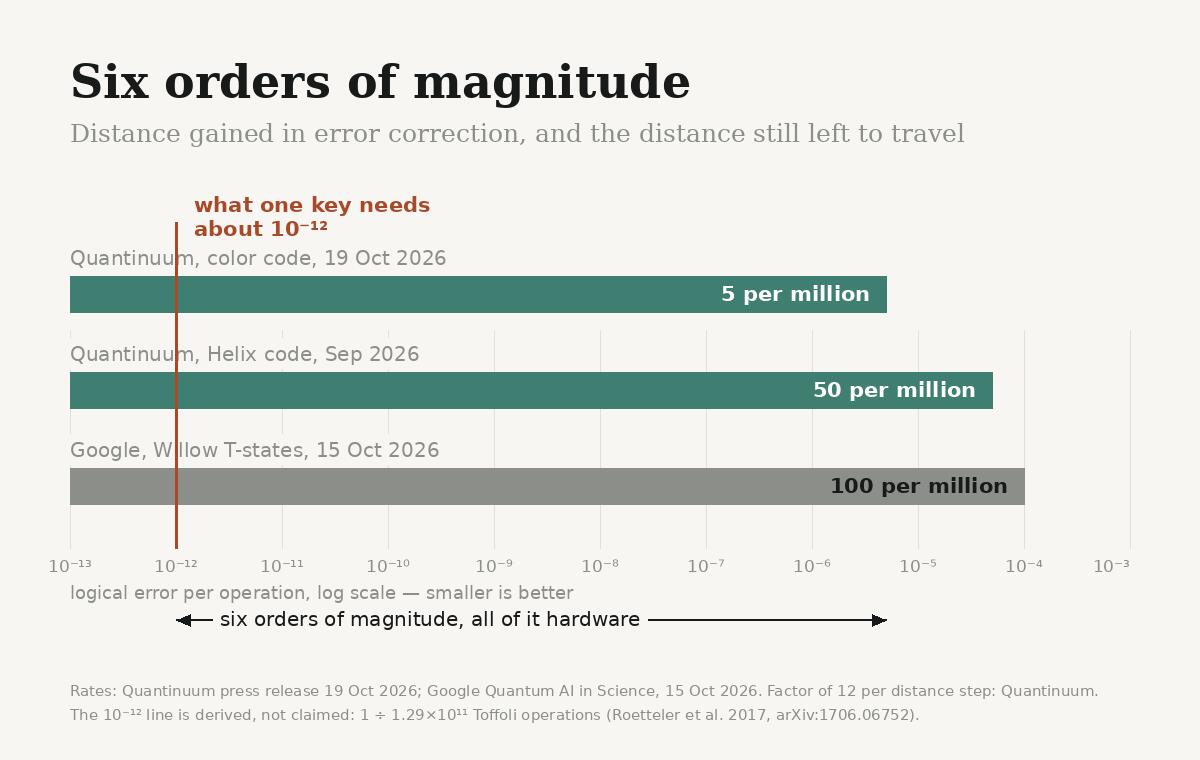
A quantum error-correction record and a federal exclusion order arrived in the same week. Both describe legacy objects whose secrets are already public, and how slowly a system moves off an assumption it has already broken.
-

Nobody Broke the Math
The cryptography held in every loss that mattered this year, and the perimeter around it failed every time. Brazil found four seed phrases on infected devices, a reseller moved more than 86 million dollars, an AI tool read 25,000 loan files in Seoul, and the one risk that cannot be patched runs at two percent a year.
-

The Rules Travel With the Asset
Cardano wrote freeze and seizure into its token standard, Tether froze a payments firm's working capital for 378 days with no court order, and Spain re-approved rent decrees its parliament had just rejected. Three faces of one mechanism: the rules now travel with the asset.
-
The Phone That Forgets You
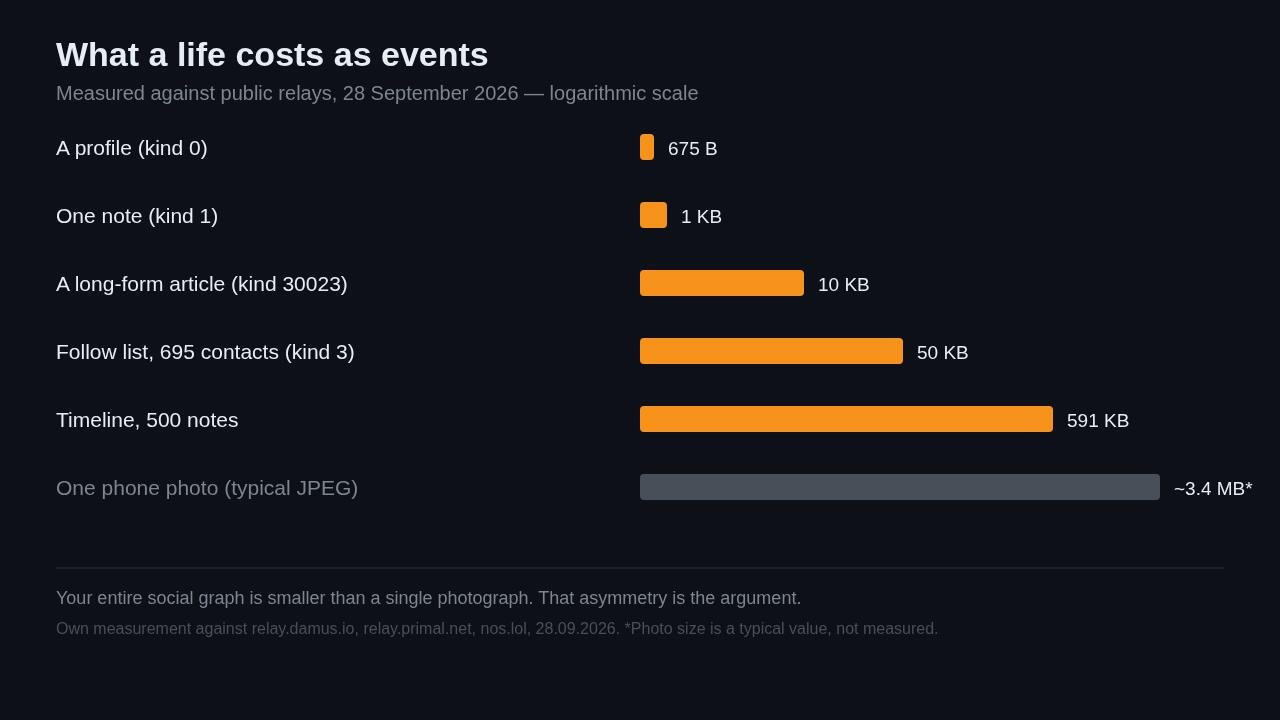
An operating system whose identity and configuration live on Nostr relays rather than on the device: what already runs, what it would actually take — bootloader architecture, carrier certification, unfunded drivers, and an EU that named the lock but legislated around it — and why twelve words in your head are more yours than any handset.
-

The Informant and the Hot Wallet
Brazil's central bank now files reports on every self-custody withdrawal above $10,000, effective 1 October. Four days earlier Bitget froze withdrawals on a $351.6M hot-wallet breach. Surveillance built on intermediaries inherits their fragility.
-

The Point Where You Decide to Trust
A four-year bug in Zcash found in one day by an AI agent, $116 million drained from Coldcard wallets in 41 minutes, and an OFAC sanction that never touched the protocol. Three different attacks, one target: the place where a human delegates trust.
-

Sanctions Built the Door. Crypto Walked Through It.
Iran just let traders settle export earnings in Tether and Bitcoin. The twist: the issuer can freeze every USDT. A look at the numbers — 0B through Iran in 2025, 75M frozen — and what currency controls look like when the escape hatch is open source.
-
YOUR DATA IS THE PRODUCT
Why Payback and loyalty programs are surveillance capitalism in disguise. The Bitcoin case for cash and data sovereignty.
Practice & Guides 4
-

The 17.3-Gigabyte Question
Two image models, one graphics card: Qwen-Image-2.1 against Z-Image Turbo, 30 prompts each. Qwen needed 17.3 GB of weights on a 12 GB card and was 2.65 times slower — but the interesting part is where the time actually goes, and which model wins on sharpness versus tone.
-

Build Your Own Site on Nostr
No server, no account, no bill. A step-by-step guide to publishing your own website on Nostr, written from actually building one - including the three failures that produce no error message.
-

Spin Up a Hermes Agent: Agentic AI Without Handing Over Your Business
What it takes to run a Hermes agent on your own hardware, why a local model cannot do the job, and why renting the intelligence is the sensible half of the deal.
-

One String Decides Where Your Reply Lands
NIP-10 replies built with nostr-sdk carry a 'reply' marker and no root tag, so clients read them as standalone notes. Your replies appear in your own feed; the people you answered never see them. The fix is one keyword argument, and the bug leaves a fingerprint you can count on your own account.


