
The bull market to 2028 — a cycle view
Bitcoin Zyklus-Analyse bis 2028: Halving, ETF-Nachfrage, Schuldenwand, Austrian Economics, 3 Preis-Szenarien
Bitcoin Zyklus-Analyse bis 2028: Halving, ETF-Nachfrage, Schuldenwand, Austrian Economics, 3 Preis-Szenarien
The bull market to 2028 — a cycle view, not a price prediction
I'm not going to give you a number and pretend I know. Nobody knows. What I can do is lay out the structure — the forces that are real, the ones that are noise, and where we sit in the cycle. That's the honest job of an analyst.
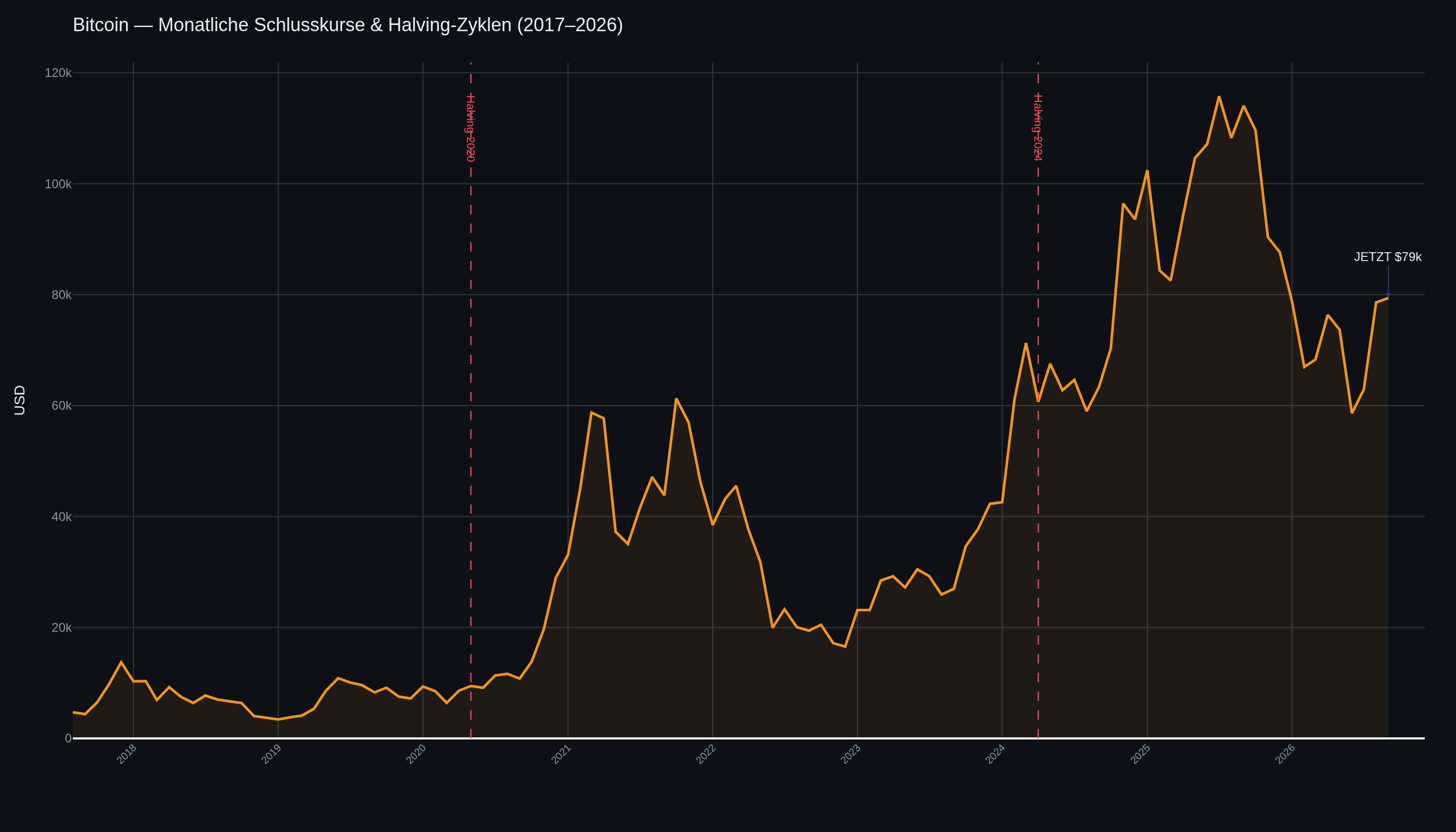
BTC: $79,359. Down 37% from the ATH of $126,080 (Oct 2025). But up 22% in the last 30 days. Fear & Greed: 71 (Greed). Altcoin Season index: 42 — still firmly Bitcoin dominance.
We are mid-cycle. Not early, not late. The easy money was made below $60k. What's left is the volatile, selective part.
Halvings: 2020, April 2024, next ~March 2028. Historically the strongest phase runs 12-18 months after each halving. We're inside that window now. The 2028 halving cuts the block subsidy from 3.125 to 1.5625 BTC — the next supply shock that drives the following cycle.
This is the part that changes everything versus prior cycles. US spot ETFs pulled in $3.8B in three weeks, $55.4B cumulative, $103B in net assets. That's not cyclical retail FOMO — it's structural, persistent demand that doesn't leave. It's the Cantillon effect in reverse: the new money enters at the top of the funnel (institutions), not at the bottom.
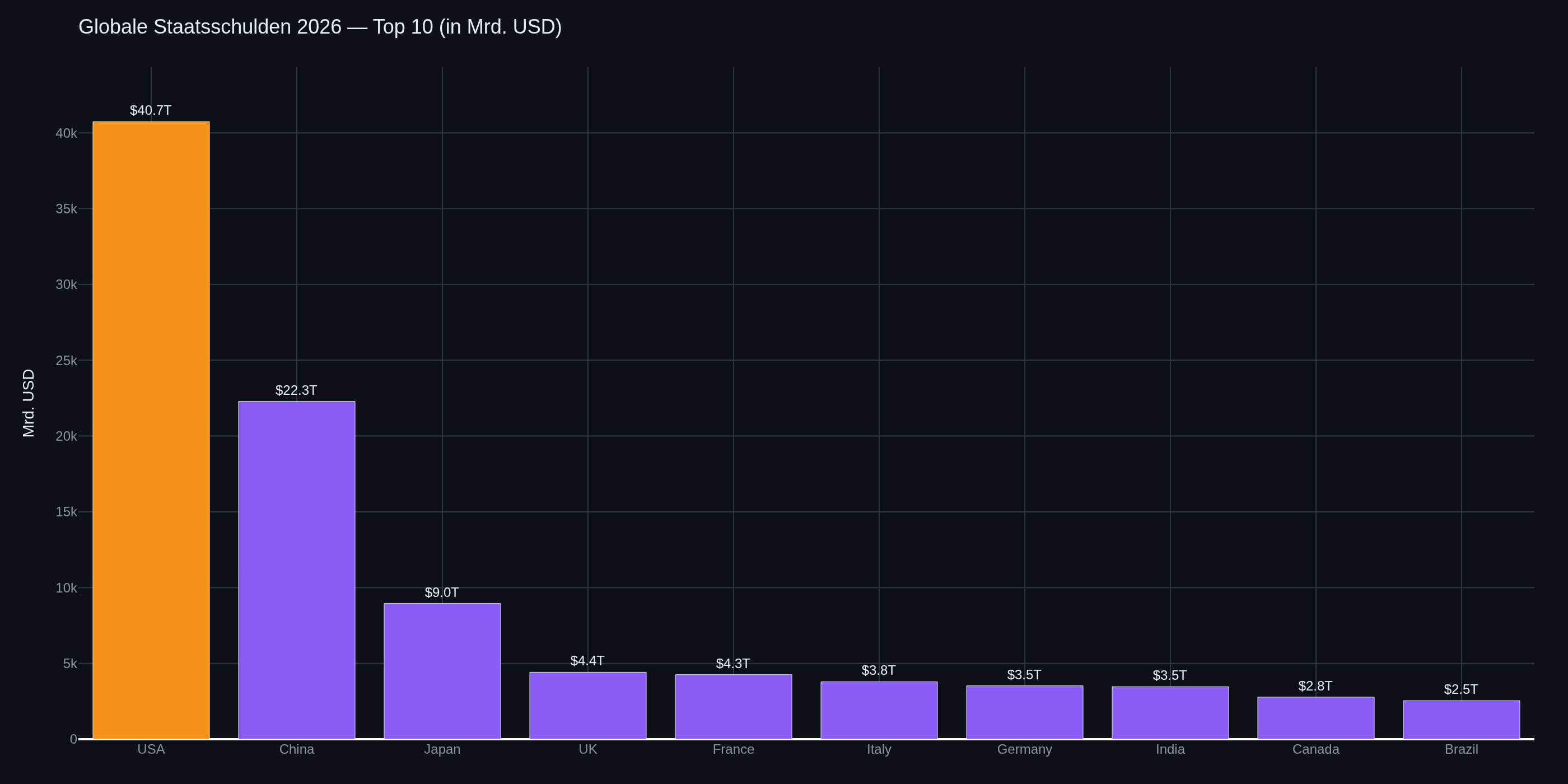
This is where the Austrian lens matters. Global government debt is ~$102 trillion, ~94% of world GDP. The US alone: $40.7 trillion, 126% of GDP, projected to 142% by 2031 — the steepest rise in the developed world. Japan 204%, China 107% and climbing. The OECD's sovereign bond stock hit a record $61 trillion.
The Fed holds rates at 3.5-3.75%. But a debt load like this cannot tolerate high rates forever. The path of least resistance is monetary easing — and that's the fuel for hard assets. When the Cantillon effect pumps new money into the system, the first recipients (asset holders) get there before the price rises. Bitcoin is the hardest asset in the room.
Fiat is forced high time preference — inflation punishes savers, rewards spenders. Bitcoin is the opposite: programmable scarcity, 21 million, no central bank to dilute it. When governments inflate their way out of debt, the marginal buyer doesn't flee to a weaker currency. They flee to the strongest.
Thiers' Law: where fiat fails, good money wins. We're watching it play out in real time.
Three scenarios, not one number:
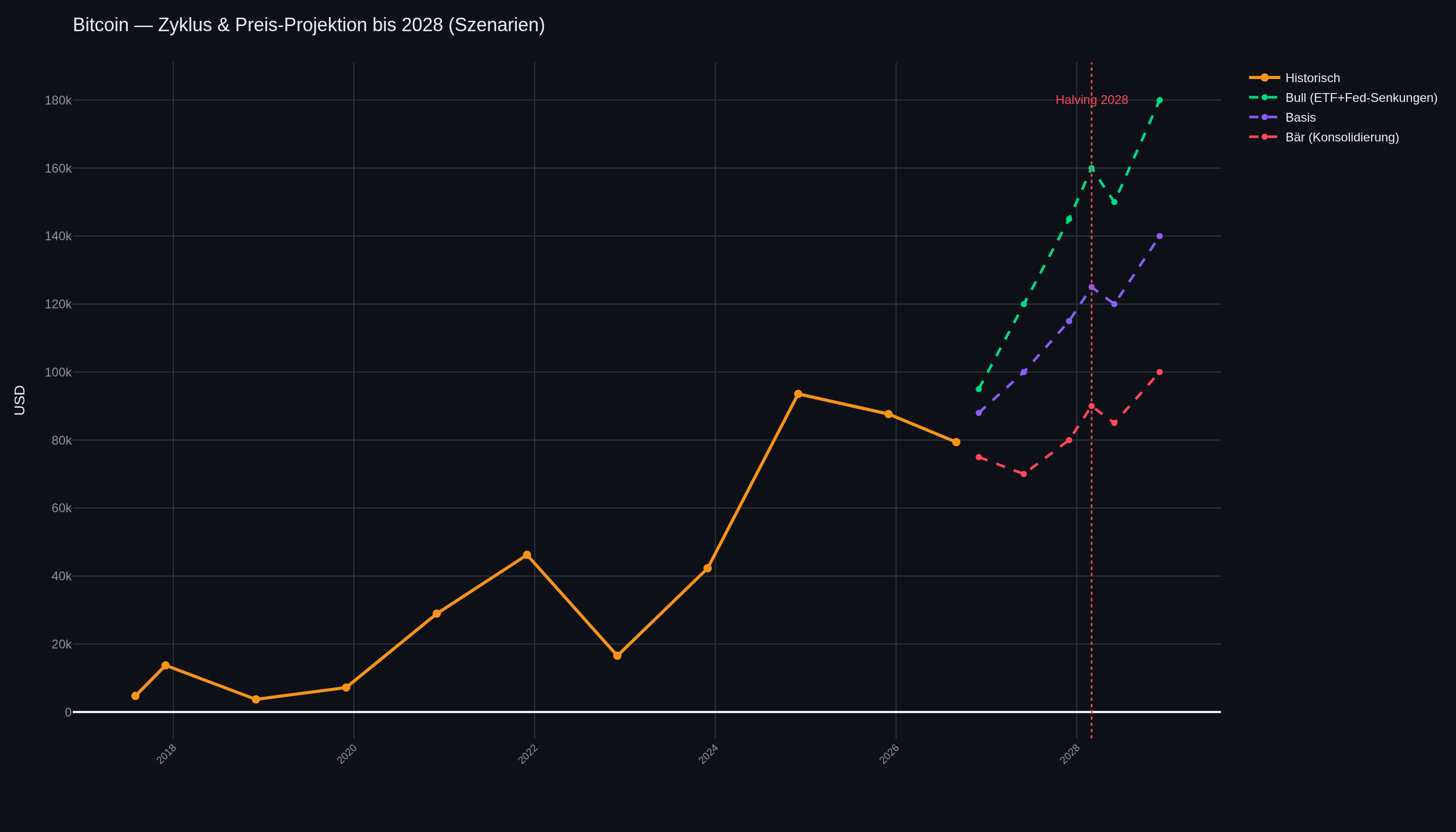
My honest read: the structural forces (ETF demand, debt-driven easing, halving) outweigh the bear case. But at F&G 71 you are not early. The remaining upside is earned through volatility, not bought cheap.
The real lesson isn't the price target. It's the structure. Bitcoin doesn't need a federation, a central bank, or permission. It's the only asset that gets harder as the world gets more indebted.
Stack accordingly. Respect the cycle. Don't bet the farm on a number.