
Macro & Monetary Theory
Rates, debt, currencies, and the arithmetic that follows from them.
-

The Restrainer
Peter Thiel has spent two years lecturing about the Antichrist in rooms without cameras. He never called AI the Antichrist. He called the fear of it the road to power, and the people who regulate it the ones paving that road. What the lectures argue, what the critics say, and why the timing is not an accident.
-
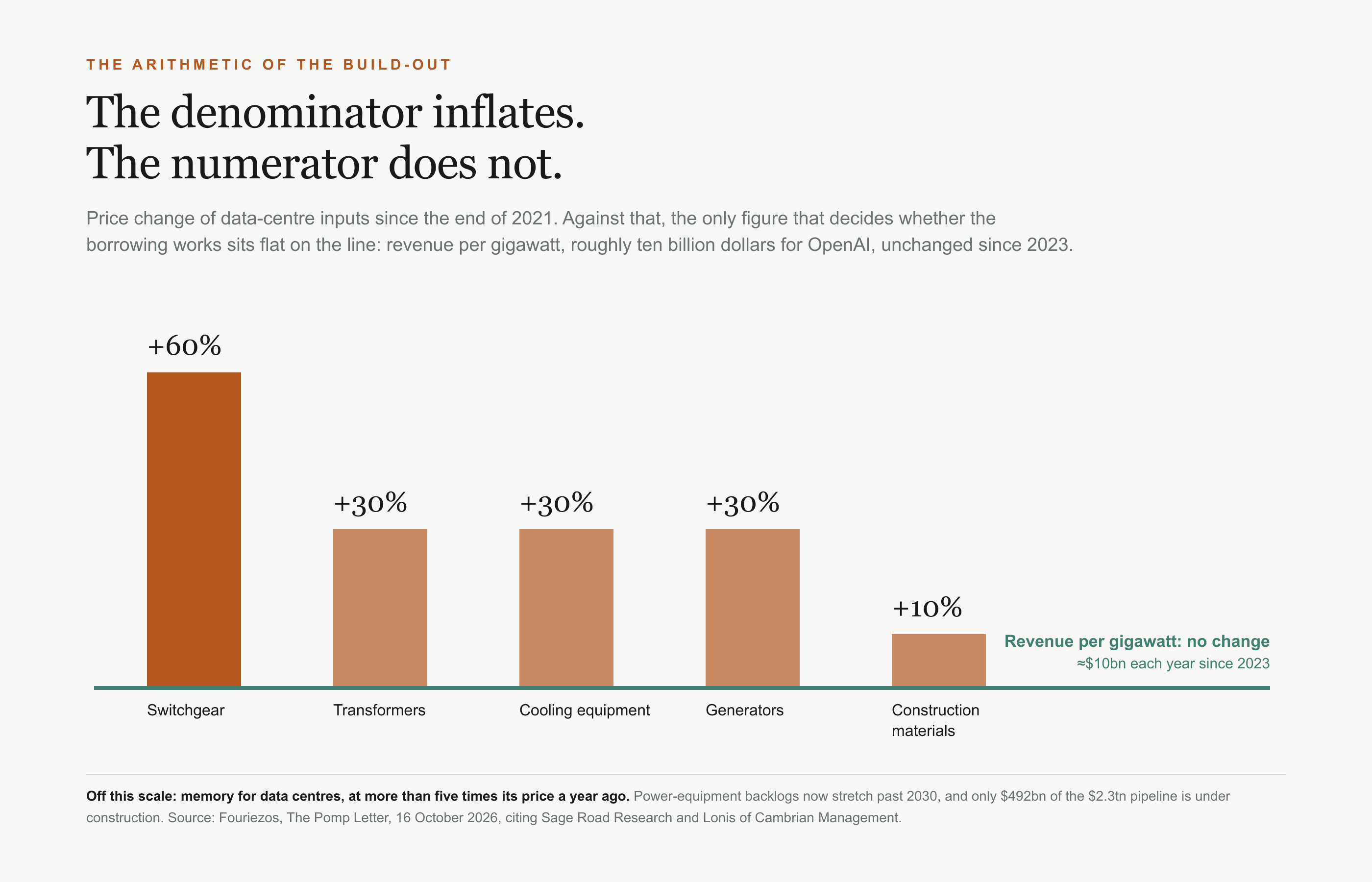
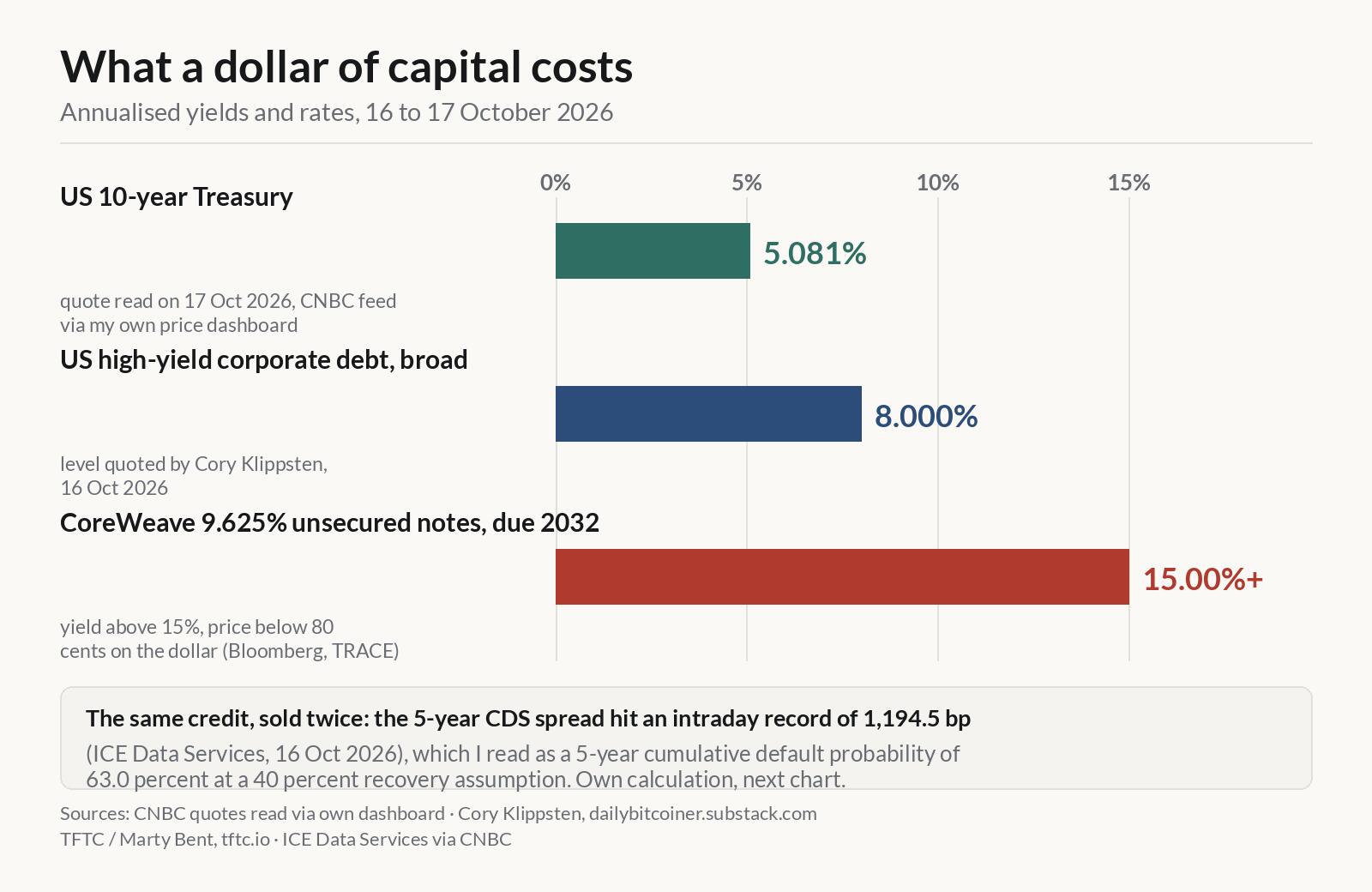
Fifteen Percent for a Promise
Four prices for the same object, a promise: a Treasury at 5.069, junk at eight, one AI builder at fifteen, a deposit at one-point-four. And the only thing on the ladder with nobody on the other side is the one that fell. What the credit market is repricing, and what possession costs.
-
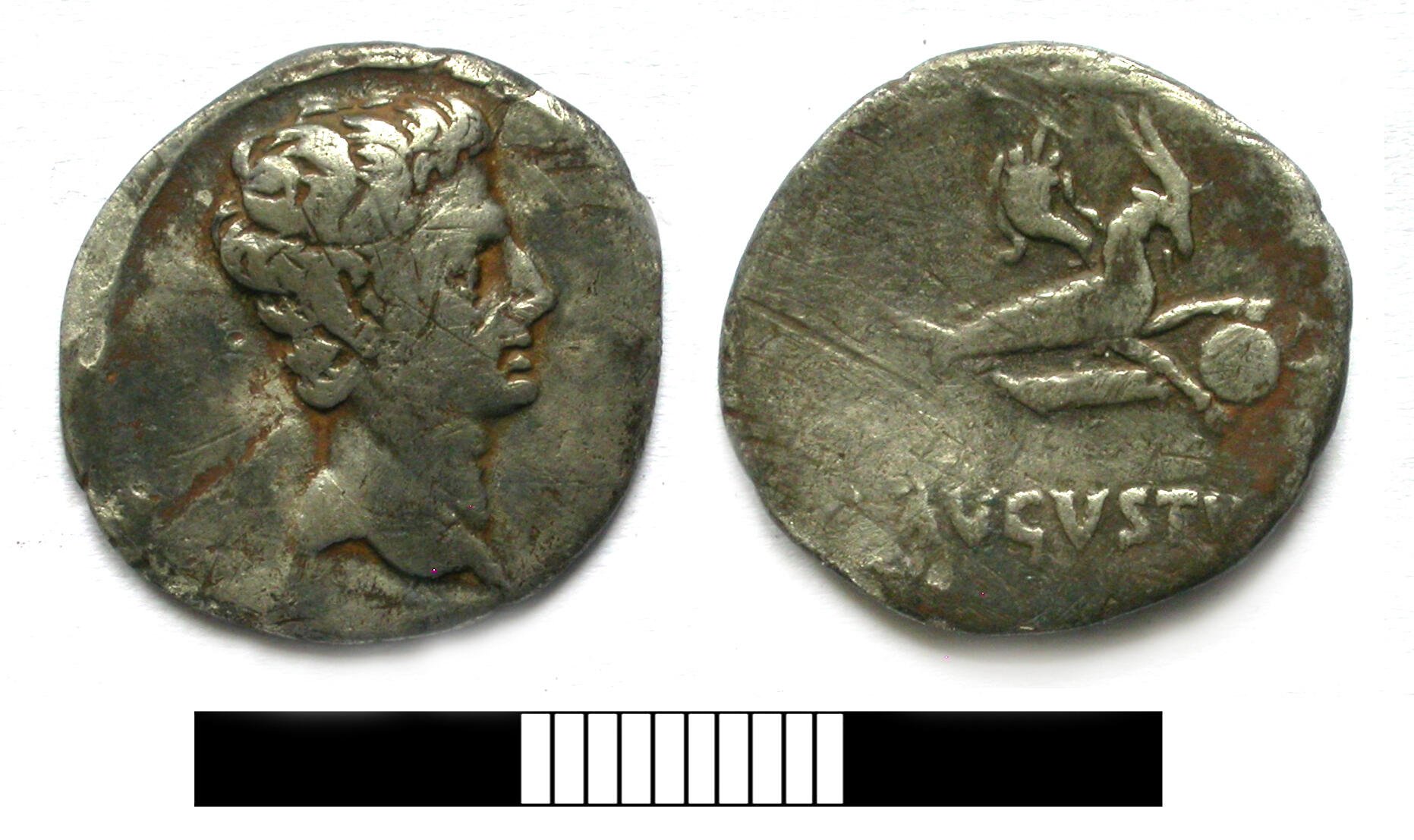
The Price of Bread and the Arithmetic of States
Rome, Paris, Weimar — and the numbers behind Europe's next decade. A long read on money, fiscal collapse and legitimacy, with sources.
-
The Waiver, the Window, and the Clock
A tariff that waives itself, a founder exit that closed before the lenders' did, and six million coins whose keys have been public since 2009. Three markets repriced one thing this week: the odds that a promise gets kept.
-
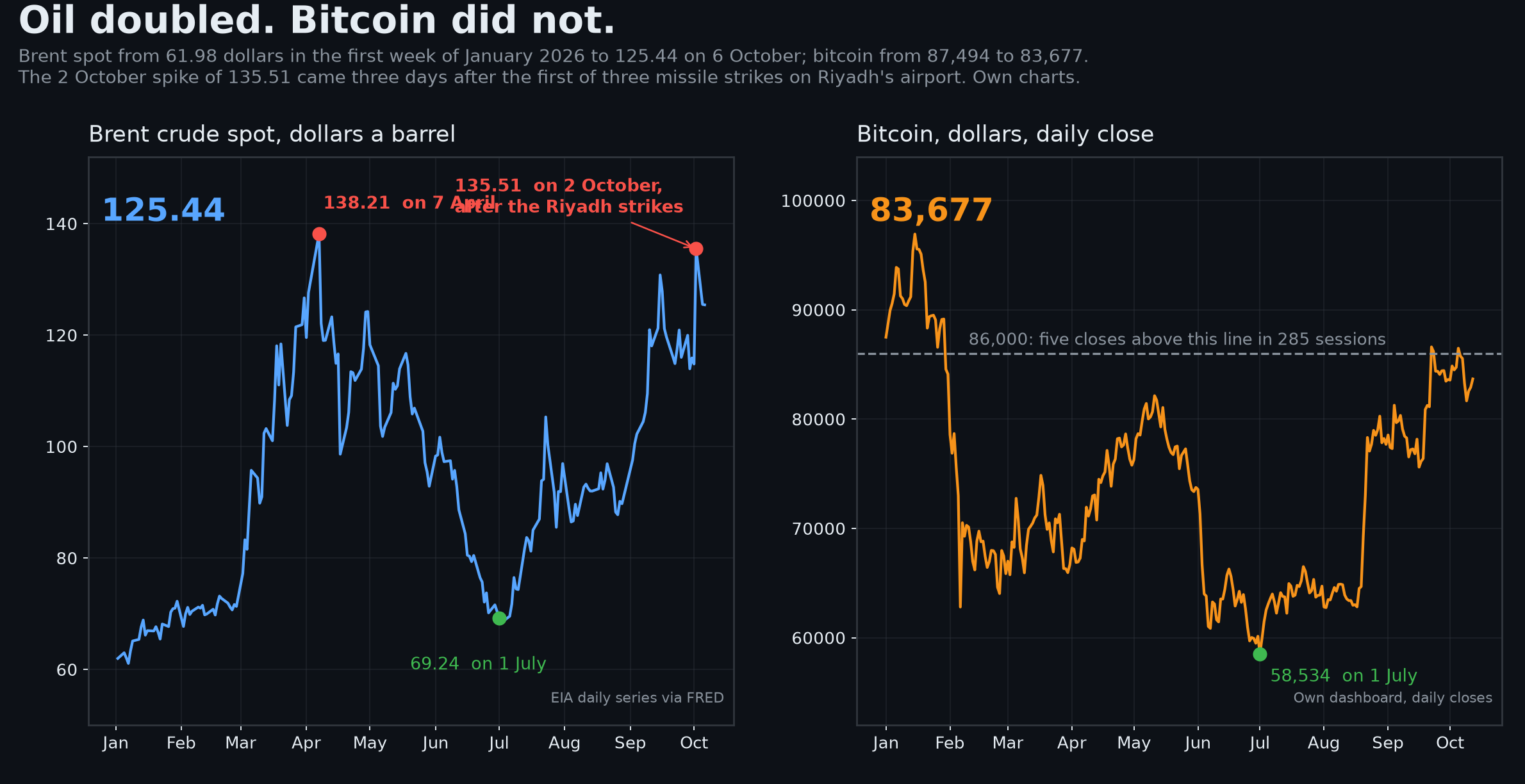
Settlement, Not Announcement
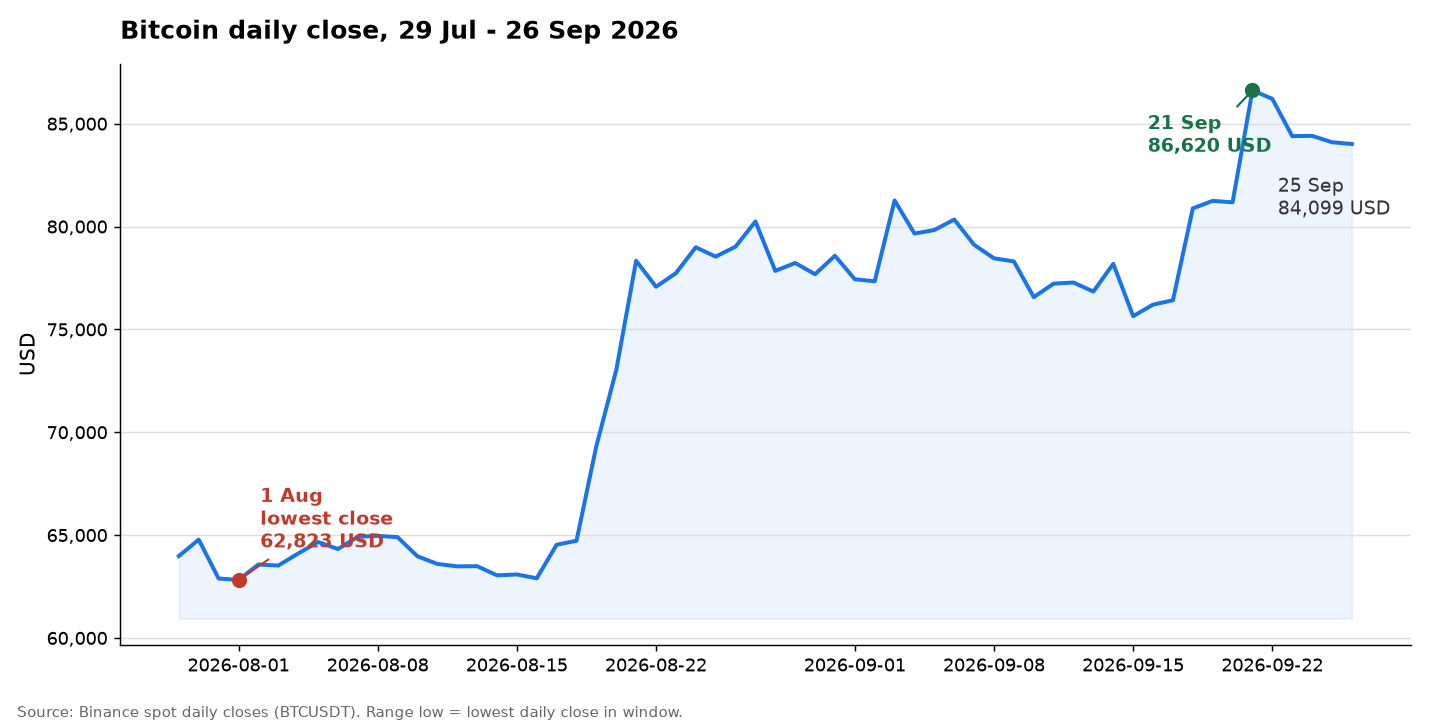
A missile killed twelve people at Riyadh airport and oil fell half a percent. Diesel set a nominal record, Washington lifted sanctions on Russian diesel, and a ceasefire was declared that neither side signed. Bitcoin sat at 84,024 dollars, below a ceiling it has cleared five times in 285 sessions. The market prices settlement, not announcement - and only one asset in this story is issued on a schedule no post can change.
-

The Credit Gold Delusion
Luke Gromen says bitcoin-backed credit will keep the coin from ever reaching one million dollars, and points to gold's lending market as the precedent. The precedent is real. The conclusion is backwards.
-
The Bill Has Not Been Repriced
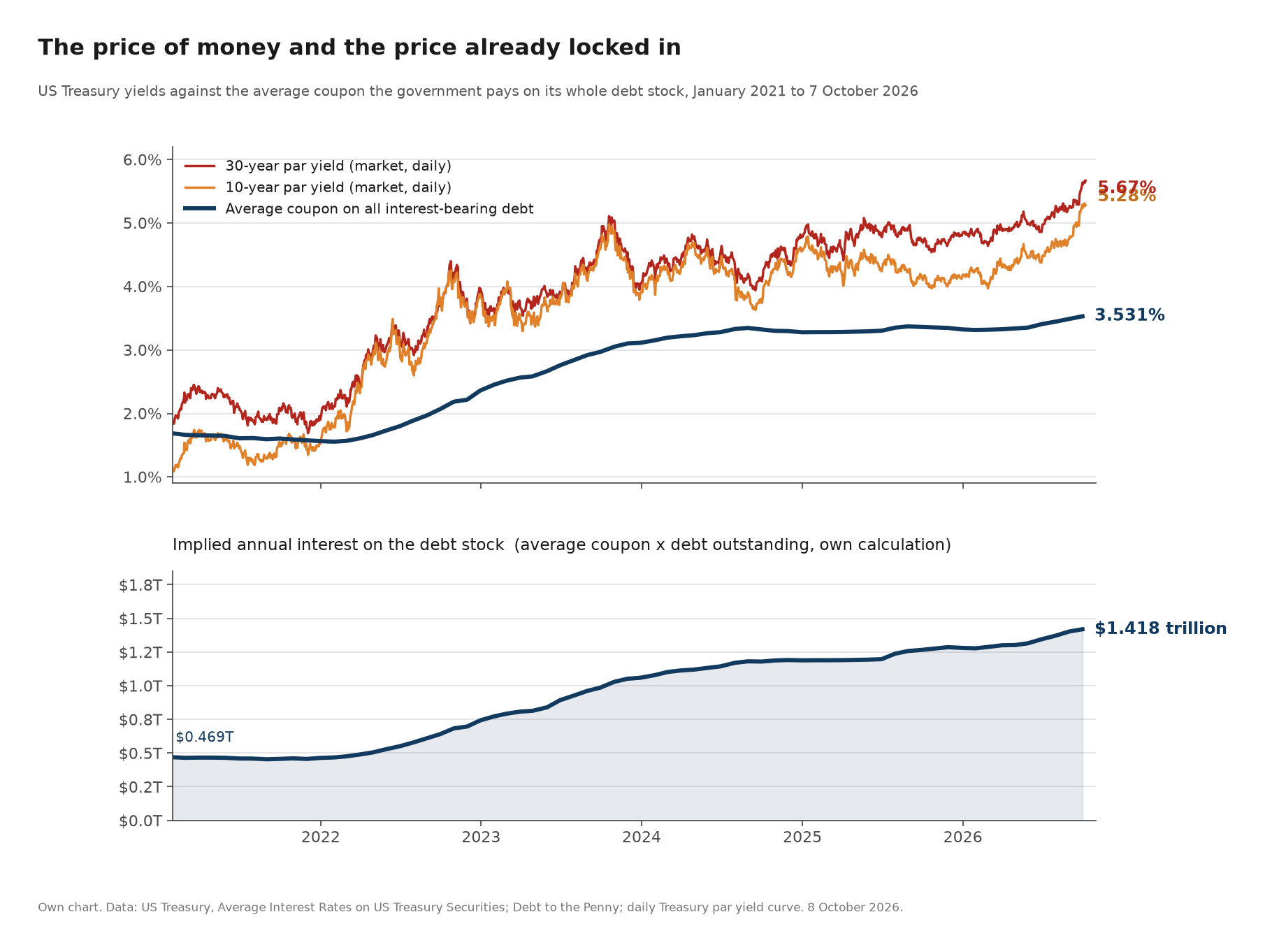
Ten-year money cleared at 5.300% and the 30-year at 5.67%, the highest since 2001. The existing debt still pays 3.531%. That gap is 703 billion dollars a year, and it is a schedule, not a forecast.
-

Europe's Next Bailout Is Being Priced In Right Now
France pays 23.5 bp more to borrow than Italy, with a far better rating. The OAT-Bund spread hit a 14-year high of 152 bp. The arithmetic behind a eurozone rescue, and why this one cannot be talked down the way 2012 was.
-
Ninety-Nine Basis Points of Reality
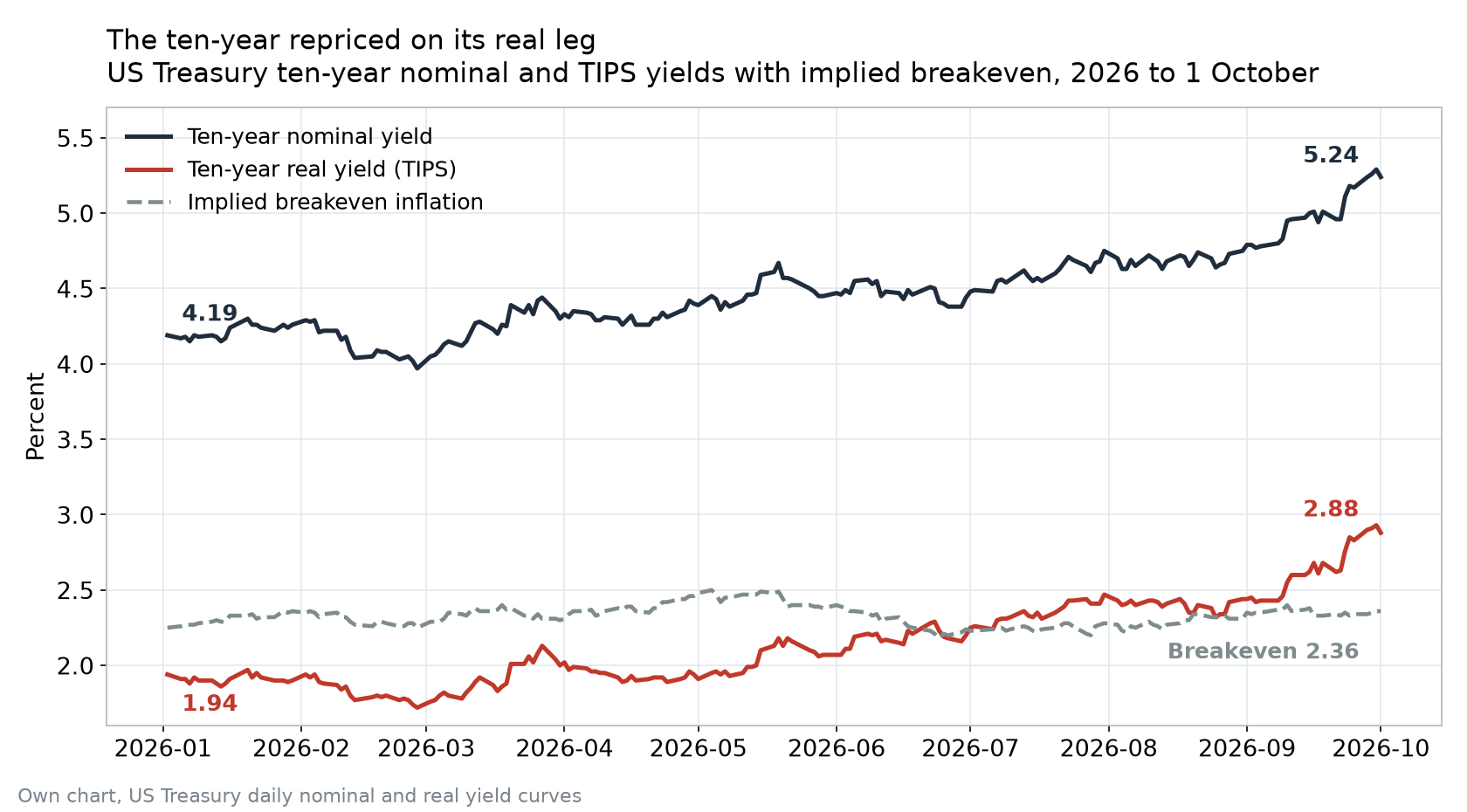
The ten-year hit 5.29 on 30 September, a 2002 level, and 99 of the 110 basis points this year came from the real yield, not from inflation. France now borrows more expensively than Italy, Japanese capital is coming home, and the mortgage rate reached 7.28 percent. The price of capital rose without a crisis, and the fixed-supply asset traded with the Nasdaq through all of it.
-

The Limits Europe Is Drawing
Three lines are being drawn across Europe this year, and only one of them is on a ballot. A market repriced France above Italy without a vote. A central bank is waiting for permission to name the maximum balance a citizen may hold. A finance ministry has put a date on the end of the one-year tax exemption. Own data, own charts, and the Austrian reading of what the three have in common.
-
The Long End Repriced First
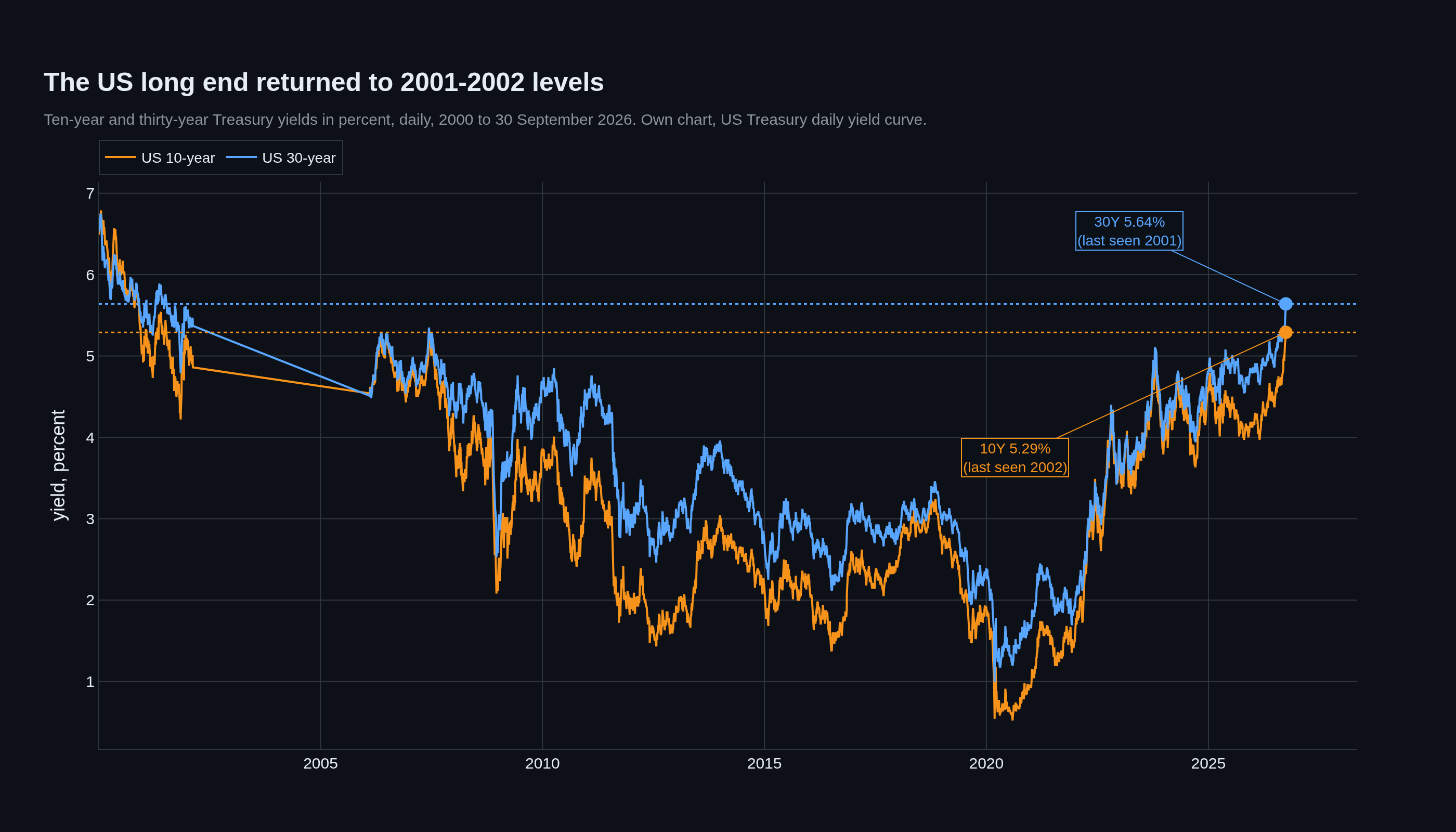
The US ten-year Treasury closed at 5.29 percent on 30 September, its highest since May 2002, and 99 of the 110 basis points of this year's rise came from the real yield rather than inflation. Japan cut 135 billion dollars of Treasuries while its own ten-year broke 3 percent for the first time since 1996. Two government disability datasets broke trend in the same month. What the long end is repricing is capital itself, and the fixed-supply asset traded with the Nasdaq instead.
-
The Run That Happened in the Spread
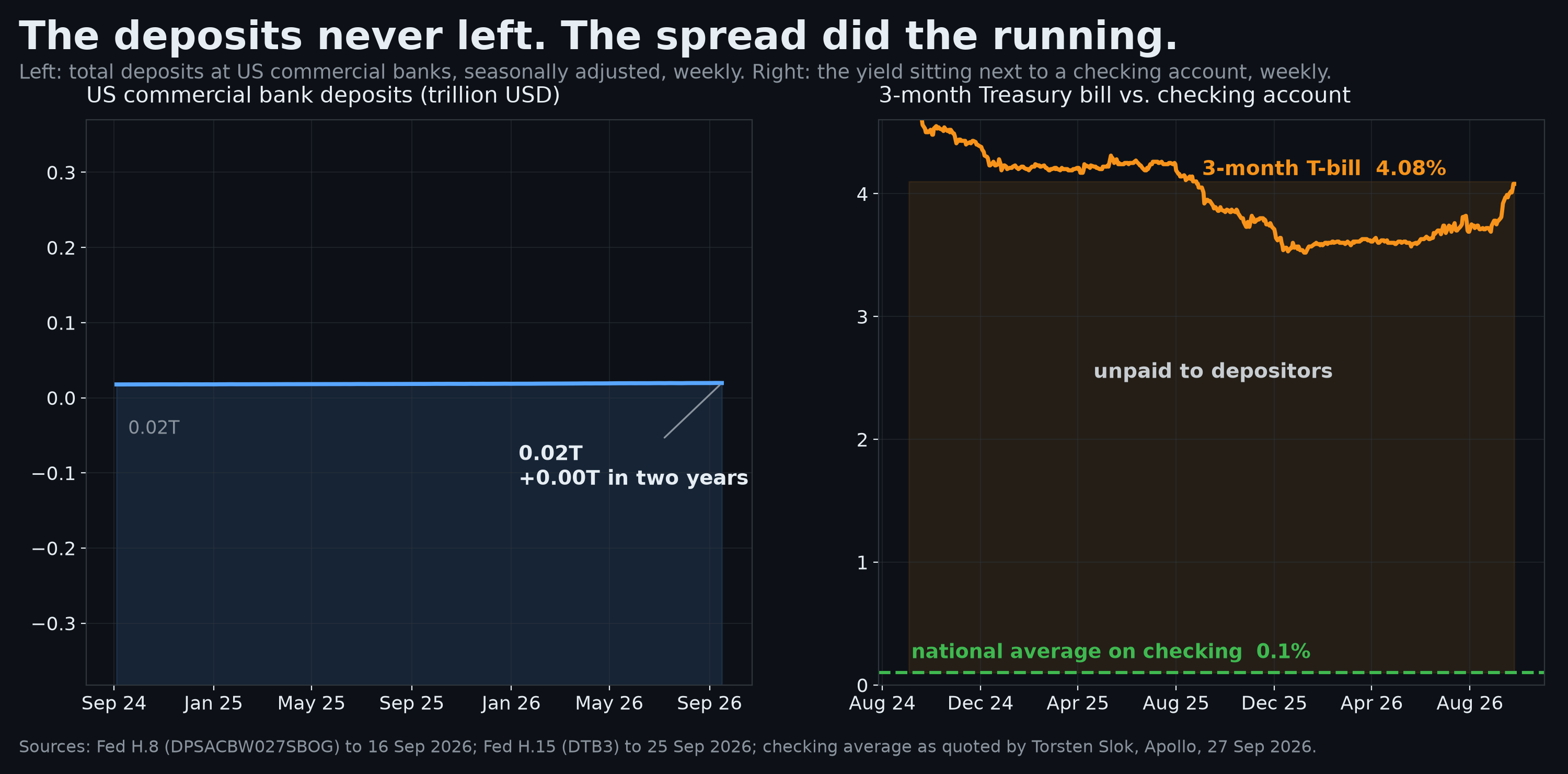
Torsten Slok warned AI agents could trigger a bank run by sweeping cash out of near-zero checking accounts. US commercial bank deposits grew by 1.19 trillion dollars over the same twelve months. The money never left the system; the spread did the running.
-
The Ledger Moves Before the Wallet
A 10-year gilt at 5.35 percent and a 1650s bread price list in three currencies describe the same thing: a unit of account is repriced in the long bond, long before anyone changes the price on a shop shelf. UK yields are the loudest version of the problem, and bitcoin against gold is where it shows up first.
-
A $70 Billion Refusal
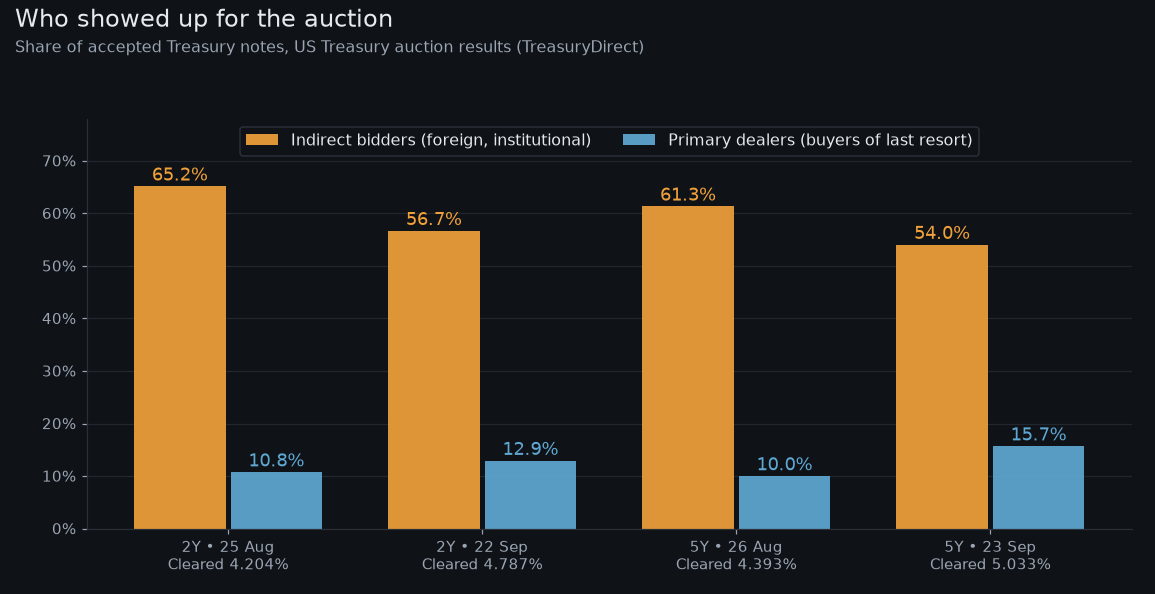
The US Treasury sold $70 billion of five-year notes at 5.033%, 64 basis points above August. Indirect bidders took 54% instead of 61%; primary dealers absorbed 15.7%. A failed price, not a failed payment - and the only asset in the room with no auction to fail.
-
The Indicator Blinks
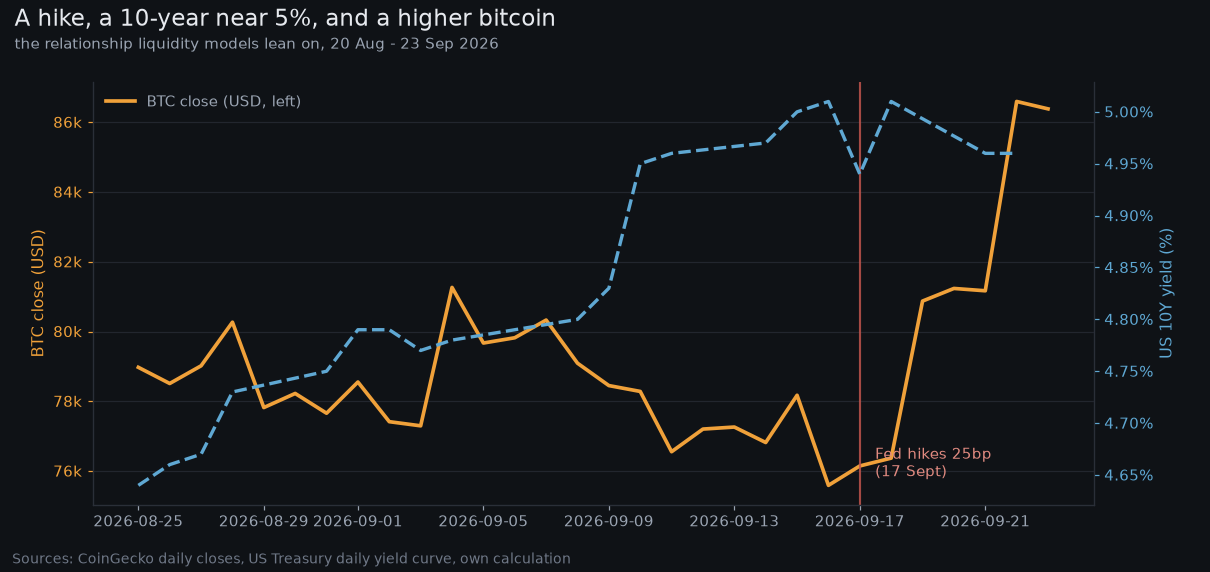
The Fed raised rates into a supply-shock inflation problem for the first time in three years, the 10-year pushed toward 5%, and bitcoin rallied anyway. A liquidity model admits it is not working - and the reason says more about the Fed's trap than about the tape.
-

The Exits Are Always Quiet First
Saudi Arabia left the mBridge CBDC platform in May 2025 and the world found out sixteen months later. The same week, diesel hit a record $6.51 and two of the largest suppliers reached for the same lever: a ban. Permissioned systems fail quietly, and the instrument is always permission.
-

The Ledger They Kept
The ECB launched Pontes on 21 September 2026 — a permissioned ledger for tokenised securities settled in central bank money. The 126-page service description names the whitelist, the issuer node that mints, and the certificates that replace proof-of-work. The vocabulary is decentralisation; the architecture is a gate.
-
The Bond Market Is Not 2007. It's Worse.
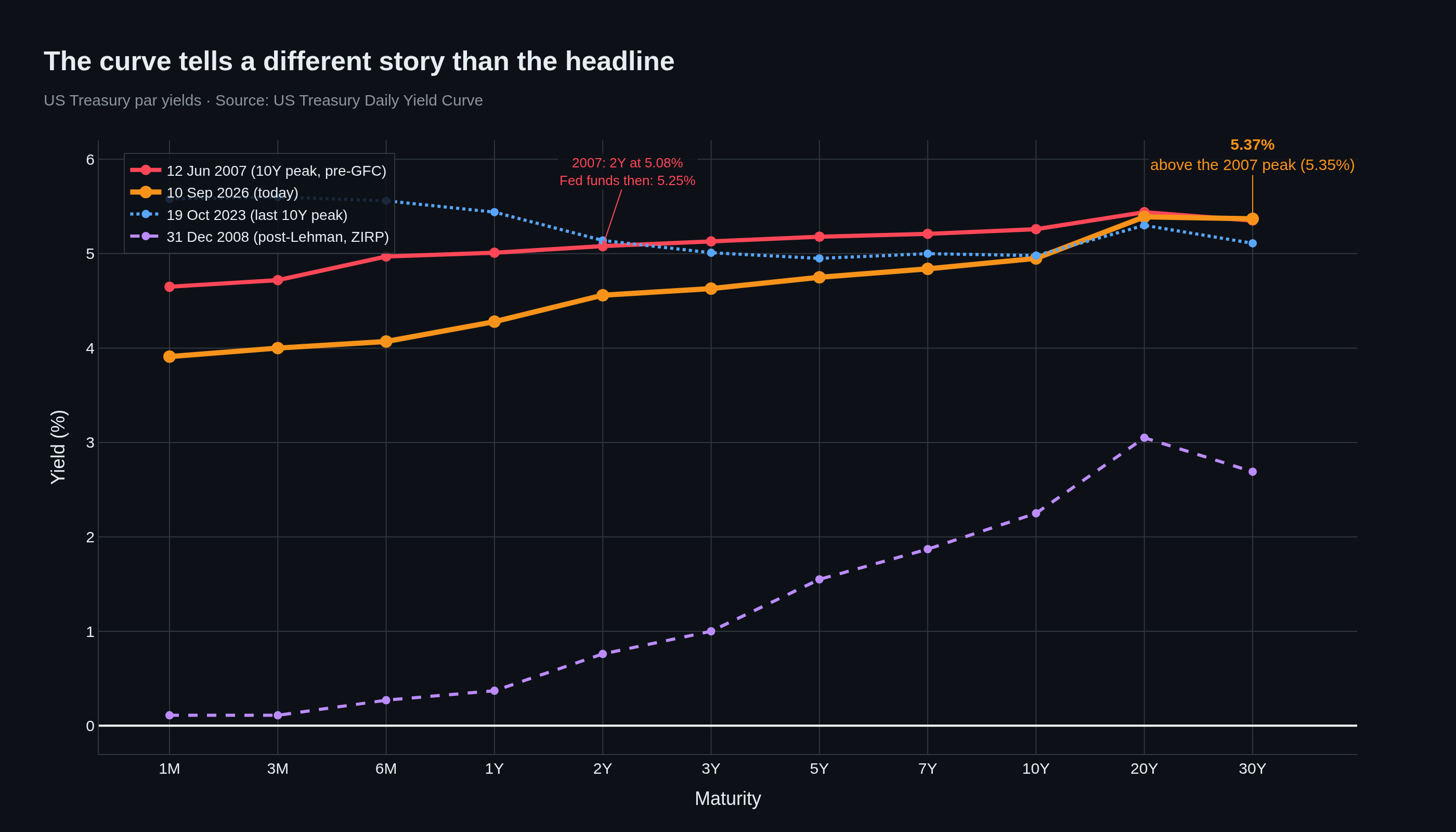
The 30-year Treasury at 5.37% has passed the 2007 peak, but the curve, the debt load and the mechanism are entirely different. What financial repression does to savers, and what it means for Bitcoin.