
Bitcoin & Markets
Price, cycle, holders, miners — what the market does with scarcity.
-
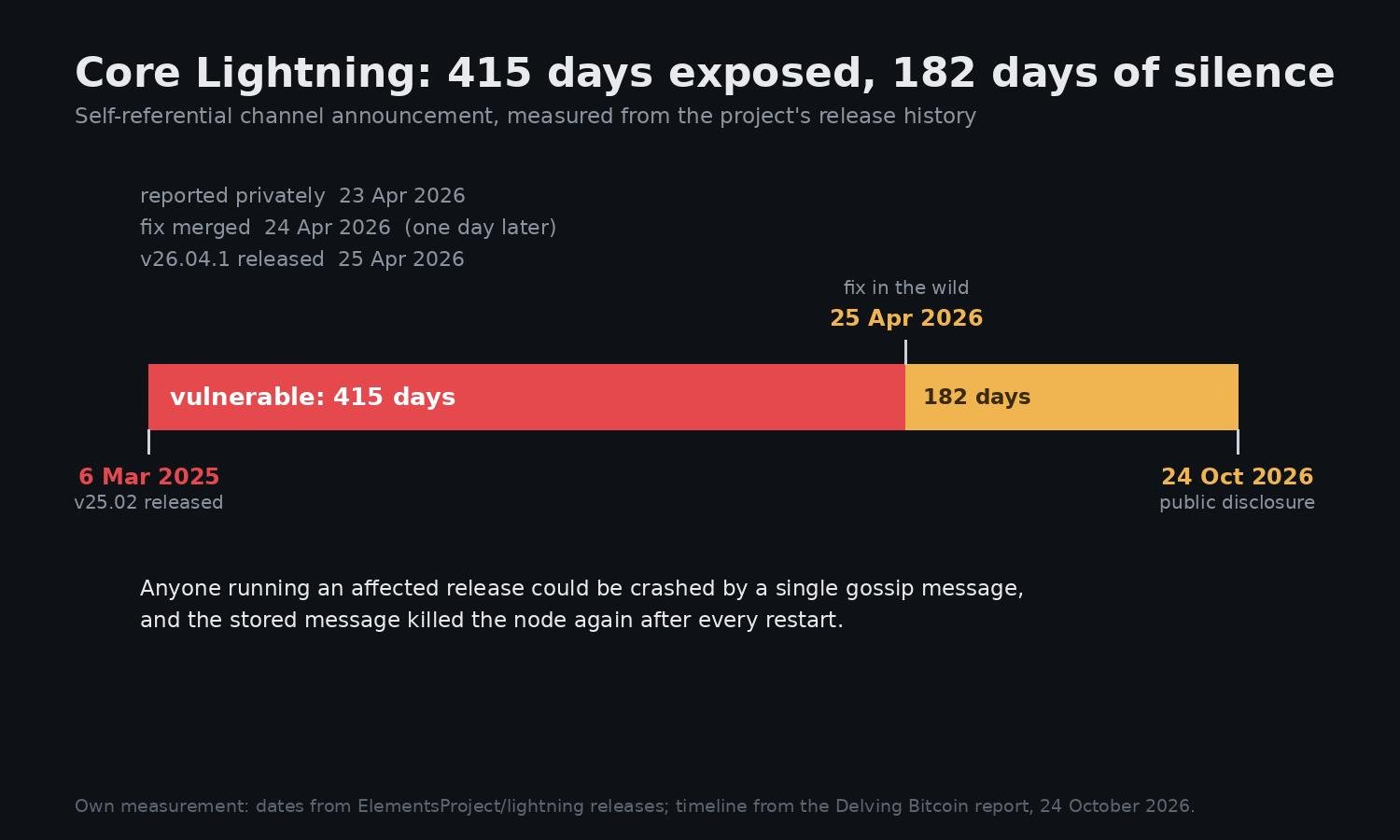
Two Days to Fix, Six Months to Tell
Bitcoin Core just stopped hiding vulnerabilities that a single prompt can rediscover. The disclosure economy it replaced was priced on a scarcity of knowledge that no longer exists - and sixteen months of CVE data say the scarcity is gone.
-
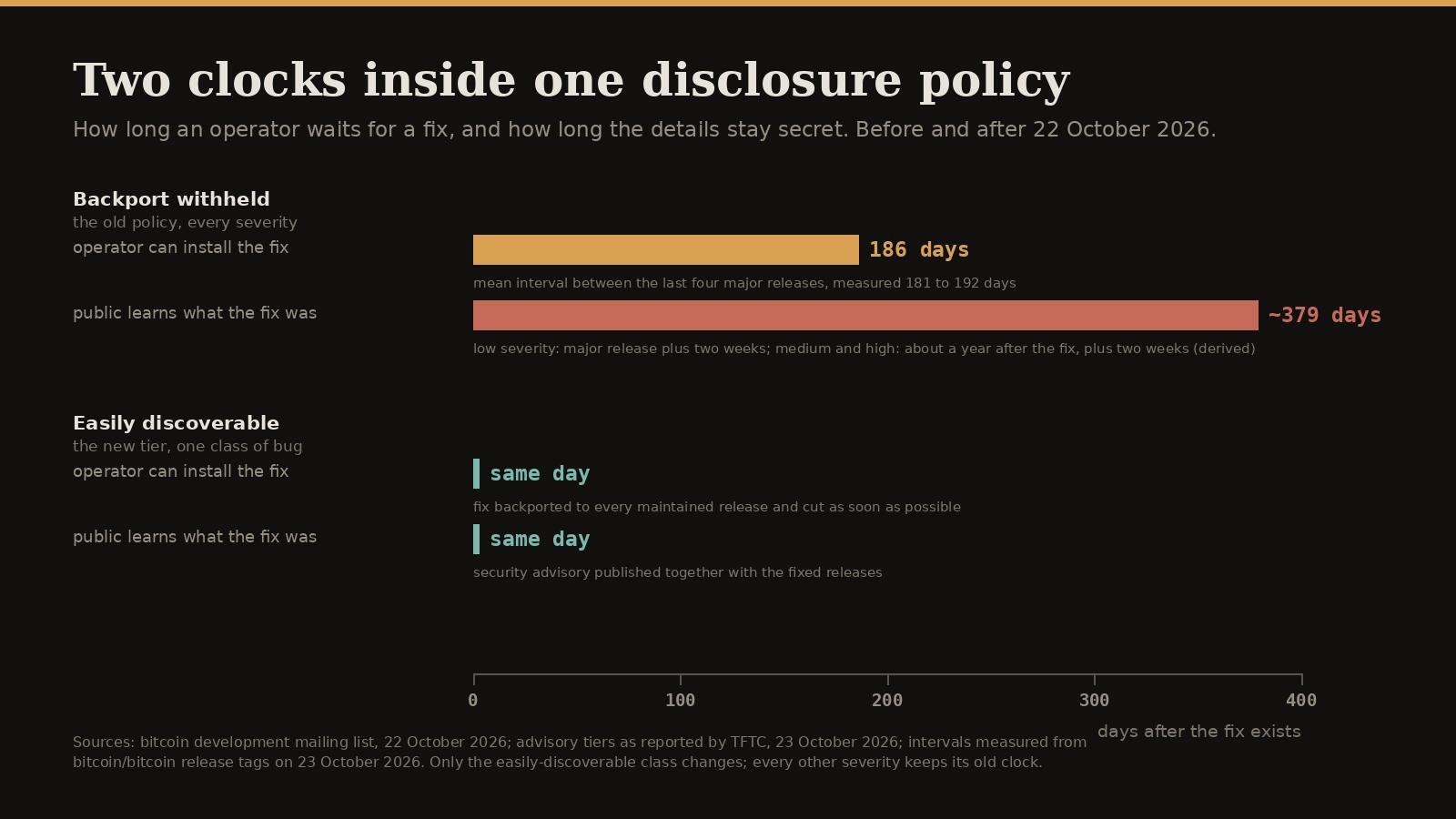
The Embargo Was Priced in Expertise
Bitcoin Core shortened its embargo for bugs a prompt can find. The same repricing shows up in PHP, in an Ethereum fork cancelled four days out, and in a difficulty chart that kept climbing while the miners left.
-
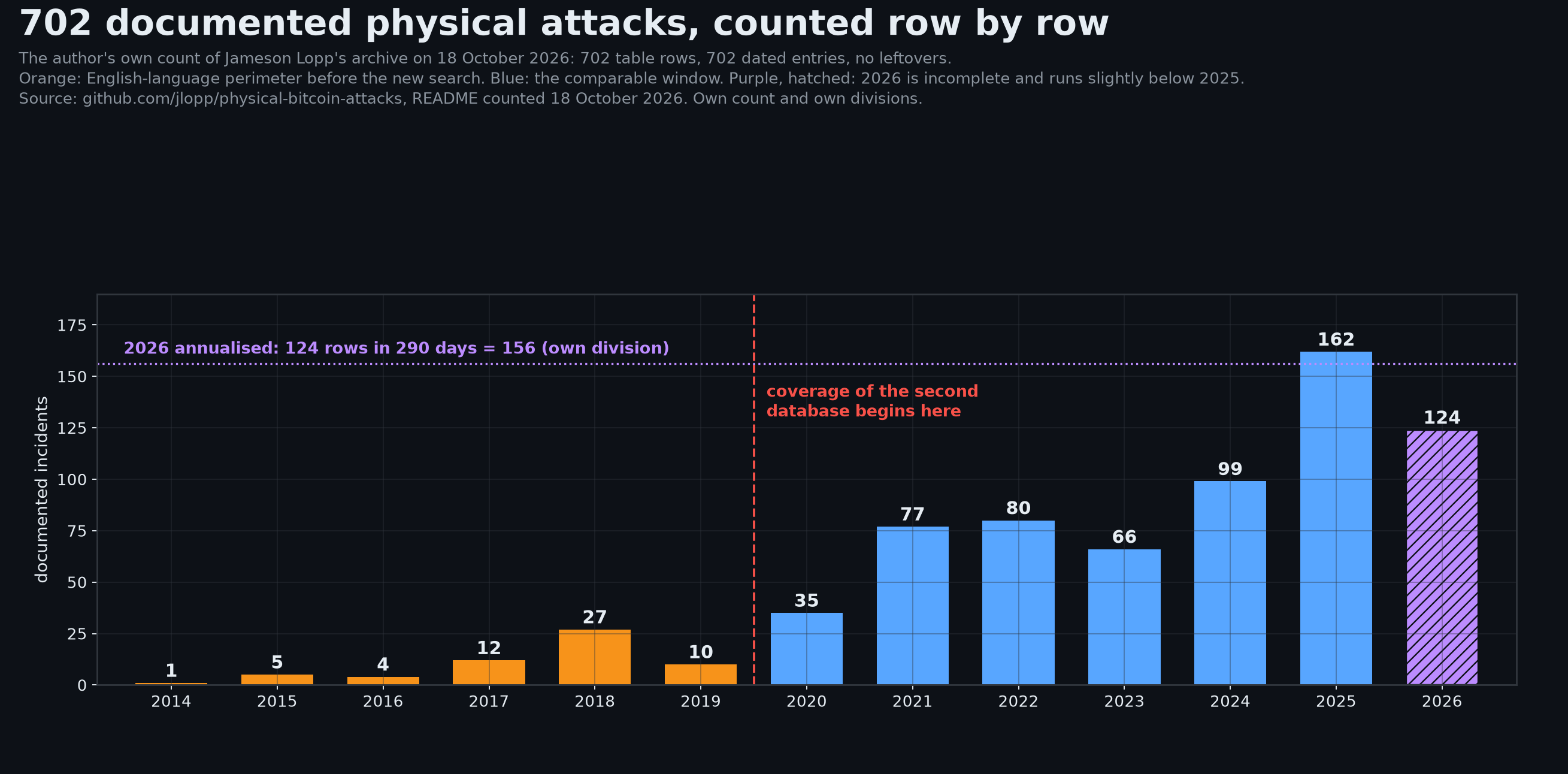
The Price of Holding
A record of physical bitcoin attacks doubled in a day because someone finally searched in 72 languages. Counted row by row, the archive says something the headline does not, and every way of holding coin was already sending a bill.
-
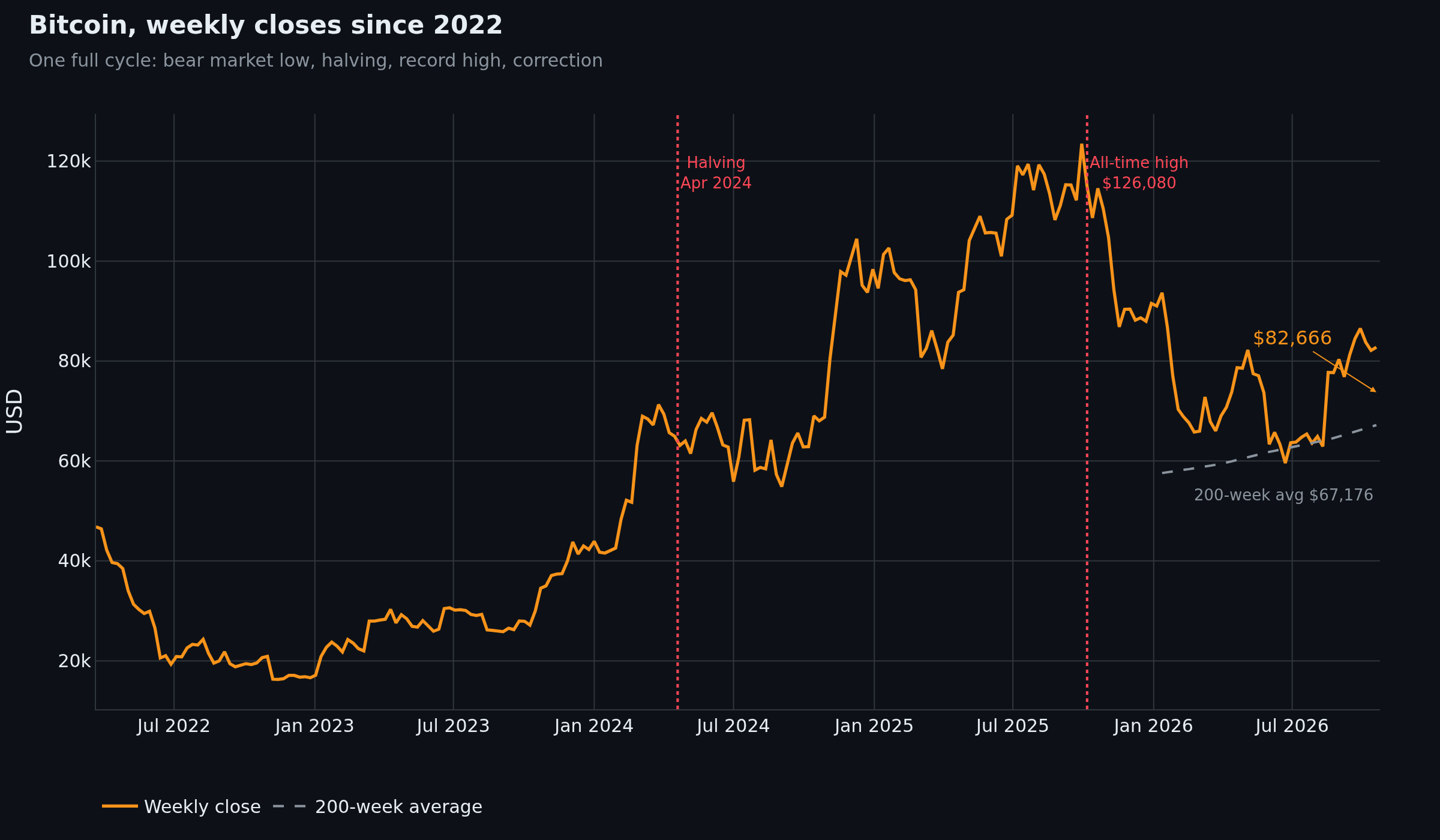
The Cycle Is Not a Calendar
Bitcoin is 34 percent below its record and 41 percent above its July low. Both numbers are true: what the tape, the halving schedule and a forty trillion dollar debt load actually say.
-
The Only Asset That Fell
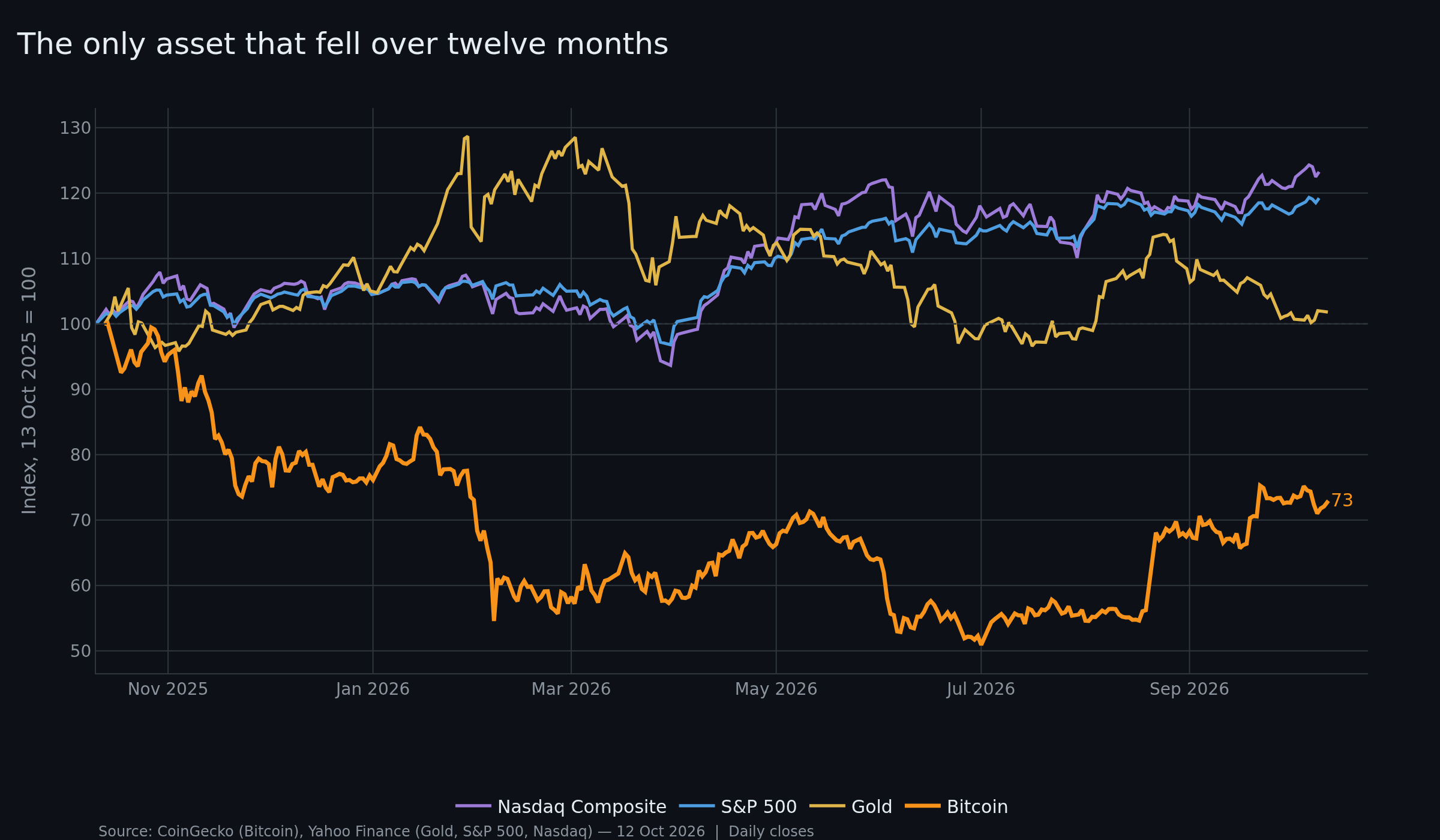
Bitcoin is 33 percent below its October 2025 high and down a quarter over twelve months, while the S&P 500, the Nasdaq and gold all rose. The fourth halving cycle is the weakest on record in both directions — and that is the part the Austrian read says to expect.
-
No Earnings, No Coupon
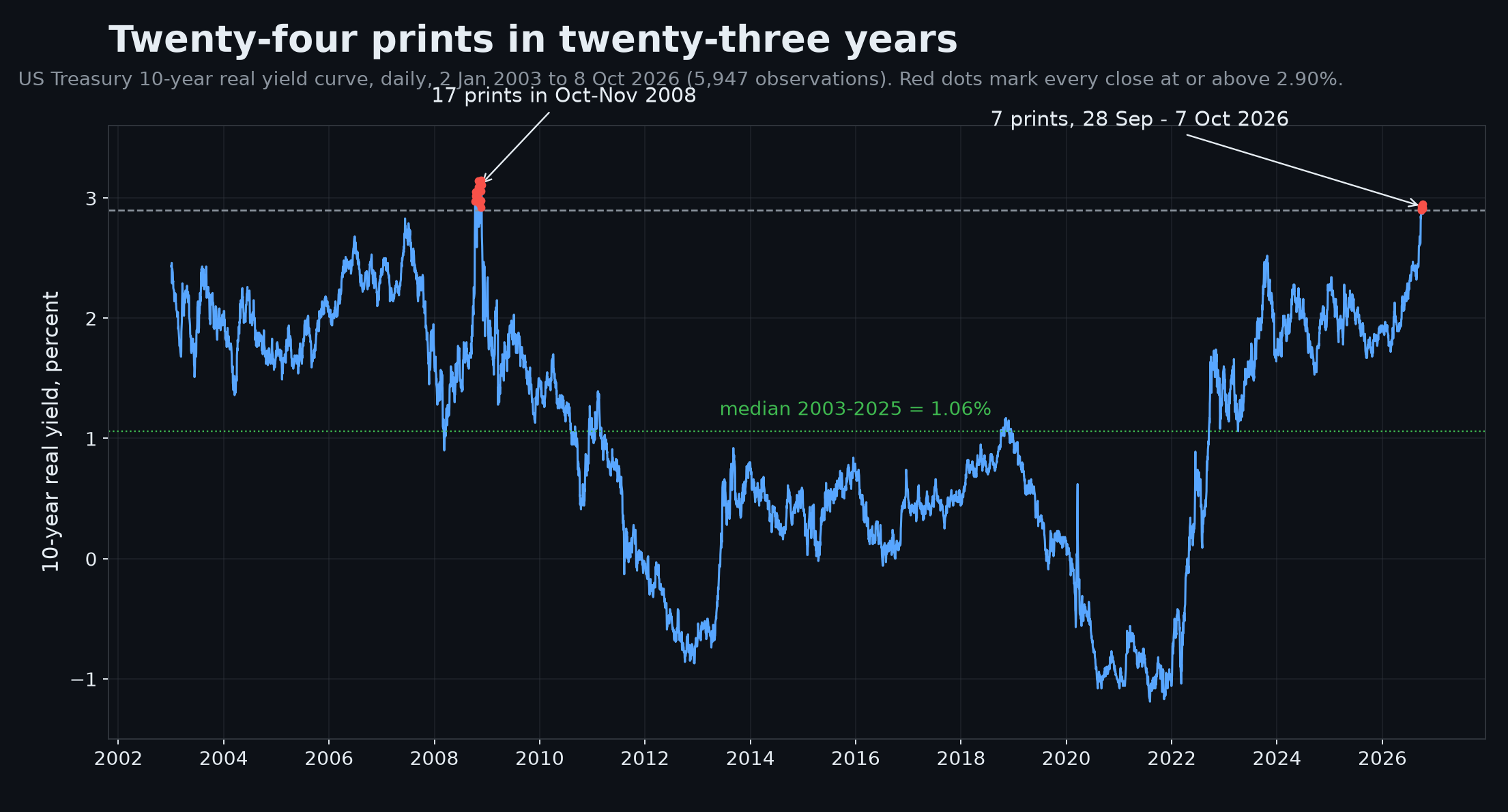
Bitcoin fell 32 percent in a year the Nasdaq set a ten-year record. The mechanism is not sentiment: a claim with no earnings cannot grow out of a higher real discount rate, and the ten-year real yield just printed above its level in the worst weeks of 2008. Measured against the Nasdaq it lost 42.6 percent.
-
The Gold Fence
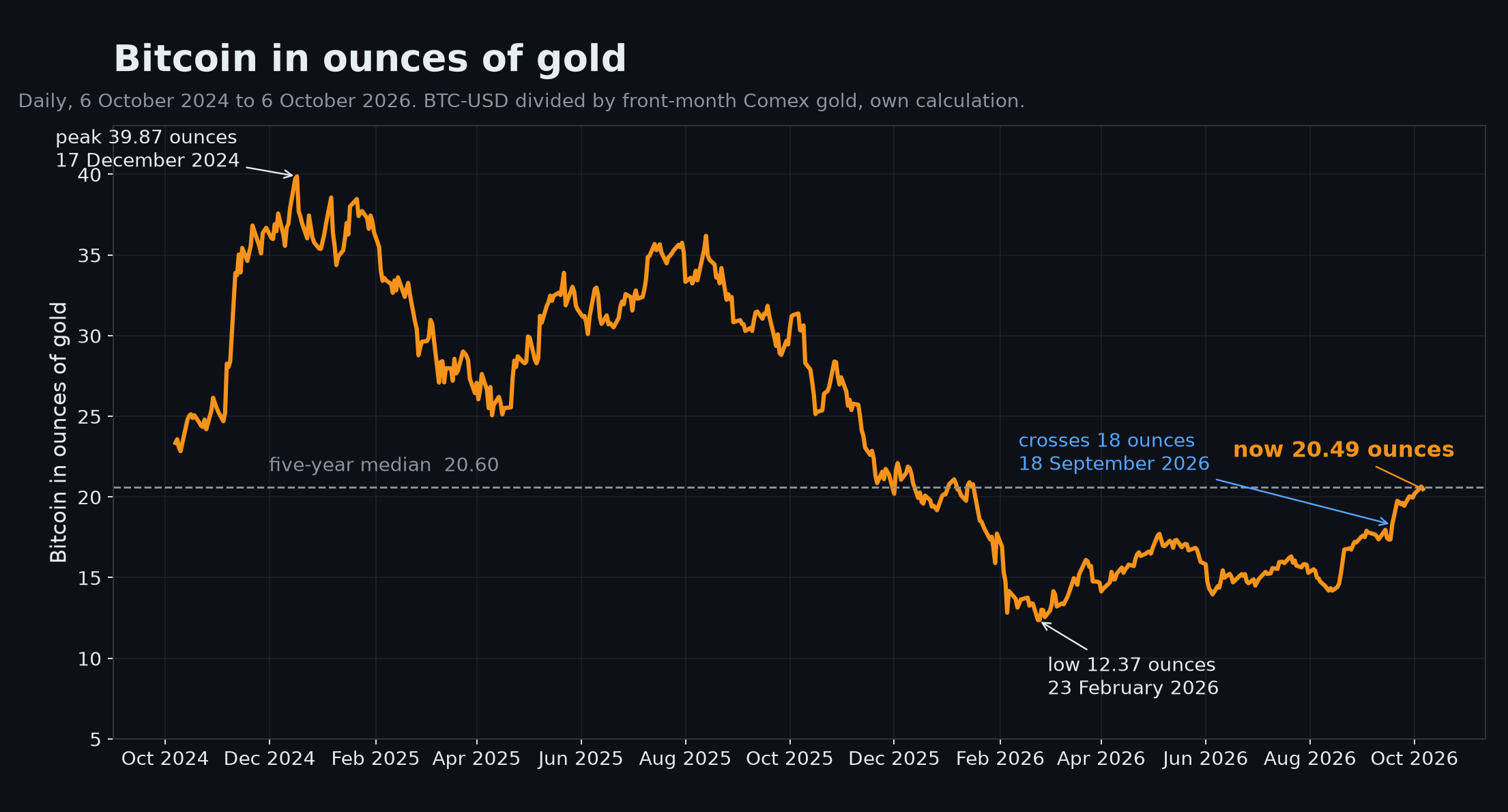
Bitcoin crossed 18 ounces of gold for the first time since last autumn and closed the week at 20.49. Three writers read the same chart and produced three different targets, because the number depends entirely on which gold you decide to count.
-
Bitcoin in October 2026: a 31% drawdown, a debt wall, and a halving 556 days out
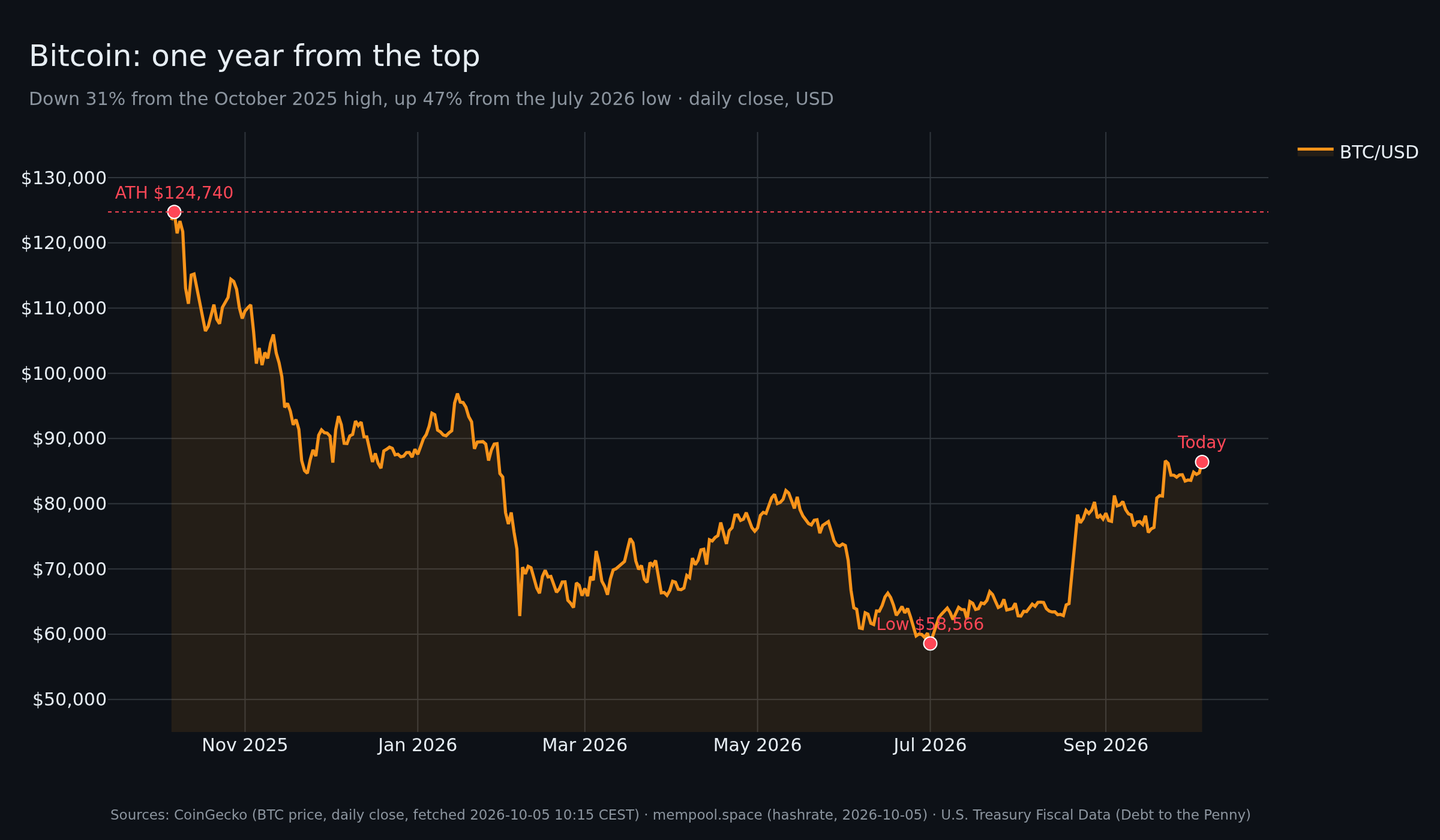
Bitcoin is 31% below its October 2025 high and 47% above its July 2026 low. What the hashrate, the ETF flows and a $40.3 trillion debt load actually say — and the strongest case against the argument.
-
The Hedge Went Quiet
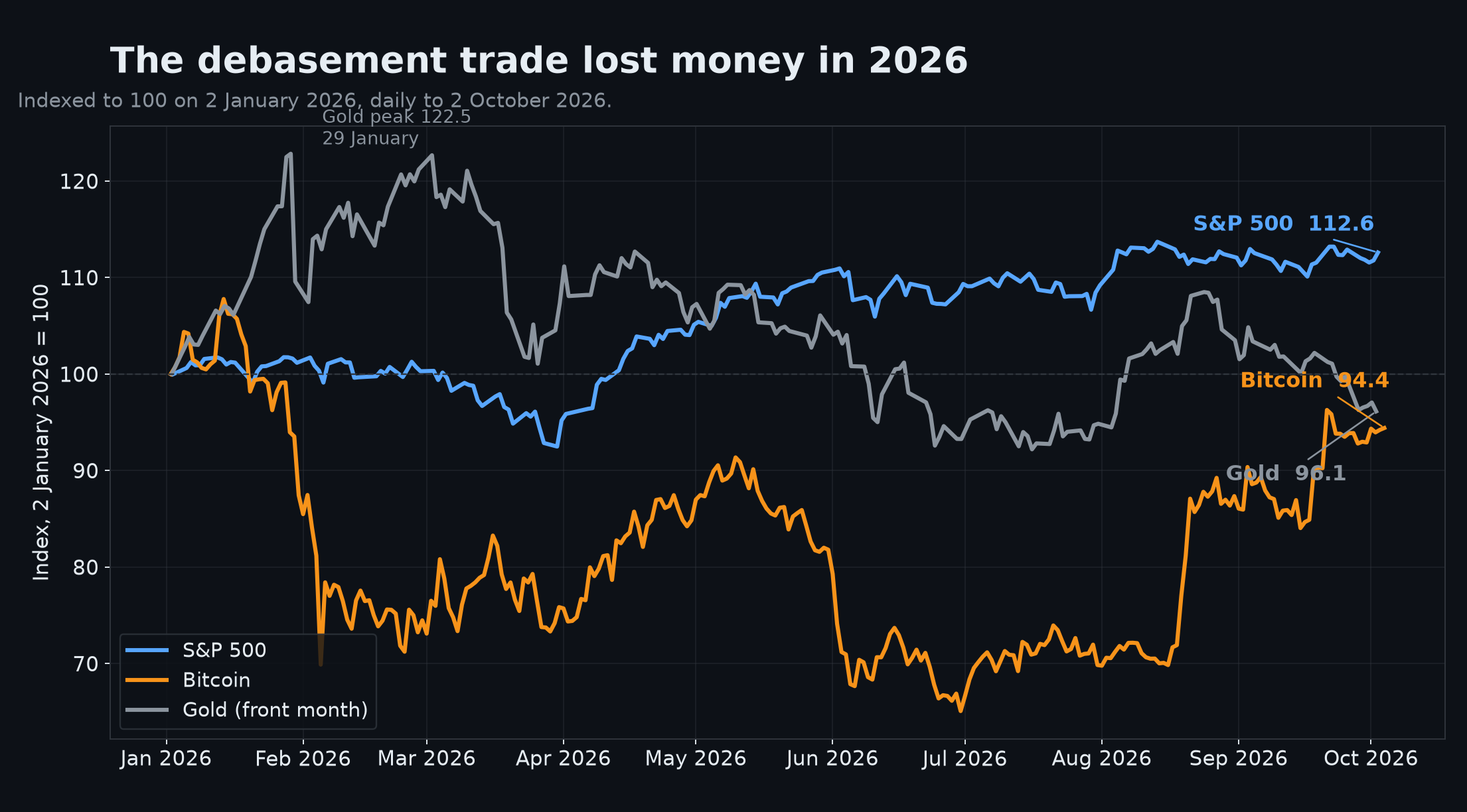
Bitcoin beat the SpaceX IPO by 34 percent and still lost money in 2026, while gold lost more. That is the year the debasement trade went on sale, and Turkey showed why the custody case does not need a price.
-
Bitcoin Wins the Fee Argument and Loses the Payment
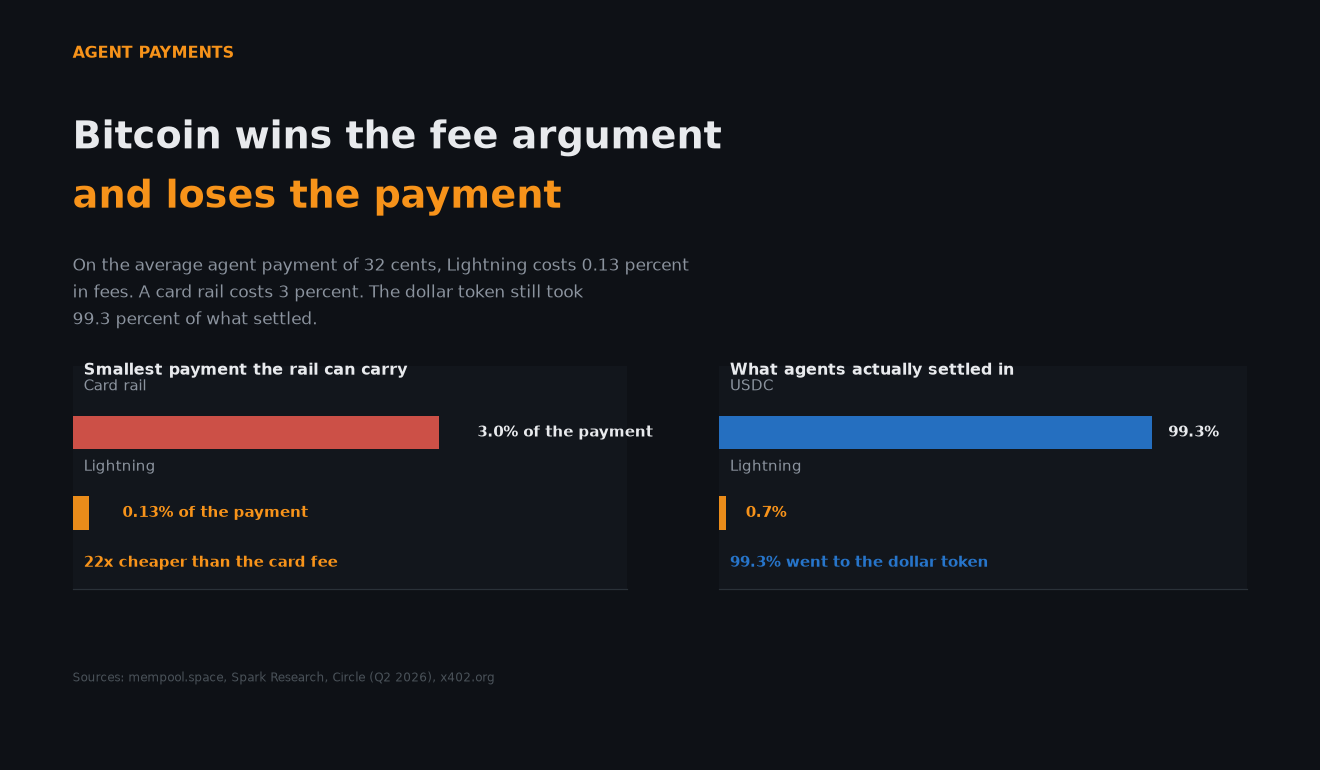
Lightning's fees beat every dollar rail by a wide margin, and agents still settled 99.3 percent in a dollar token. This is the story of the connection string that made a node unnecessary, the July bet Lightning Labs placed against its own architecture, and the honest correction of a number I published wrong the first time.
-
The Squeeze That Reprices Itself
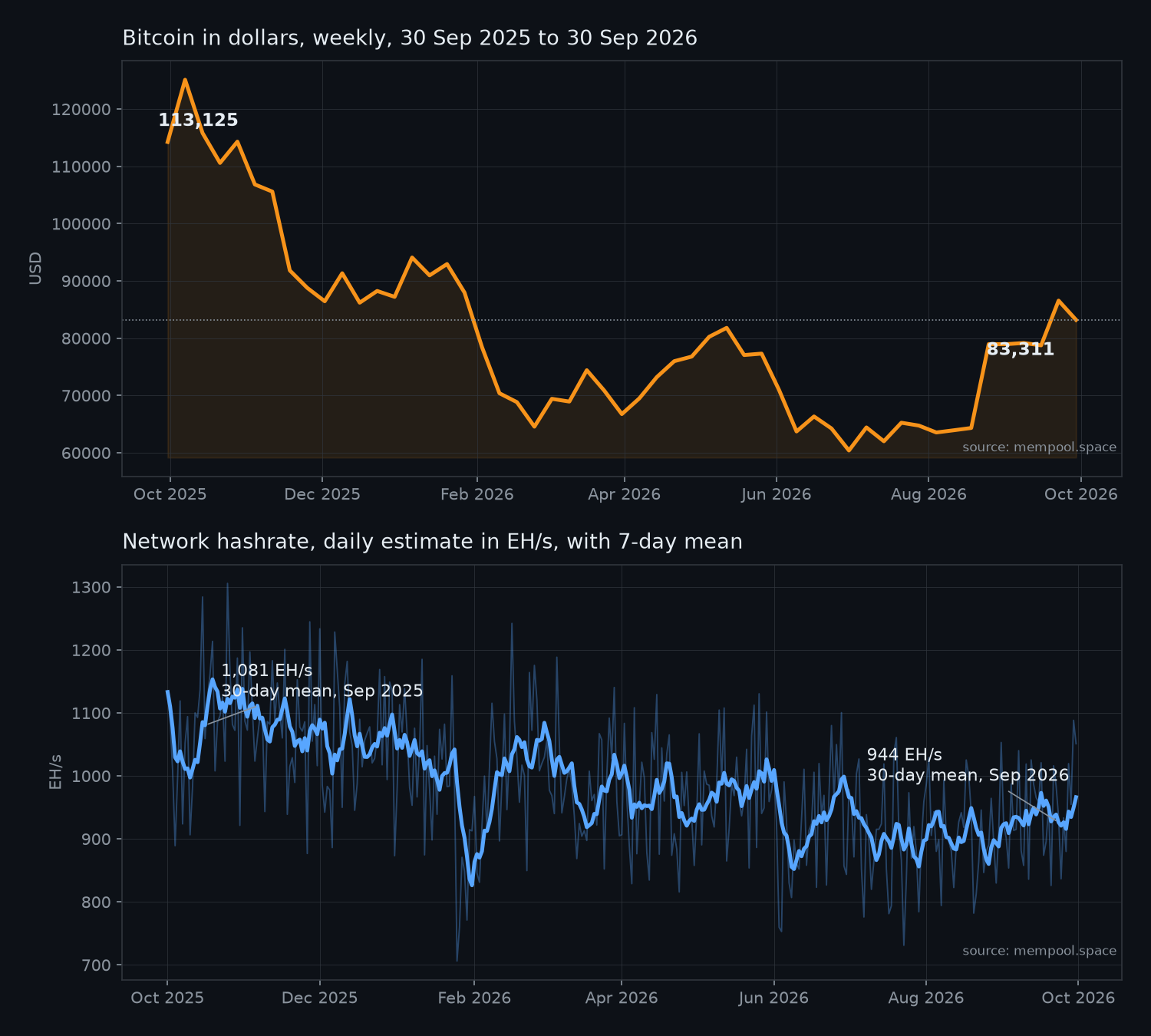
Bitcoin miners absorbed a quarter price drop with an automatic adjustment no manufacturer gets. Two charts, 240 measured blocks, and the fee line that will not save them.
-
The Company That Turned Its Cash Into a Rock
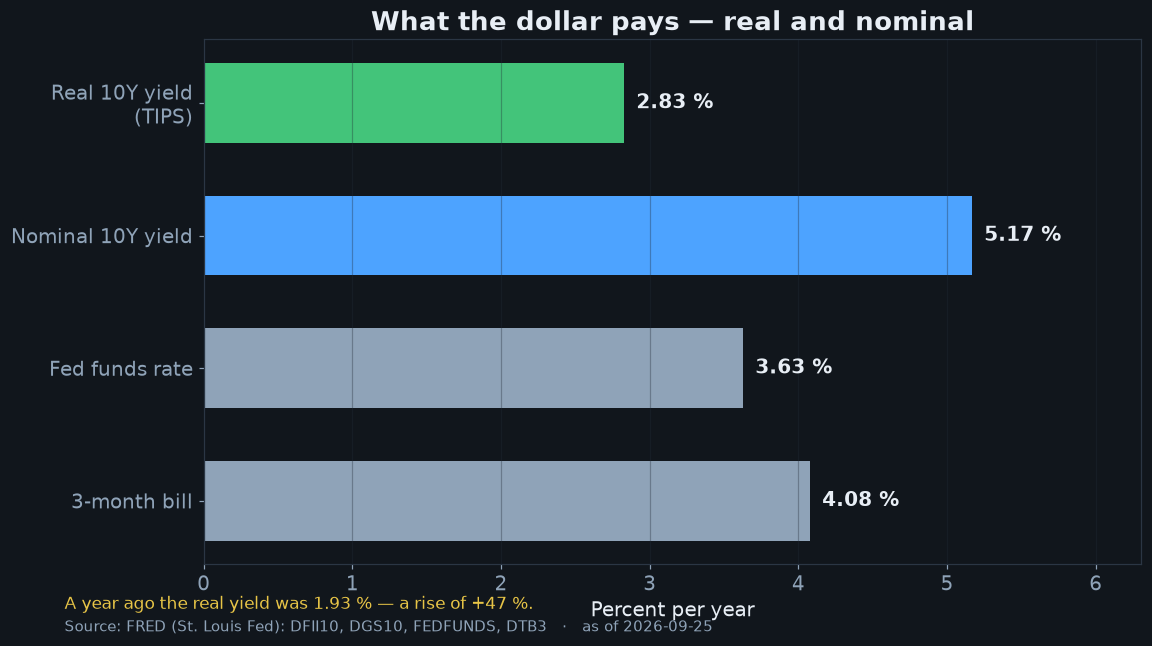
Eighty-eight listed companies now hold 1.26 million bitcoin — six percent of everything that will exist. The dollar has started paying its savers a real return for the first time in years. A monthly letter on what happens when both are true: own data, own charts, Austrian reading.
-
The Gas That Had No Buyer
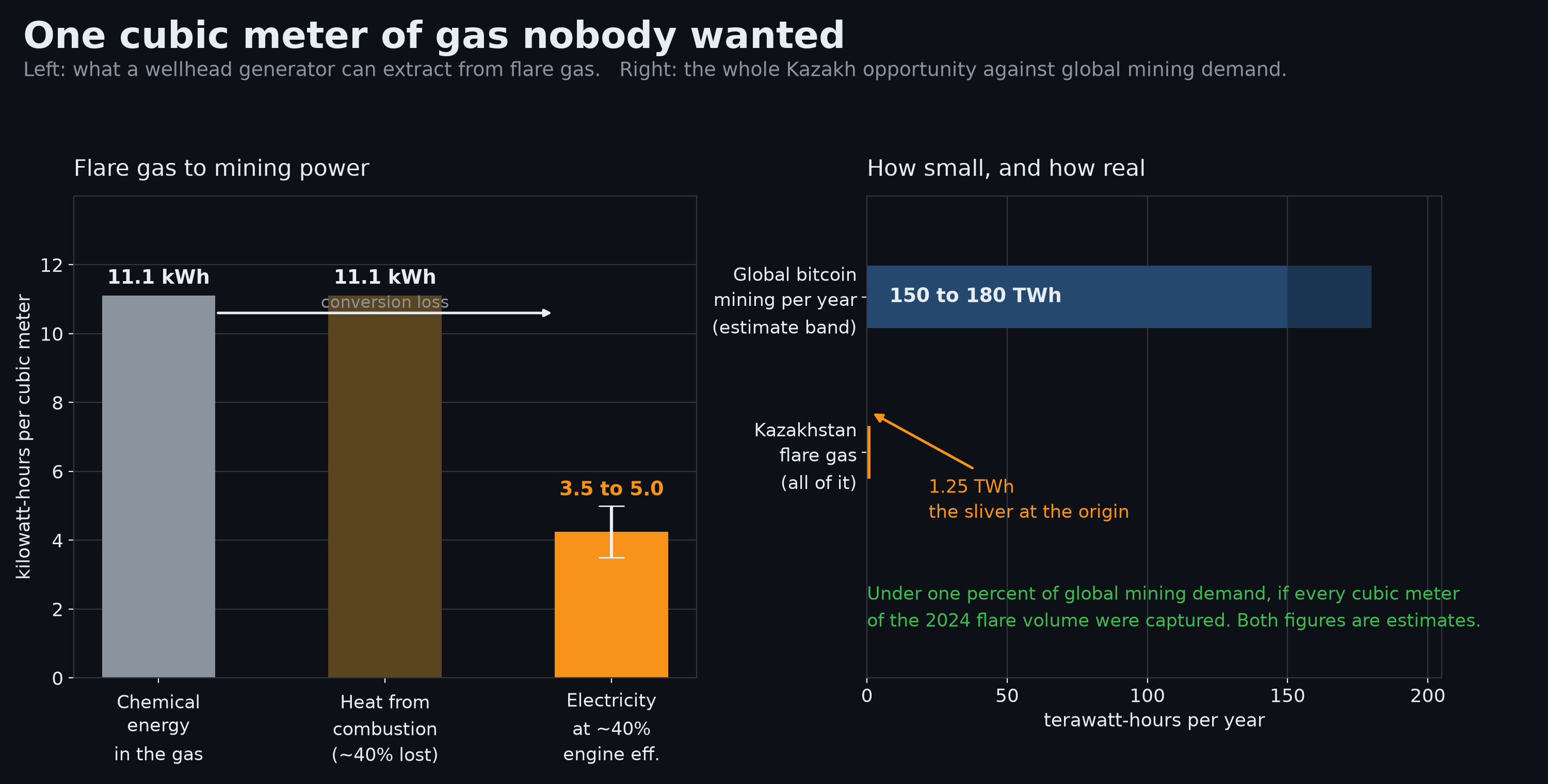
Kazakhstan's July 2026 decree lets oil producers sell flare gas to bitcoin miners at the wellhead, off the grid. The energy checks out: 1.25 TWh against a global mining band of 150-180 TWh. The same week, a departing SEC commissioner put zero-knowledge identity proofs into the federal record. Two regulators, writing rules for mechanisms they do not operate.
-
The Vault and the Bread Price
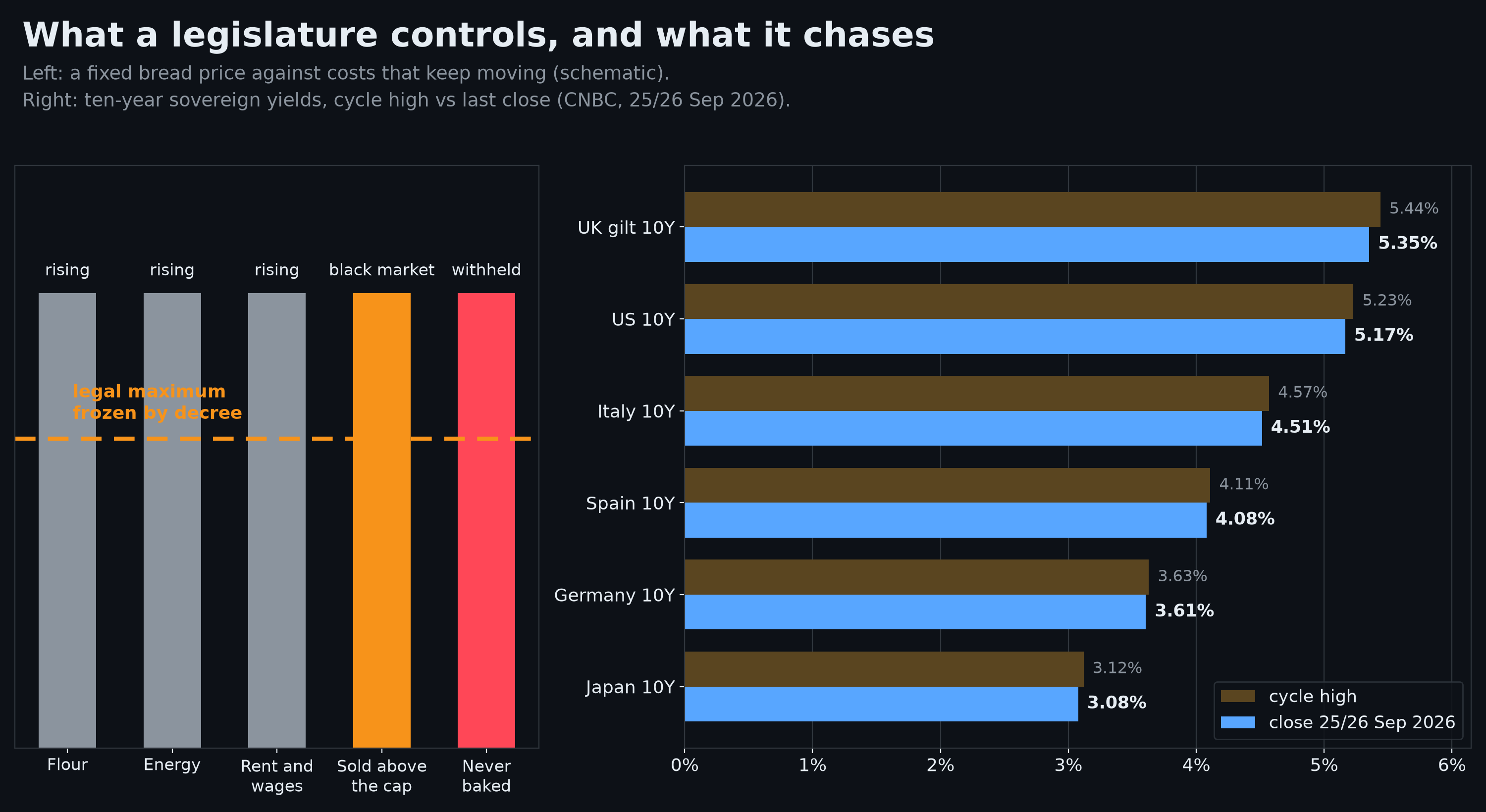
Two US votes in one week: a 20-year statutory lockup on seized bitcoin, and a failed cloture vote the day before. What a legislature can bind, and what it can only chase - read against the price ceiling nobody can enforce.
-
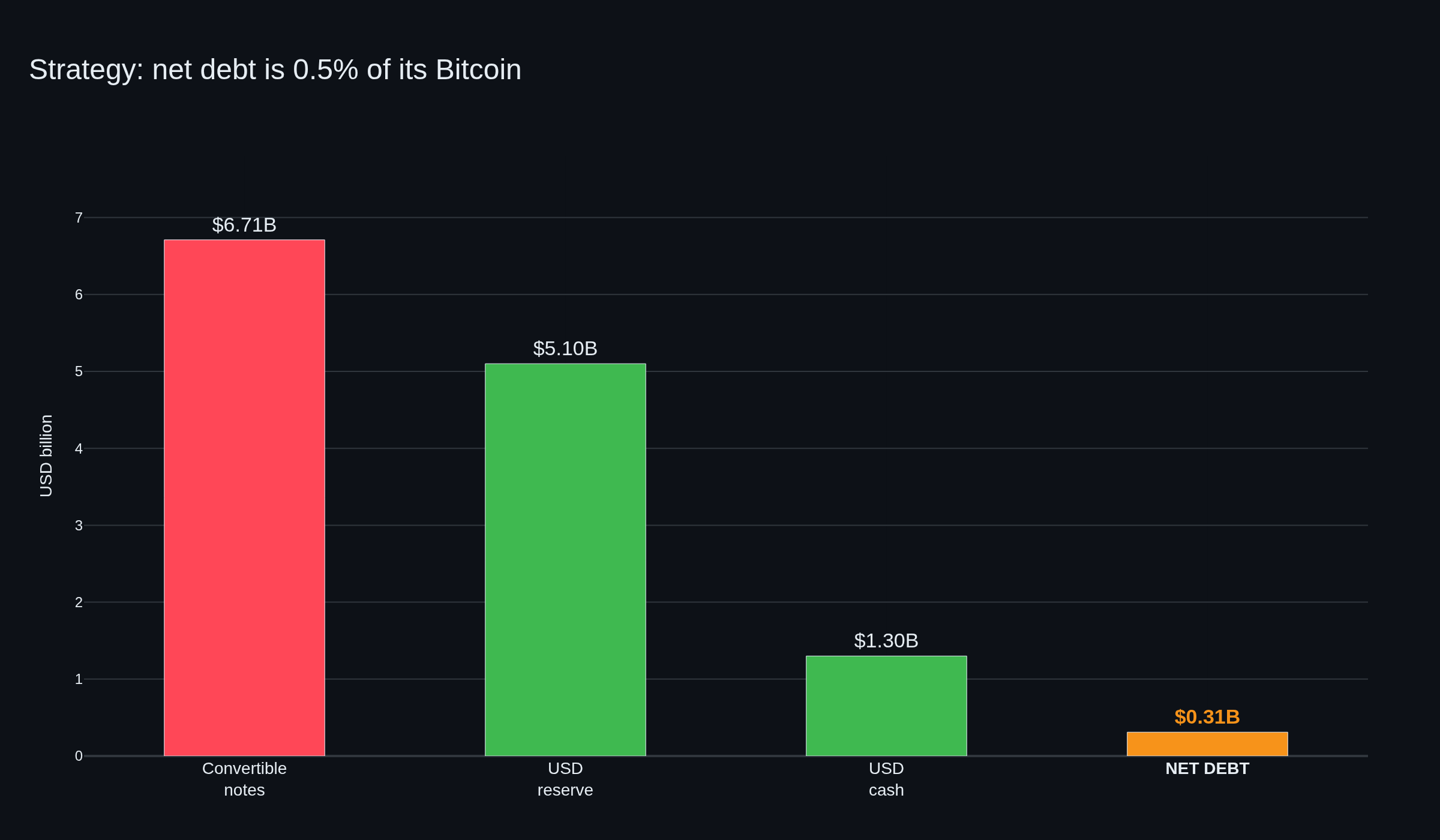
Strategy: net debt is 0.5% of its Bitcoin
$6.71B convertible notes, $6.40B reserves, $64.8B in Bitcoin. The leverage story falls apart when you do the division.
-

The billion dollar wall — how perpetual preferred changed the cycle
Strategy, Strive and the ETFs buy $3-4B of Bitcoin every week. SATA hit $999M, Strategy doubled the STRC facility to $2B. Why the perpetual preferred model breaks the old cycle — Hurdle Rate Ep. 73 breakdown.
-
The supercycle thesis — why this cycle breaks the pattern
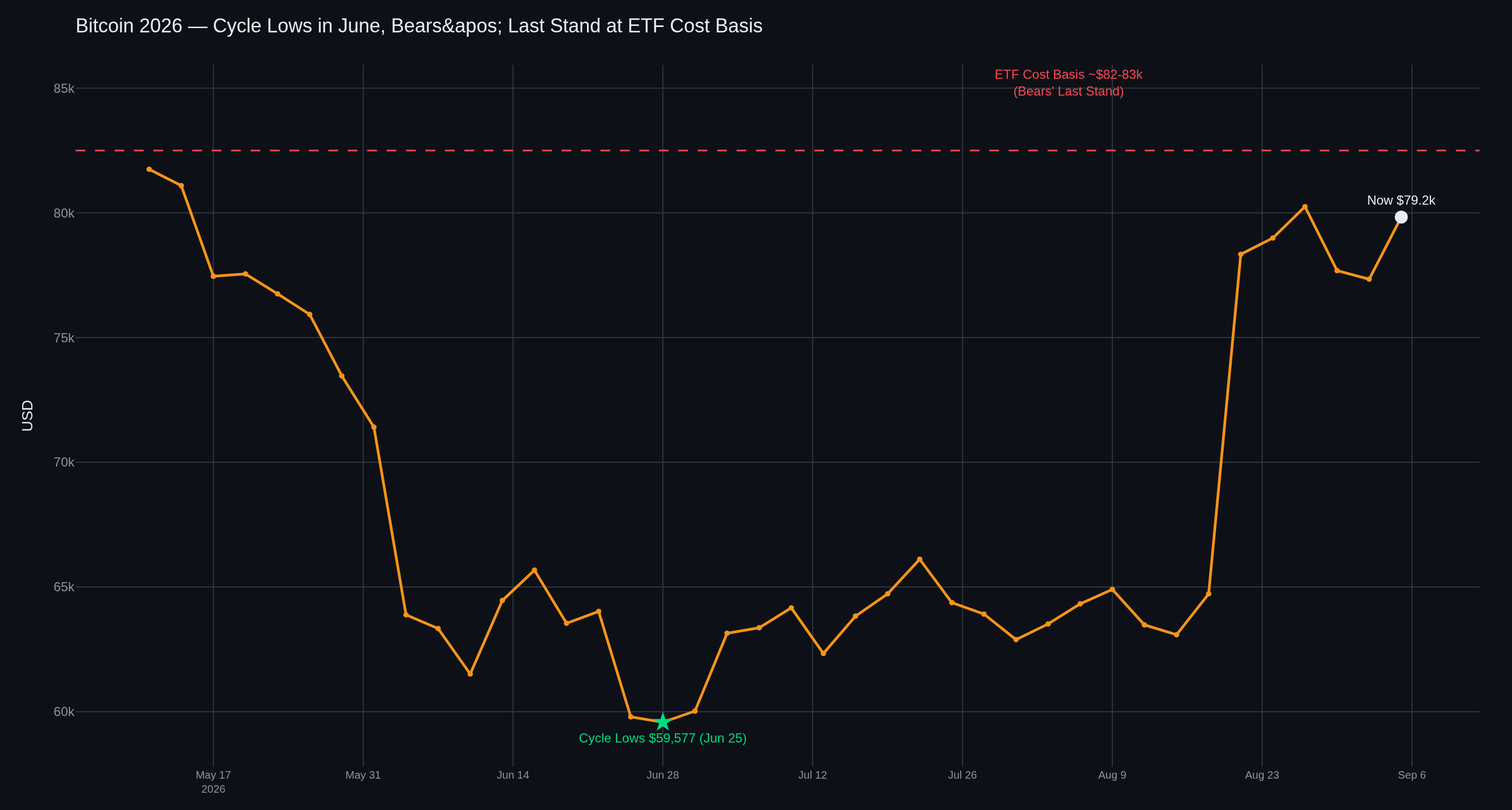
Why the 4-year halving cycle is losing relevance: institutional demand, dollar debasement, AI unwind, supercycle. After Andre Dragos (Bitwise) with on-chain data.
-
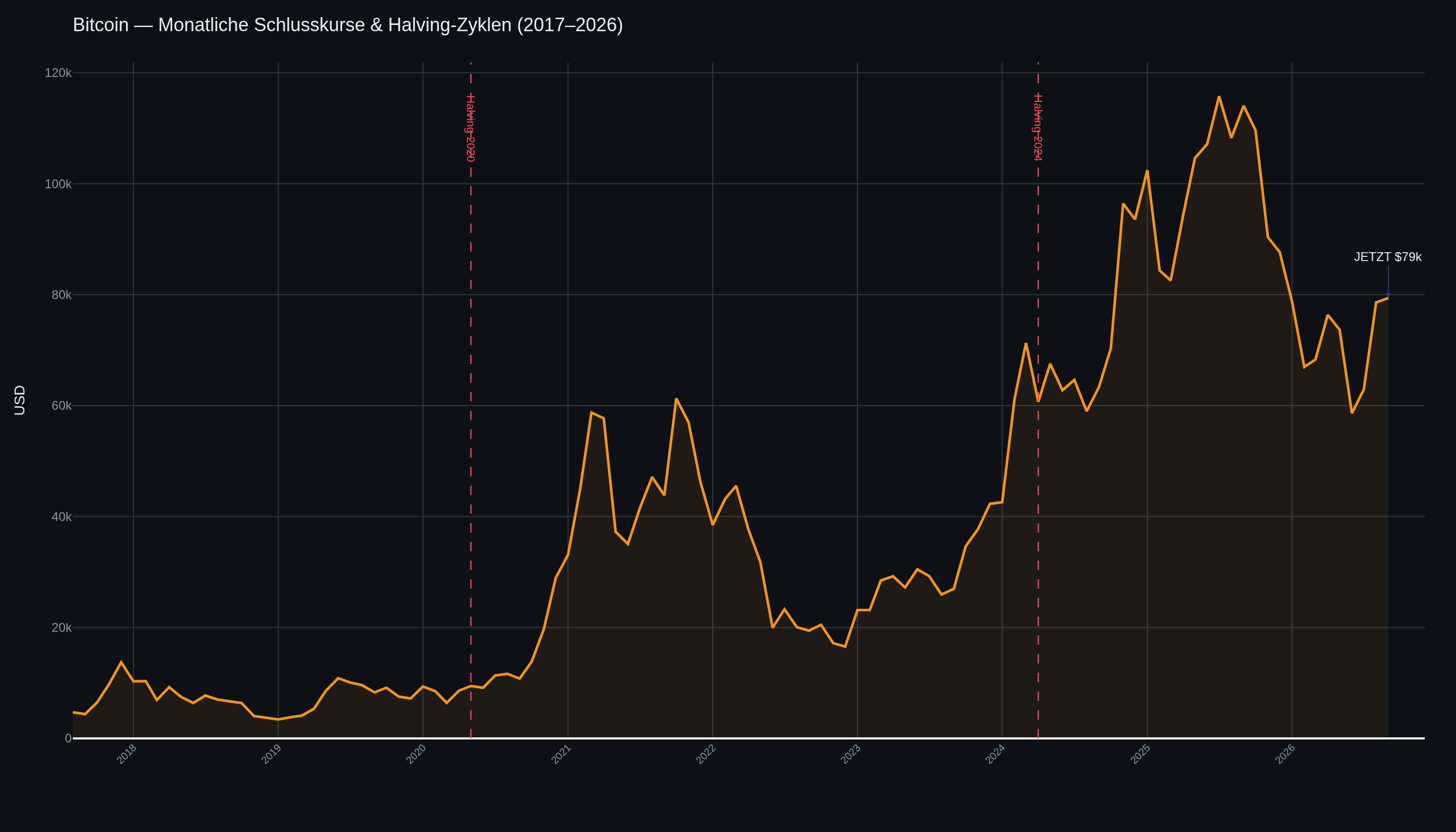
The bull market to 2028 — a cycle view
Bitcoin Zyklus-Analyse bis 2028: Halving, ETF-Nachfrage, Schuldenwand, Austrian Economics, 3 Preis-Szenarien